Thailand Medical Study Finds That SARS-CoV-2 Omicron Variants Disrupt Blood Stem Cells and Fat-Derived Cells
Nikhil Prasad Fact checked by:Thailand Medical News Team Oct 18, 2026 43 minutes ago
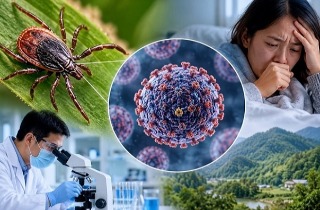
New research from Thailand suggests that the Omicron variant of SARS-CoV-2 may affect cells responsible for producing blood and regulating immune responses, raising questions about COVID-19's effects beyond the respiratory system.
 New laboratory research reveals that the Omicron coronavirus variant may alter blood stem cell development
and immune-regulating cells without producing detectable infectious virus
Researchers from Mahidol University, including its Faculty of Science, Faculty of Tropical Medicine, Faculty of Medicine Ramathibodi Hospital, and Chakri Naruebodindra Medical Institute, investigated how different coronavirus variants interact with human stem and supporting cells.
The findings suggest that Omicron can trigger cellular changes even without producing detectable infectious virus.
Omicron Shows Stronger Effects on Fat-Derived Cells
The researchers compared mesenchymal stromal cells (MSCs) obtained from fat tissue and bone marrow. These cells support tissue repair, regulate inflammation, and help maintain environments essential for blood cell development.
Cells were exposed to the original SARS-CoV-2 strain, Delta, or Omicron BA.1.15.
Omicron produced approximately three times greater viral nucleocapsid protein signals in fat-derived MSCs than the original and Delta variants. This protein indicates the presence of viral material inside cells.
Bone marrow-derived MSCs showed considerably weaker responses, suggesting that tissue origin influences susceptibility.
Importantly, researchers detected no infectious virus released from either cell type after 72 hours, indicating that viral protein detection does not necessarily establish productive infection.
Scientists Identify a Possible Viral Entry Mechanism
Further experiments identified neuropilin-1 (NRP1), a cellular protein potentially involved in coronavirus entry, as an important factor.
Fat-derived MSCs expressed significantly more NRP1 than bone marrow-derived cells.
When researchers reduced NRP1 expression using gene-silencing techniques, Omicron-associated viral protein signals declined significantly. Comparable reductions were not observed with the original or Delta variants.
Omicron also increased expression of IDO1, an enzyme involved in regulating immune activity.
These findings suggest that Omicron exposure may alter immune-regulating functions even when infectious viral production remains undetectable.
Blood Stem Cells Show Unexpected Changes
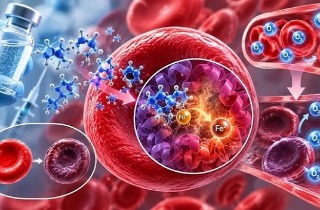
A particularly important discovery involved CD34-positive hematopoietic stem and progenitor cells collected from umbilical cord blood.
These cells generate red blood cells, white blood cells, and platelets throughout life.
Omicron exposure increased viral protein detection, particularly within primitive stem cell populations associated with long-term blood production.
Researchers also observed r
eductions in the proportions of these immature cell populations, suggesting disruption of normal stem cell organization.
However, this
Thailand Medical News report highlights an unexpected finding: Omicron-exposed cells demonstrated increased blood cell colony formation.
Total colony formation increased significantly (P=0.0021), including red blood cell precursor colonies (P=0.0374) and granulocyte-macrophage colonies (P=0.0022).
After 14 days, early red blood cell progenitors also accumulated significantly (P=0.0299).
This suggests that Omicron exposure may accelerate certain developmental responses while simultaneously altering primitive stem cell populations.
Active Virus Triggers Changes That Inactivated Virus Does Not
Researchers compared active coronavirus exposure with heat-inactivated viral material.
Heat-inactivated virus failed to reproduce the increased colony formation, early red blood cell precursor accumulation, or reductions in primitive stem cell populations.
Genetic analysis additionally identified changes involving BMP4, CXCR1, interferon-related genes, and pathways controlling inflammation, cell division, and differentiation.
However, these gene-expression findings were exploratory and did not survive stringent multiple-testing correction.
Conclusions
The findings suggest Omicron can influence blood-forming stem cells and their supporting environments without detectable infectious virus production. However, these laboratory experiments cannot establish whether comparable changes occur in patients or cause lasting blood disorders. Larger studies involving human samples are needed.
The study findings were published in the peer-reviewed journal: PLOS ONE.
https://journals.plos.org/plosone/article?id=10.1371/journal.pone.0360439
Read Also:
https://www.thailandmedical.news/articles/coronavirus
https://www.thailandmedical.news/articles/long-covid




 Share
Share
 Tweet
Tweet
 Share
Share