Nikhil Prasad Fact checked by:Thailand Medical News Team May 14, 2026 3 months, 2 weeks, 5 days, 3 hours, 16 minutes ago
Medical News: Researchers from the Department of Respiratory Medicine and the Department of Obstetrics at Mindong Hospital Affiliated to Fujian Medical University in Ningde, China, have uncovered alarming evidence that people with hypertension face a far greater danger when infected with COVID-19. Their findings show that high blood pressure significantly raises the risk of respiratory failure and death, even after accounting for other major health factors.
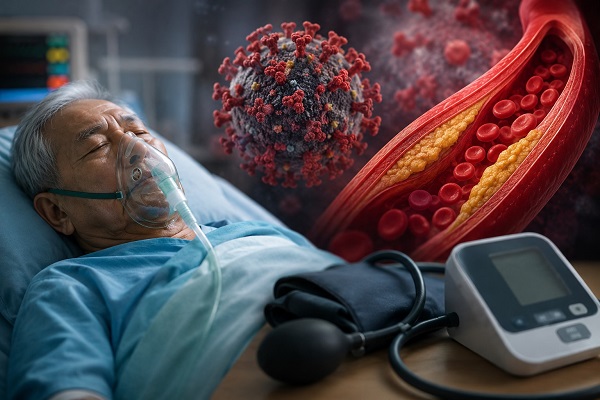 New research shows hypertension dramatically increases the risk of respiratory failure and death in COVID-19 patients
The new study examined hospitalized COVID-19 patients and revealed that hypertension was linked to more than double the risk of respiratory failure and nearly triple the risk of dying in the hospital. The researchers also developed a predictive model that may help doctors identify high-risk patients much earlier.
Why Hypertension Makes COVID-19 More Dangerous
High blood pressure is one of the most common medical conditions worldwide, affecting more than a billion people. Since the start of the pandemic, doctors noticed that many severe COVID-19 patients also suffered from hypertension, but scientists were unsure whether hypertension itself was directly responsible for worse outcomes or whether other factors such as age played a larger role.
To answer that question, the Chinese research team carefully analyzed data from 357 hospitalized COVID-19 patients treated between October 2022 and May 2023. After matching patients with and without hypertension by age and sex, they compared outcomes between the two groups.
The results were striking. Patients with hypertension had respiratory failure rates of 28.8 percent compared to 15.9 percent in non-hypertensive patients. Death rates were also much higher, reaching 23.5 percent compared to 10.6 percent in patients without hypertension.
Even after adjusting for smoking, alcohol use, obesity, and diabetes, hypertension remained a major independent risk factor.
Hidden Biological Clues Found in Blood Tests
One of the most important discoveries involved two specific biological markers: eosinophils and kidney filtration function.
Eosinophils are a type of white blood cell involved in immune defense. Researchers found that low eosinophil levels explained nearly half of the increased risk linked to hypertension. Kidney function, measured through estimated glomerular filtration rate or eGFR, also played a significant role.
Patients with hypertension often showed lower kidney function and abnormal immune responses. According to the researchers, these changes may weaken the body’s ability to fight the virus and recover from lung damage.
The scientists believe this connection may be related to the ACE2 receptor system, which is heavily involved in both blood pressure regulation and the entry of SARS-CoV-2 into human cells. COVID-19 can disrupt this system, causing increased inflammation, lung injury, and cardiovascular stress.
This
>Medical News report highlights that the combination of chronic hypertension, immune imbalance, and kidney impairment may create a dangerous cycle that greatly worsens COVID-19 outcomes.
Men, Smokers, and Seniors Faced Even Higher Risks
The study also found that certain groups of hypertensive patients appeared especially vulnerable.
Men with hypertension had much higher odds of respiratory failure and death than women. Smokers and older individuals above age 65 were also at elevated risk. Interestingly, even patients with normal body weight were not protected if they had hypertension.
These findings suggest that doctors should closely monitor hypertensive COVID-19 patients regardless of whether they appear otherwise healthy.
New Prediction Model Could Help Save Lives
The researchers went beyond identifying risks and developed a practical prediction tool using routine blood tests.
The model used four markers: neutrophil count, C-reactive protein (CRP), blood urea nitrogen (BUN), and albumin. Together, these markers accurately predicted which hypertensive COVID-19 patients were likely to develop respiratory failure.
Another simplified model using neutrophil count and BUN helped estimate mortality risk.
Doctors could potentially use these tools in hospitals to identify dangerous cases early, prioritize treatment, and improve survival chances.
Conclusions
The findings strongly suggest that hypertension is not merely a background medical condition but a major independent driver of severe COVID-19 complications. People with high blood pressure appear to experience more intense immune dysfunction, greater kidney stress, and more severe lung damage after SARS-CoV-2 infection. The study also demonstrates that simple laboratory markers may help physicians rapidly identify patients at highest risk before their condition deteriorates. These discoveries could improve hospital triage strategies and encourage more aggressive monitoring of hypertensive COVID-19 patients in future outbreaks.
The study findings were published in the peer reviewed journal: Frontiers in Medicine.
https://www.frontiersin.org/journals/medicine/articles/10.3389/fmed.2026.1825373/full
For the latest COVID-19 news, keep on logging to Thailand
Medical News.
Read Also:
https://www.thailandmedical.news/articles/coronavirus




 Share
Share
 Tweet
Tweet
 Share
Share