Nikhil Prasad Fact checked by:Thailand Medical News Team Apr 20, 2026 5 months, 2 weeks, 4 hours, 35 minutes ago
Medical News: Scientists are uncovering a surprising and complex connection between HIV infection and cancer, even in patients whose virus is well controlled with modern treatments. A new scientific review is shedding light on how subtle chemical imbalances inside the body may be quietly driving this dangerous link.
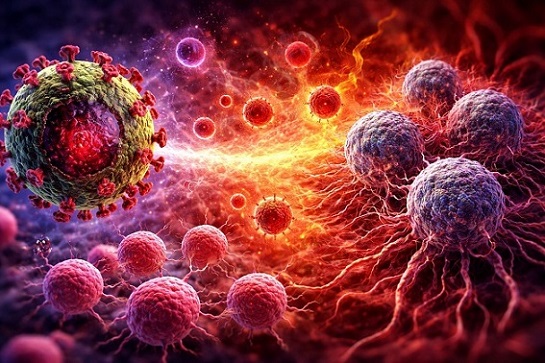 New research reveals how chronic inflammation and oxidative stress connect HIV infection to increased cancer risk
Why Cancer Risk Remains High in HIV Patients
New research reveals how chronic inflammation and oxidative stress connect HIV infection to increased cancer risk
Why Cancer Risk Remains High in HIV Patients
For years, antiretroviral therapy has transformed HIV from a fatal disease into a manageable condition. However, people living with HIV still face a higher risk of developing cancers—especially those not traditionally linked to AIDS.
Researchers from Drexel University College of Medicine and the Drexel University College of Arts and Sciences, Philadelphia, USA, explored why this happens. Their findings suggest that the answer may lie in chronic inflammation and oxidative stress—two processes that continue even when the virus is suppressed.
Cancer types such as lung, liver, breast, and skin cancers are now more commonly seen in HIV patients, and outcomes are often worse compared to those without HIV.
The Role of Oxidative Stress and Inflammation
At the center of this discovery is something called the “redox system,” which controls how cells handle reactive oxygen and nitrogen species—unstable molecules that can damage DNA and cells.
Normally, the body keeps these molecules under control. But in HIV infection, this balance becomes disrupted. The virus triggers both increased production of these harmful molecules and increased defensive responses. Over time, this creates a toxic environment that does not kill cells outright but instead encourages abnormal growth.
This
Medical News report highlights that such an environment can actually help cancer cells survive, grow, and even resist treatments like chemotherapy and radiation.
Key Enzymes That Link HIV and Cancer
The study points to two important enzyme systems—thioredoxin (TXN) and protein disulfide isomerase (PDI)—as critical players in this process.
These enzymes normally help protect cells and maintain proper protein structure. However, in both HIV infection and cancer, they become overactive.
-In HIV, they assist the virus in entering cells and replicating
-In cancer, they help tumor cells grow, spread, and resist treatment
HIV infection and cancer share a “redox and inflammatory environment,” where both conditions reinforce each other and accelerate disease progression.
How HIV Weakens the Body’s Cancer Defenses
Another major factor is the destruction of CD4+ T-cells, which are essential for immune defense.
These cells not only fight infections but also help detect and destroy cancer cells.
Even with treatment, CD4+ levels often do not fully recover. This weakens the body’s ability to control abnormal cell growth, allowing cancers to develop more easily and progress faster.
In addition, HIV proteins continue to circulate in the body and promote inflammation, even when viral levels are undetectable. This ongoing immune activation further fuels the cancer-promoting environment.
Treatment Challenges and New Hope
Interestingly, some existing drugs that target these redox systems are being studied for both HIV and cancer treatment. Early trials have shown limited success, but researchers believe better patient selection and targeted therapies could improve outcomes.
There is also growing interest in combining treatments that address both viral infection and cancer-related oxidative stress at the same time.
Conclusion
The emerging evidence clearly shows that HIV and cancer are more deeply connected than previously thought. The disruption of the body’s redox balance creates a shared biological environment where both diseases can thrive. This discovery not only explains why cancer risk remains elevated in people living with HIV but also opens the door to new treatment strategies that target both conditions simultaneously. By focusing on inflammation, oxidative stress, and key enzyme systems, future therapies may significantly improve survival and quality of life for affected patients.
The study findings were published in the peer reviewed journal: Pathogens.
https://www.mdpi.com/2076-0817/15/4/423
For the latest HIV research, keep on logging to Thailand
Medical News.
Read Also:
https://www.thailandmedical.news/articles/hiv-aids
https://www.thailandmedical.news/articles/cancer




 Share
Share
 Tweet
Tweet
 Share
Share

































