Scientists Warn That Cocaine Use Triggers Cocaine-Related Cerebropathy Which Results in Permanent Brain Damage
Nikhil Prasad Fact checked by:Thailand Medical News Team Mar 15, 2026 6 months, 2 weeks, 6 days, 3 hours, 56 minutes ago
Medical News: A new scientific analysis is raising concern that long-term cocaine use can trigger progressive brain damage in some individuals, potentially leading to lasting neurological and cognitive problems. Researchers reviewing decades of evidence say repeated exposure to the stimulant may gradually weaken the brain’s resilience, opening the door to what they describe as a possible “cocaine-related cerebropathy,” a condition in which multiple biological stresses combine to harm the brain over time.
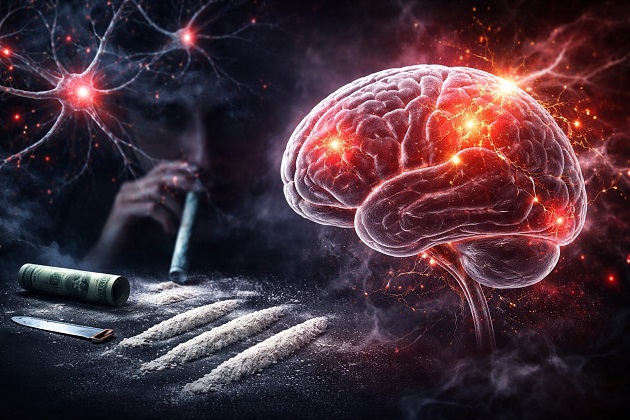 New research suggests repeated cocaine use may gradually weaken brain resilience and lead to long-term neurological harm
The research was conducted by scientists from the University of Insubria in Varese, Italy; the G. De Lisio Institute of Behavioural Sciences in Pisa, Italy; Saint Camillus International University of Health Sciences in Rome, Italy; ASL 5 Liguria NHS in La Spezia, Italy; ASST Sette Laghi–Ospedale di Circolo e Fondazione Macchi in Varese, Italy; ASST Crema in Crema, Italy; Sant’Elia Hospital in Caltanissetta, Italy; and the Grenoble Alpes University Hospital and Grenoble Institute of Neurosciences in France.
A New Way to Look at Cocaine’s Long-Term Effects
Cocaine has long been known to produce intense short-term effects such as euphoria, heightened energy, and strong cravings. These effects happen because the drug blocks transporters that normally remove neurotransmitters like dopamine, serotonin, and norepinephrine from brain synapses. As a result, these chemical messengers build up rapidly and overstimulate key brain circuits linked to reward, motivation, and behavior.
However, scientists now believe the long-term story may be far more complex. Rather than causing only temporary chemical changes, chronic cocaine exposure may slowly alter the brain’s structure and function. According to the researchers, repeated stimulation of brain circuits could eventually trigger harmful processes such as oxidative stress, inflammation, and mitochondrial damage within nerve cells.
This
Medical News report highlights how these processes may gradually reduce the brain’s ability to repair itself or respond to stress.
The Brain Regions Most at Risk
Studies involving brain imaging and laboratory experiments consistently point to several regions that appear particularly vulnerable to chronic cocaine exposure.
These include the prefrontal cortex, which is responsible for decision-making and impulse control; the striatum, a key center for reward processing; the limbic system, which governs emotion and memory; and potentially even parts of the cerebellum, which helps coordinate movement and cognitive timing.
Researchers observed that long-term cocaine use is often linked with reduced grey matter volume in these areas. Such changes may help explain why many long-term users experience problems such as impaired judgment, poor emotional regulation, memory difficulties, a
nd increased impulsivity.
White matter connections that link different brain regions may also become damaged, potentially disrupting communication between important neural networks.
A Multi-Hit Model of Brain Vulnerability
One of the most important ideas emerging from the research is that cocaine alone may not be the only factor behind these changes. Instead, scientists propose a “multi-hit” model in which cocaine interacts with other biological vulnerabilities.
For example, people with conditions such as ADHD, cardiovascular disease, infections like HIV, traumatic brain injuries, or genetic predispositions to neurological disorders may be especially vulnerable. Lifestyle factors such as poor nutrition, irregular sleep, and the use of multiple substances can further amplify the damage.
Under this model, cocaine acts as a powerful stressor that pushes already vulnerable brain systems toward dysfunction.
Signs Of Possible Neuroprogression
In some cases, researchers believe the resulting brain changes could resemble early features seen in neurodegenerative disorders.
Chronic cocaine use has been associated with symptoms including tremors, movement abnormalities, cognitive decline, mood instability, anxiety disorders, and in severe cases, psychotic features. Some researchers also note similarities between certain cocaine-related brain changes and mechanisms involved in diseases like Parkinson’s or Alzheimer’s.
Importantly, scientists emphasize that cocaine use does not automatically lead to neurodegeneration. Many of the observed changes may still be reversible, especially if individuals stop using the drug early and receive proper treatment.
Why More Research Is Needed
Although the evidence linking cocaine to long-term brain vulnerability is growing, scientists caution that much of the current data comes from cross-sectional studies or laboratory models. This makes it difficult to prove exactly how brain damage develops or whether it always progresses over time.
Future studies using long-term brain imaging, biomarkers, and advanced neurological testing will be necessary to determine how these changes evolve and whether sustained abstinence can reverse them.
Conclusion
The emerging research suggests that chronic cocaine exposure may do far more than produce temporary drug highs. By disrupting multiple brain systems simultaneously, long-term stimulant use could gradually erode neural resilience and increase vulnerability to lasting neurological and cognitive problems. While the idea of cocaine-related cerebropathy remains a theoretical framework rather than a confirmed disease, the growing body of evidence underscores the importance of early intervention, sustained abstinence, and deeper scientific investigation into how stimulant drugs affect the brain over time.
The study findings were published in the peer reviewed Journal of Clinical Medicine.
https://www.mdpi.com/2077-0383/15/6/2222
For the latest on brain damage caused by illegal recreational drugs, keep on logging to Thailand
Medical News.
Read Also:
https://www.thailandmedical.news/articles/health-news




 Share
Share
 Tweet
Tweet
 Share
Share

































