COVID-19 Omicron Variants Linked to Dangerous Heart Clots Even Without Blocked Arteries
Nikhil Prasad Fact checked by:Thailand Medical News Team May 17, 2026 4 months, 2 weeks, 5 days, 15 hours, 28 minutes ago
Medical News: Doctors in China are warning that the Omicron variant of COVID-19 and even its various sub-lineages may trigger dangerous blood clots in the heart even in people who do not have the usual blocked arteries associated with heart attacks. The alarming findings come from a new case series involving three patients who developed severe coronary thrombosis after COVID-19 infection despite having little or no underlying atherosclerotic plaque.
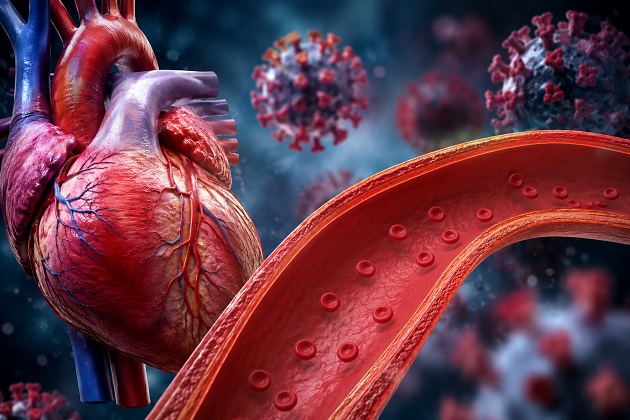 New study shows Omicron COVID-19 infections may trigger deadly heart clots even in patients without blocked arteries
Researchers from the Department of Cardiology at Dalian University Affiliated Zhongshan Hospital and the Department of Cardiology at Fuwai Hospital, Chinese Academy of Medical Science, Peking Union Medical College and the National Center for Cardiovascular Disease in China documented the unusual cases and said the virus appears capable of creating an intense clotting environment inside the body.
COVID-19 Triggered Heart Attacks in Unexpected Patients
The study described three Chinese patients infected with the Omicron variant who later developed acute myocardial infarction, commonly known as a heart attack. What shocked doctors was that coronary angiography showed major blood clots but no significant artery plaque buildup that would normally explain such events.
The first patient was a healthy 33-year-old man who tested positive for COVID-19 and shortly afterward developed chest pain. Doctors discovered a massive clot in a major heart artery known as the left anterior descending artery. However, later scans showed the clot had disappeared and there was no evidence of obstructive coronary artery disease.
The second patient, a 76-year-old man, suffered a much more severe complication. After developing COVID-19 pneumonia and a heart attack, he later experienced a ventricular septal defect, a dangerous tear in the wall separating the heart chambers. He required mechanical support with an intra-aortic balloon pump before eventually undergoing successful heart surgery.
The third patient, a 76-year-old woman with atrial fibrillation, developed a large clot in the right coronary artery along with deep vein thrombosis in her legs. She was treated with powerful blood thinners and later recovered without recurring clotting episodes.
Why Omicron May Cause Dangerous Clotting
Researchers explained that COVID-19 can trigger a “hypercoagulable” state, meaning the blood becomes unusually prone to clotting. Severe inflammation caused by the virus releases immune chemicals called cytokines that damage blood vessels and activate platelets, creating the perfect conditions for clot formation.
The study noted that the virus may directly injure the endothelium, the delicate inner lining of blood vessels. Once damaged, these vessels become inflamed and more likely to produce clots. Scientists also believe the famous “cytokine storm” seen in severe COVID-19 cases further accelerates this process.
This
<
;strong>Medical News report highlights that these complications may occur even in patients without the traditional risk factors for heart disease. The researchers emphasized that both arterial clots, which can cause heart attacks, and venous clots, which can cause pulmonary embolism or deep vein thrombosis, appear to be increasingly linked to severe COVID-19 infections.
Delays in Treatment Increased Risks
The doctors also warned that delayed treatment during the pandemic may have worsened outcomes. Some patients avoided hospitals or experienced delayed interventions because of infection control measures and overloaded healthcare systems.
The second patient’s life-threatening heart wall rupture was believed to be partly caused by delayed presentation and delayed access to emergency cardiac procedures. According to the researchers, many COVID-19 patients with heart attacks experienced longer “door-to-balloon” times, referring to delays before arteries could be reopened.
Blood Thinners and Rapid Intervention Are Critical
The researchers stressed that rapid diagnosis and aggressive treatment are essential for patients with COVID-19 who develop chest pain or symptoms of a heart attack. Treatments included anticoagulants, dual antiplatelet therapy, and in some cases emergency coronary procedures.
Doctors also highlighted the importance of the “Heart Team” approach, where cardiologists, surgeons, and intensive care specialists work together to stabilize patients and decide the best treatment strategy.
Interestingly, follow-up scans in all three patients showed that the large clots eventually resolved with treatment, further suggesting that inflammation-driven clotting rather than chronic artery disease was the main cause.
Conclusions
The findings add to growing evidence that COVID-19 is not simply a respiratory infection but also a major vascular disease capable of attacking the heart and circulatory system in unexpected ways. Even the Omicron variant, often considered milder than earlier strains, may still provoke dangerous clotting complications in vulnerable individuals. The study also reinforces the need for doctors to remain alert for heart attack symptoms in COVID-19 patients, including younger individuals without known cardiovascular disease. Early intervention, proper anticoagulation therapy, and coordinated cardiac care may significantly improve survival and reduce long-term complications.
The study findings were published in the peer reviewed Journal of Medical Case Reports.
https://link.springer.com/article/10.1186/s13256-026-06003-0
For the latest COVID-19 news, keep on logging to Thailand
Medical News.
Read Also:
https://www.thailandmedical.news/articles/coronavirus
https://www.thailandmedical.news/articles/long-covid




 Share
Share
 Tweet
Tweet
 Share
Share