Ebola Outbreak Reaches Major City in DRC as Death Toll Tops 447 and Contact Tracing Collapses
Nikhil Prasad Fact checked by:Thailand Medical News Team Jul 03, 2026 3 months, 2 days, 15 hours, 24 minutes ago
Medical News: Ebola spreads into Kisangani as healthcare systems struggle to contain an escalating epidemic
The Ebola outbreak in the Democratic Republic of the Congo (DRC) has entered a dangerous new stage after the deadly virus reached the major northeastern city of Kisangani while the official death toll climbed to more than 447. Health authorities are warning that the epidemic continues to expand rapidly as contact tracing efforts deteriorate, treatment centers reach capacity, and thousands of suspected infections remain awaiting laboratory confirmation.
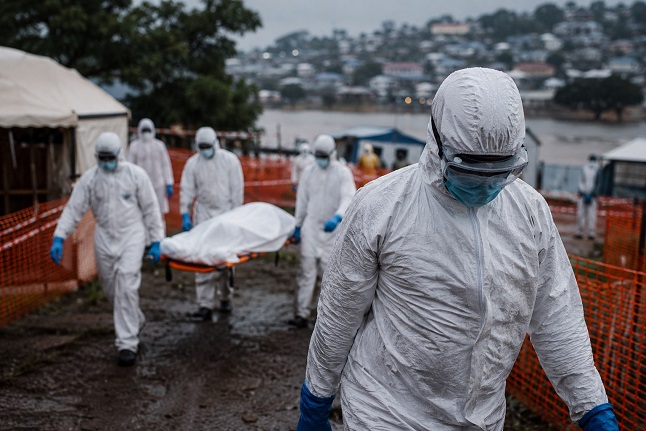 Ebola reaches the major city of Kisangani as deaths exceed 447 and contact tracing efforts collapse across eastern Congo
Since the outbreak was officially declared on May 15, the National Institute of Public Health has confirmed approximately 1,460 Ebola infections, with more than 447 people losing their lives, resulting in a fatality rate of just over 30 percent.
https://x.com/Com_mediasRDC/status/2072816635539235105
However, experts caution that these figures likely underestimate the true scale of the epidemic because many suspected cases have yet to be confirmed through laboratory testing. Numerous patients remain critically ill in intensive care units as healthcare workers struggle to cope with the growing number of severe infections.
This
Medical News report highlights one of the most serious Ebola emergencies the DRC has faced in recent years, with multiple warning signs suggesting that transmission remains far from under control.
First confirmed Ebola case reaches Kisangani
The epicenter of the outbreak remains Ituri Province, where more than 83 percent of all reported Ebola deaths have occurred. However, confirmation of the virus in Kisangani, a city of approximately 1.5 million residents and the capital of Tshopo Province, has significantly raised concerns about further urban transmission.
Health officials confirmed that laboratory testing detected Ebola infection in the body of a 24-year-old pregnant woman. Investigators later determined that her body had been secretly transported by motorcycle from the Nia Nia health zone in Ituri to Kisangani following her death.
The movement of infected bodies represents one of the greatest risks during Ebola outbreaks because the virus remains highly infectious after death. Previous epidemics have repeatedly shown that traditional burial practices involving direct contact with deceased victims can rapidly accelerate community transmission.
Outbreak expands beyond its original epicenter
Although Ituri continues to account for the majority of infections, Ebola has now spread into North Kivu and South Kivu provinces. Imported infections have also been confirmed in both Tshopo and Haut-Uele provinces.
Authorities recently reported one Ebola-related death and another confirmed infection in Haut-Uele.
Health officials revealed that the infected individual had fled from the Nia Nia health zone and remains on the run, complicating efforts to identify contacts and interrupt transmission.
While officials continue to classify these infections as imported rather than evidence of widespread local transmission, several close contacts have already been identified in both provinces, indicating that additional spread remains a significant possibility.
The outbreak also poses regional risks because Ituri borders both Uganda and South Sudan. Uganda has already reported 20 Ebola cases, including two deaths, highlighting the continuing threat of cross-border spread.
Contact tracing system falling apart
Perhaps the greatest concern is the collapse of effective contact tracing.
According to the Africa Centres for Disease Control and Prevention, only about 30 percent of contacts linked to confirmed Ebola patients are currently being identified and monitored. Public health experts estimate that approximately 80 percent of contacts must be successfully traced to effectively interrupt transmission chains.
Africa CDC Director-General Dr. Jean Kaseya warned that most newly confirmed Ebola patients were never previously identified as contacts, demonstrating that widespread community transmission is occurring outside the reach of public health surveillance.
To strengthen the response, Africa CDC is recruiting approximately 20,000 community workers from affected areas. They will receive training in contact tracing, public education, infection prevention, and safe burial practices.
Epidemiologists estimate that every confirmed Ebola patient should generate at least 20 contacts requiring follow-up. In urban settings such as Kisangani, that number may exceed 40 contacts, while infected individuals living in crowded displacement camps may expose well over 120 people.
Displacement camps increase transmission risks
The Bundibugyo strain responsible for the current outbreak has now spread into camps housing nearly one-third of the approximately one million internally displaced people living in eastern Congo.
Years of armed conflict have forced large populations into overcrowded camps where sanitation is poor and healthcare access remains extremely limited. Under these conditions, each infected individual can potentially expose a much larger number of people than in typical community settings, making containment substantially more difficult.
Hospitals approaching breaking point
Healthcare services throughout eastern Congo are coming under enormous pressure.
Africa CDC reports that approximately 95 percent of emergency Ebola treatment beds are already occupied, suggesting that the healthcare system has very little remaining capacity should infections continue increasing.
Many treatment facilities continue experiencing shortages of essential protective equipment, chlorine disinfectants, and other infection-control supplies needed to safely care for patients while protecting healthcare workers.
At the same time, deep mistrust continues to undermine disease control efforts. Some residents deny Ebola exists, while others believe international organizations are profiting from the outbreak, fueling resistance to medical interventions.
Violence further undermines outbreak response
The fragile public health response suffered another major setback after an Ebola treatment center in the Nia Nia health zone was attacked and set on fire.
Seven suspected Ebola patients being isolated at the facility escaped during the attack and have not yet been located. Two bodies believed to belong to Ebola victims were also present before scheduled safe burials.
According to local medical officials, protesters attempted to recover the bodies because they rejected the Ebola diagnosis. Police fired warning shots as tensions escalated, but the treatment center was ultimately burned. One police officer was killed during the confrontation, while two young protesters sustained serious injuries.
Most concerning, the protesters succeeded in removing both bodies, creating what health officials described as a major new risk for further community transmission.
Experimental treatments offer hope
Unlike the Zaire strain of Ebola, the Bundibugyo variant currently driving this outbreak has neither an approved vaccine nor a specific licensed treatment.
Nevertheless, promising clinical trials are now beginning. One study is evaluating remdesivir alone or in combination with the monoclonal antibody MBP-134, which has demonstrated encouraging activity against Bundibugyo Ebola in animal studies.
Another clinical trial will evaluate obeldesivir, an oral form of remdesivir, as post-exposure prophylaxis in approximately 1,200 individuals recently exposed to Ebola. Researchers plan an interim analysis after the first 600 participants, with the possibility of expanding access if the treatment demonstrates effectiveness.
Meanwhile, DRC President Félix Tshisekedi reminded the international community that infectious disease outbreaks do not respect national borders, while South African President Cyril Ramaphosa urged countries not to isolate the DRC through unnecessary travel restrictions and expressed optimism that an effective vaccine targeting the Bundibugyo strain could eventually become available.
Outlook
The current epidemic has become the DRC's 17th recorded Ebola outbreak and is rapidly evolving into one of its most complex public health crises. The combination of a virus reaching a major urban center, an official death toll exceeding 447, thousands of suspected infections still awaiting confirmation, contact tracing capturing only around 30 percent of exposed individuals, treatment facilities operating at nearly full capacity, shortages of critical medical supplies, widespread population displacement, and violent attacks on healthcare facilities has created conditions that strongly favor continued viral spread. While new antiviral therapies and preventive treatments provide cautious optimism, they are unlikely to change the immediate trajectory of the outbreak. Without dramatic improvements in surveillance, community cooperation, rapid case detection, and contact tracing, health experts fear the epidemic could become the largest Ebola outbreak the country has ever experienced.
For the latest Ebola news, keep on logging to Thailand
Medical News.
Read Also:
https://www.thailandmedical.news/articles/ebola




 Share
Share
 Tweet
Tweet
 Share
Share