COVID-19 Spike Protein Can Weaken the Brain’s Protective Barrier Without Infection
Nikhil Prasad Fact checked by:Thailand Medical News Team Aug 30, 2026 25 minutes ago
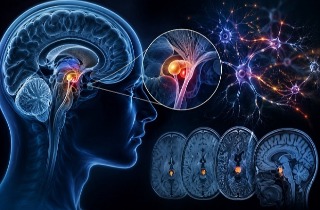
A new laboratory study suggests that SARS-CoV-2 may damage the blood-brain barrier even when the virus does not actively infect the cells forming this crucial protective boundary. The findings could help explain how inflammation contributes to neurological problems during and after COVID-19.
 SARS-CoV-2 spike protein disrupted a human blood-brain barrier model and triggered inflammation even
without productive infection
Researchers Habib Jmii, Ruth Haverty and Nicola F. Fletcher are from the School of Veterinary Medicine and Conway Institute of Biomedical and Biomolecular Research at University College Dublin, Ireland. Keith D. Rochfort is from the School of Biotechnology and Life Sciences Institute at Dublin City University, Ireland.
A Human Model of the Blood-Brain Barrier
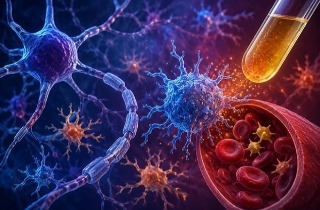
The blood-brain barrier (BBB) tightly controls movement of substances between circulating blood and brain tissue. The researchers created an in vitro human BBB model containing four primary human brain cell types: brain microvascular endothelial cells, astrocytes, pericytes and microglia.
They exposed the model to heat-inactivated SARS-CoV-2 or recombinant spike protein from either the luminal, or “blood,” side and the abluminal, or “brain,” side. Because the virus was inactivated, researchers could investigate whether viral material could trigger barrier damage without productive infection.
This
Thailand Medical News report highlights an important distinction: neurological injury associated with COVID-19 may involve inflammatory responses to viral components rather than requiring direct infection of brain-barrier cells.
Barrier Integrity Fell After Viral Exposure
One of the clearest findings was a progressive reduction in transendothelial electrical resistance, or TEER, a measure of barrier integrity. With 5 micrograms of spike protein, TEER dropped from about 50 Ω·cm² at exposure to 26.5 Ω·cm² after 72 hours. Following apical exposure to heat-inactivated virus, mean TEER fell from 80.88 Ω·cm² to 39.44 Ω·cm².
A complementary permeability test showed significant barrier disruption with 5 micrograms of spike protein, while 1–2 micrograms did not produce a significant effect.
Spike Protein Weakens Critical Cellular Junctions
Spike exposure reduced transcripts for several junction proteins in a concentration- and time-dependent manner. Claudin-5 and ZO-1 were particularly affected, with gene expression falling by more than 50% after 72 hours of luminal treatment with 5 micrograms of spike.
Western blot testing supported these findings, showing concentration-dependent reductions in junction proteins, especially ZO-1. Effects were generally stronger when spike was applied from the blood-facing side.
An Intense Inflammatory Signal Emerged
SARS-CoV-2 exposure acti
vated inflammatory pathways across endothelial cells, microglia, astrocytes and pericytes. In brain microvascular endothelial cells, CXCL10 gene expression increased more than 10,000-fold, while CCL5 rose more than 100-fold. IL-1β, IL-6, TNF-α, NF-κB, ICAM-1 and MMP-9 were also increased.
Protein measurements showed increased MCP-1 and IP-10 after luminal exposure, while IL-1β release increased depending on which side received viral material. The results indicate that exposure from either side can provoke inflammatory responses capable of destabilizing the BBB.
Important Limitations
The experiments involved a laboratory model, not patients. Spike concentrations of 0.5–5 micrograms were higher than circulating spike antigen levels reported in vivo. Researchers also did not directly measure endothelial damage or effects on the coagulation cascade.
Conclusions
The findings suggest that SARS-CoV-2 components can weaken a human BBB model and trigger substantial inflammation without productive infection of barrier-forming cells. This supports the possibility that direct infection and virus-driven immunopathology may jointly contribute to neurological complications, although clinical research is needed to establish how closely these laboratory findings reflect processes occurring in patients.
The study findings were published in the peer reviewed Journal of NeuroVirology.
https://link.springer.com/article/10.1007/s13365-026-01337-3
Read Also:
https://www.thailandmedical.news/articles/coronavirus
https://www.thailandmedical.news/articles/long-covid




 Share
Share
 Tweet
Tweet
 Share
Share