Nikhil Prasad Fact checked by:Thailand Medical News Team Jan 24, 2026 8 months, 1 week, 3 days, 17 hours, 56 minutes ago
Medical News: New scientific findings are drawing attention to a complex and sensitive issue affecting people living with HIV, namely whether COVID-19 mRNA vaccines may influence the hidden HIV reservoir that persists despite long-term treatment. A recently published scientific analysis has carefully examined laboratory experiments, patient-derived immune cells, and real-world clinical observations to explore how the SARS-CoV-2 Spike protein and vaccine mRNA might affect dormant HIV within the body.
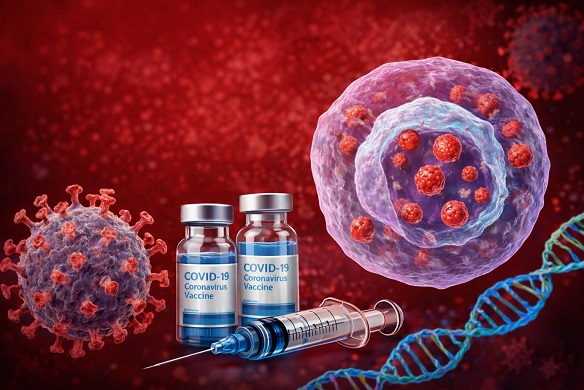 New research suggests COVID-19 mRNA vaccines may interact with dormant HIV in treated patients
Understanding the Hidden HIV Reservoir
New research suggests COVID-19 mRNA vaccines may interact with dormant HIV in treated patients
Understanding the Hidden HIV Reservoir
Antiretroviral therapy has allowed millions of people living with HIV to enjoy long and productive lives. Even so, HIV is never fully eradicated. Small numbers of infected immune cells carry silent HIV genetic material embedded in their DNA. This collection of dormant virus, known as the HIV reservoir, is normally kept under tight control by medication. However, under certain biological triggers, these silent viruses can become active again.
Why COVID-19 Vaccines Raise New Questions
Unlike traditional vaccines, mRNA COVID-19 vaccines work by instructing human cells to produce the SARS-CoV-2 Spike protein. Research has shown that this Spike protein is biologically active and can persist in blood, lymph nodes, and immune cells for extended periods. These same tissues are also known hiding places for latent HIV, raising questions about possible overlap and interaction.
Laboratory Evidence Signals Reactivation Risk
Several laboratory and ex vivo studies have demonstrated that exposure to either the Spike protein or COVID-19 mRNA vaccines can trigger HIV reactivation in latently infected immune cells. These effects were observed in different immune cell types, including CD4 T cells and macrophages. Importantly, HIV reactivation occurred even without full immune activation, suggesting a more direct molecular effect rather than general inflammation.
Biological Mechanisms Behind the Findings
Researchers found that vaccine mRNA and Spike protein can activate specific cellular signaling pathways linked to inflammation and viral sensing. These pathways can unlock the genetic controls that normally keep HIV silent. In some experiments, Spike protein was shown to interact with internal cell machinery that regulates gene expression, leading directly to renewed HIV activity.
Real World Patient Observations
Clinical studies involving vaccinated people living with HIV have produced mixed outcomes. Most individuals with fully suppressed HIV levels experienced no lasting increase in viral activity. However, some patients with incomplete viral suppression or lower immune cell counts showed temporary increases in HIV activity or signs of reservoir expansion. Differences in testing methods and timing may explain why not all studies detected the same effects.
Research Institutions Involved
The analysis was conducted by scientists from the National Center for Global Health at the Istituto Superio
re di Sanità in Rome Italy, drawing on data from multiple international research teams across Europe and North America. This
Medical News report reflects a comprehensive review of both experimental and clinical evidence
Conclusions
Taken together, the evidence suggests that COVID-19 mRNA vaccines may influence HIV latency under specific biological conditions, particularly in people with ongoing viral activity or weakened immune control. While current data do not indicate that vaccination is unsafe for people living with HIV, the findings highlight the importance of careful monitoring and further research.
Understanding these interactions will help guide safer vaccination strategies and long-term care for vulnerable populations.
The study findings were published in the peer reviewed journal: Viruses.
https://www.mdpi.com/1999-4915/18/2/154
For the latest on COVID-19 Vaccines, keep on logging to Thailand
Medical News.
Read Also:
https://www.thailandmedical.news/articles/vaccine-news
https://www.thailandmedical.news/articles/coronavirus




 Share
Share
 Tweet
Tweet
 Share
Share

































