Nikhil Prasad Fact checked by:Thailand Medical News Jun 19, 2026 3 months, 2 weeks, 22 hours, 16 minutes ago
Medical News: Cervical cancer remains one of the most preventable forms of cancer, yet hundreds of thousands of women worldwide continue to be diagnosed every year. A new international analysis now suggests that simple self-collected vaginal swabs and urine samples could dramatically improve screening rates by making testing easier, more private, and more accessible.
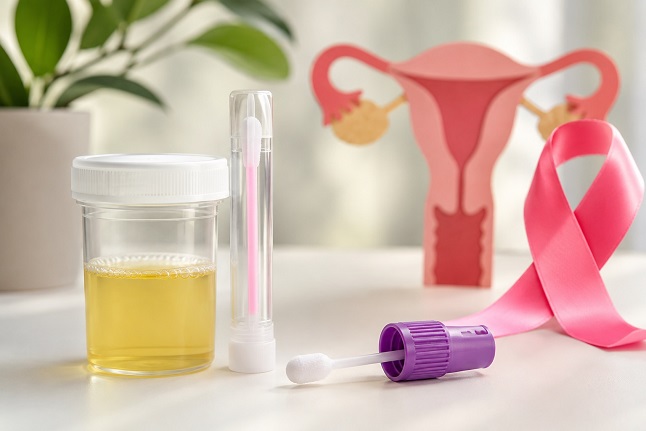 Large international review finds self-collected HPV tests can approach the accuracy of clinic-based cervical cancer screening
Researchers from the School of Medicine, Nazarbayev University, Kazakhstan; the Department of Surgery, School of Medicine, Nazarbayev University, Kazakhstan; and the Clinical Academic Department of Women’s Health, Corporate Fund University Medical Center, Kazakhstan, conducted a large systematic review and meta-analysis to compare the accuracy of self-collected samples with traditional clinician-collected cervical samples for detecting high-risk human papillomavirus (HPV), the virus responsible for most cervical cancer cases.
Why Self-Sampling Matters
Many women avoid cervical cancer screening because of embarrassment, discomfort, cultural stigma, limited access to healthcare facilities, or a lack of trained medical professionals. These barriers are especially common in low- and middle-income countries, where most cervical cancer deaths occur.
Self-sampling offers a potential solution. Instead of undergoing a clinic-based examination, women can collect either a vaginal swab or a first-void urine sample themselves and submit it for HPV testing.
What the Researchers Examined
The researchers analyzed 22 studies published between 2015 and 2025 involving more than 9,000 participants from countries including Sweden, Japan, South Korea, China, Brazil, Belgium, Italy, Denmark, Uzbekistan, and the United Kingdom.
The team compared self-collected samples with clinician-collected cervical samples and evaluated how accurately each method detected high-risk HPV and precancerous cervical lesions.
Vaginal Self-Sampling Delivers Strong Results
The findings showed that vaginal self-sampling performed remarkably well. The pooled sensitivity, which measures how effectively a test identifies true cases, reached 91.3 percent. The pooled specificity, which reflects how well a test avoids false positives, was 86.9 percent.
In direct comparisons, vaginal self-sampling achieved an even higher sensitivity of 95.6 percent, demonstrating that it closely matches the performance of samples collected by healthcare professionals.
Researchers noted that vaginal self-sampling consistently showed strong agreement with clinician-collected samples across multiple studies and populations.
Urine Testing Also Shows Promise
Urine-based testing was slightly less accurate but still delivered impressive results. The pooled sensitivity for urine self-sampling was 86.9 percent, while specificity reached 79.5 percent. Although urine testing produced somewhat more false-negative results than vaginal sampling, it remained a valuable screening
option.
For women unwilling or unable to undergo pelvic examinations, urine testing may provide a practical alternative that could significantly increase participation in screening programs.
This
Medical News report highlights that urine collection may be particularly useful in underserved communities where privacy concerns and healthcare access challenges continue to limit participation in cervical cancer prevention efforts.
Technology and Storage Conditions Matter
The study also revealed that testing technology plays an important role in accuracy.
DNA-based PCR tests consistently outperformed mRNA-based testing methods. Researchers found that mRNA-based assays showed lower sensitivity, meaning they were more likely to miss infections.
Another important finding was that urine samples stored at room temperature tended to show reduced sensitivity. This suggests that proper sample handling and transport procedures are essential for achieving reliable results.
A Potential Shift in Global Screening
The researchers concluded that both vaginal self-sampling and urine self-sampling are effective tools for detecting high-risk HPV. Vaginal self-sampling demonstrated the strongest overall performance and came closest to matching traditional clinician-collected samples. However, urine testing remains an important non-invasive option that could help reach women who otherwise might never participate in screening programs. Expanding access to these self-collection methods could improve early detection rates, reduce healthcare barriers, and ultimately help lower cervical cancer incidence and mortality worldwide, especially in regions where screening coverage remains inadequate.
The study findings were published in the peer reviewed journal: Viruses.
https://www.mdpi.com/1999-4915/18/6/681
For the latest on HPV, keep on logging to Thailand
Medical News.
Read Also:
https://www.thailandmedical.news/articles/stds




 Share
Share
 Tweet
Tweet
 Share
Share

































