Nikhil Prasad Fact checked by:Thailand Medical News Team Jun 15, 2026 3 months, 2 weeks, 4 days, 22 hours, 38 minutes ago
Medical News: For generations, chrysanthemum tea has been enjoyed across Asia as a soothing beverage believed to offer a variety of health benefits. Rich in plant compounds with antioxidant and anti-inflammatory properties, it is often viewed as a natural aid for wellness. However, a new scientific review is raising important concerns that some compounds found in chrysanthemum may have unexpected effects during pregnancy, particularly on the development of a baby's brain and spinal cord.
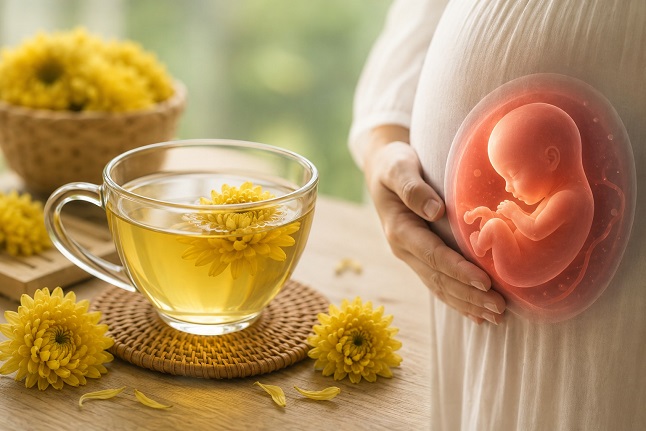 New research suggests that compounds in chrysanthemum may have both protective and potentially harmful effects on
early fetal brain and spinal cord development depending on dose and exposure
Scientists Investigate Chrysanthemum’s Effects on Early Fetal Development
Researchers from Lyuliang University, The First Hospital of Shanxi Medical University, Shanxi Medical University, The First Hospital of Shanxi Medical University Liver Transplant Center, Shanxi Second People’s Hospital, Lvliang People’s Hospital, and the Capital Institute of Pediatrics in Beijing conducted a comprehensive review examining how chrysanthemum-derived compounds may influence neural tube development.
The neural tube is one of the earliest structures formed during pregnancy and eventually develops into the brain and spinal cord. Failure of this structure to close properly can lead to severe birth defects known as neural tube defects, including spina bifida, anencephaly, and encephalocele. While genetic factors and folic acid deficiency have long been recognized as major contributors, researchers are increasingly investigating the role of environmental exposures and natural compounds in these developmental abnormalities.
A Plant Packed with Powerful Bioactive Compounds
Chrysanthemum contains a diverse range of biologically active substances, including flavonoids, polyphenols, terpenoids, volatile oils, phenylpropanoids, and polysaccharides. Many of these compounds have attracted scientific interest because of their potential health-promoting properties.
The review highlighted compounds such as chlorogenic acid, luteolin derivatives, quercetin, and eriodictyol-7-O-β-D-glucoside, which appear capable of reducing inflammation and oxidative stress. These effects occur through several critical biological pathways including NF-κB, Nrf2/HO-1, MAPK, PI3K/Akt, and Wnt/β-catenin signaling.
Oxidative stress and excessive inflammation are known to interfere with normal embryonic development. By reducing these harmful processes, some chrysanthemum compounds could theoretically support healthy neural tube formation during the earliest stages of pregnancy.
Potential Benefits for Maternal Health
The researchers also noted that chrysanthemum compounds may indirectly benefit fetal development by improving maternal metabolic health. Chrysanthemum has demonstrated lipid-lowering, anti-inflammatory, and cardiovascular-supportive properties in various studies.
Maternal obesity is recognized as a significant risk factor for neural tube defects because it can alter metabolism, increase inf
lammation, and negatively affect placental function. By improving metabolic health and reducing inflammation, chrysanthemum compounds could potentially create a healthier environment for fetal development.
Additionally, chrysanthemum polysaccharides have been shown to influence immune function, enhancing immune balance and cytokine regulation. Since immune disturbances have been linked to neural tube defects, these effects may also play a supportive role in normal embryonic development.
The Hidden Dangers Scientists Are Warning About
Despite these potential benefits, the review revealed a more troubling side to chrysanthemum biology.
The researchers found that natural pyrethrins, insecticidal compounds produced by chrysanthemum plants, can trigger oxidative stress, DNA damage, liver toxicity, and neurological abnormalities in experimental models. These compounds have been shown to increase the production of harmful reactive oxygen species, disrupt mitochondrial function, activate cell death pathways, and damage cellular structures.
Particularly concerning was evidence that pyrethrins can interfere with pathways involved in normal neurodevelopment. Experimental studies also linked pyrethrin exposure to developmental abnormalities and disruptions in genes involved in nervous system formation.
This
Medical News report highlights another important concern. Certain flavonoids found in chrysanthemum can readily cross the placenta. While these compounds may provide benefits at lower levels, high doses may act as pro-oxidants, disrupt hormone metabolism, trigger DNA damage, and potentially interfere with fetal development.
Why Dose May Be the Deciding Factor
A key conclusion from the review is that chrysanthemum appears to function as a biological "double-edged sword."
At low levels, such as those commonly obtained through dietary intake and moderate tea consumption, many chrysanthemum compounds may help reduce inflammation and oxidative stress. However, at higher concentrations, some of the same compounds may produce the opposite effect, increasing cellular stress and toxicity.
Researchers proposed that the impact of chrysanthemum depends heavily on dosage, timing of exposure, individual susceptibility, and the specific compounds involved. Vulnerable populations, particularly pregnant women, may respond differently than the general population.
Conclusion
The findings reveal that chrysanthemum is far more complex than previously believed. While many of its compounds demonstrate antioxidant, anti-inflammatory, immune-supportive, and neuroprotective properties, others may pose risks under certain conditions, especially during critical stages of fetal development. Importantly, the researchers stress that there is currently no direct evidence showing that ordinary chrysanthemum tea consumption causes neural tube defects in humans. However, major knowledge gaps remain regarding pregnancy exposure, placental transfer, fetal accumulation, and long-term developmental effects. Until more definitive studies are completed, pregnant women may wish to exercise caution with excessive consumption of chrysanthemum-based products. The review ultimately underscores the need for rigorous safety evaluations of herbal remedies during pregnancy, even those traditionally regarded as safe and beneficial.
The study findings were published in the peer reviewed journal: Frontiers in Cell and Developmental Biology.
https://www.frontiersin.org/journals/cell-and-developmental-biology/articles/10.3389/fcell.2026.1804458/full
For the latest on herbs and phytochemicals, keep on logging to Thailand
Medical News.
Read Also:
https://www.thailandmedical.news/articles/herbs-and-phytochemicals




 Share
Share
 Tweet
Tweet
 Share
Share

































