French Study Shows That Long-Term Exposure to Air Pollution Raises COVID-19 Infection Risk
Nikhil Prasad Fact checked by:Thailand Medical News Team Feb 02, 2026 8 months, 1 day, 23 hours, 6 minutes ago
Medical News: Long-term exposure to common air pollutants may have played a much bigger role in COVID-19 infections and illness than previously understood, according to a major population study from France that tracked tens of thousands of adults before and during the pandemic.
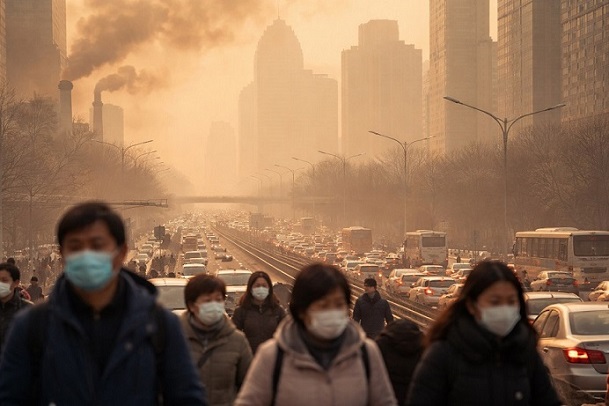 Long-term exposure to polluted air significantly increased both COVID infection and disease risk in a large
French population study.
This
Medical News report is based on data from the French CONSTANCES cohort, one of Europe’s largest long-running population health studies, and provides strong individual-level evidence linking polluted air to both SARS-CoV-2 infection and the development of COVID-19 disease.
Large French Cohort Offers Rare Individual Evidence
The study followed 33,974 adults enrolled in the CONSTANCES cohort across mainland France. Participants underwent blood antibody testing between May and November 2020 to confirm past SARS-CoV-2 infection, while detailed questionnaires captured COVID-19 diagnoses, symptoms, lifestyle habits, and existing medical conditions.
Researchers estimated long-term exposure to three major air pollutants at each participant’s residential address in 2019: fine particulate matter known as PM2.5, nitrogen dioxide, and black carbon. These pollutants are commonly produced by traffic, industrial activity, and fossil fuel combustion.
Higher Pollution Linked to More Infections
The findings showed that individuals living in areas with higher levels of PM2.5 and nitrogen dioxide faced a significantly higher likelihood of becoming infected with SARS-CoV-2. An increase in PM2.5 exposure was associated with a 28 percent higher infection risk, while nitrogen dioxide exposure raised infection risk by 21 percent.
Importantly, these associations remained strong even after adjusting for age, smoking, income, education, population density, and health behaviors, strengthening confidence that pollution itself played an independent role.
Pollution Also Increased COVID Disease Risk
The study revealed even stronger effects when examining COVID-19 disease rather than infection alone. Participants exposed to higher PM2.5 and nitrogen dioxide levels had roughly a 40 percent greater risk of developing COVID-19 illness.
Black carbon exposure was also linked to higher COVID-19 disease risk, although further analysis suggested this effect may be driven by its close relationship with overall particulate pollution rather than black carbon alone.
Vulnerable Groups Faced Greater Harm
Men, adults over 60, and individuals with existing chronic diseases such as asthma, hypertension, diabetes, or kidney disease were especially vulnerable. Among people with chronic illnesses, pollution exposure nearly tripled the risk of developing COVID-19 disease in some analyses.
Researchers believe p
olluted air may weaken lung defenses, impair immune responses, and increase inflammation, making viral infection more likely and symptoms more severe.
Institutions Behind the Research
The study was conducted by researchers from Univ Rennes Inserm EHESP Irset France, CHU Rennes France, Université Paris Cité and Université Paris-Saclay France, INSERM Epidemiological Population Cohorts Unit France, Swiss Tropical and Public Health Institute Switzerland, University of Basel Switzerland, Sorbonne Université Inserm France, and Institut Pierre-Louis d’Épidémiologie et de Santé Publique France.
Conclusion
These findings provide some of the strongest individual-level evidence to date that long-term air pollution exposure increases both the risk of catching SARS-CoV-2 and developing COVID-19 disease. The results suggest that reducing air pollution could help limit the spread and severity of future respiratory pandemics, especially among older adults and those with chronic health conditions.
The study findings were published in the peer reviewed journal: Heliyon.
https://www.sciencedirect.com/science/article/pii/S240584402600068X
For the latest COVID-19 News, keep on logging to Thailand
Medical News.
Read Also:
https://www.thailandmedical.news/articles/coronavirus
https://www.thailandmedical.news/articles/long-covid




 Share
Share
 Tweet
Tweet
 Share
Share

































