Nikhil Prasad Fact checked by:Thailand Medical News Team Apr 16, 2026 3 months, 2 weeks, 2 days, 16 hours, 52 minutes ago
Medical News: A growing body of research is shedding light on a hidden factor that could be quietly fueling the global rise of type 2 diabetes - chronic metabolic acidosis, a subtle but persistent imbalance in the body’s acid–base system that may be far more influential than previously thought.
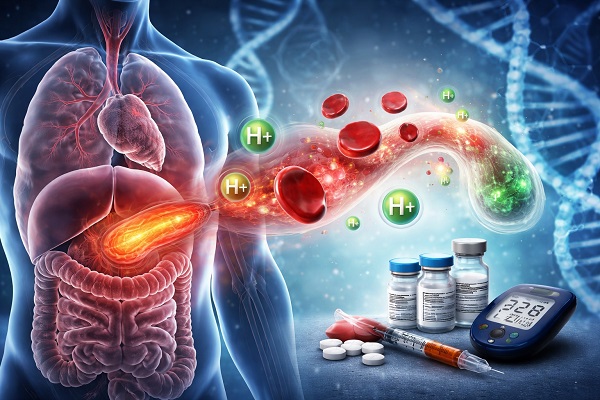 Chronic low-level acidity in the body may be a hidden driver behind diabetes and its complications
A Hidden Imbalance with Big Consequences
Chronic low-level acidity in the body may be a hidden driver behind diabetes and its complications
A Hidden Imbalance with Big Consequences
Type 2 diabetes has long been understood as a condition driven by insulin resistance and high blood sugar levels. However, scientists are now revisiting this traditional view. New insights suggest that a mild but chronic increase in acidity inside the body may play a central role in how the disease develops and progresses.
Researchers from the Department of Medical Biochemistry, College of Medicine and Health Sciences, Arabian Gulf University in Bahrain, and the Centre for Cardiovascular Science, Queens Medical Research Institute, University of Edinburgh in the United Kingdom, conducted an extensive review examining how chronic metabolic acidosis affects the body at multiple levels - from tiny cellular processes to major organ systems.
How Acidity Disrupts the Body
The human body tightly regulates pH levels to ensure normal function. Even slight shifts can disrupt enzymes, hormones, and cellular activity. The researchers found that chronic metabolic acidosis interferes with critical biological processes, including energy production, protein synthesis, and cell survival.
At the cellular level, increased acidity alters how cells grow, divide, and die. It can trigger premature cell death, especially in insulin-producing pancreatic cells. This contributes directly to reduced insulin levels over time.
At the molecular level, acidity changes enzyme behavior. Many enzymes responsible for breaking down glucose work best within a narrow pH range. When acidity rises, their efficiency drops, leading to poor glucose handling and worsening insulin resistance.
A Vicious Cycle with Diabetes
One of the most striking findings is the possibility of a self-reinforcing cycle. Chronic metabolic acidosis can worsen insulin resistance, while insulin resistance itself may increase acid production in the body. This creates a loop where both conditions continuously fuel each other.
This
Medical News report highlights that disrupted cellular pathways - particularly those involved in glucose transport - are highly sensitive to pH changes. When acidity increases, key signaling systems fail, reducing the ability of cells to absorb glucose efficiently.
Impact Across Major Organs
The effects are not limited to blood sugar control. The review reveals that chronic metabolic acidosis mirrors many complications seen in diabetes across multiple organs.
In muscles, increased acidity reduces energy production and contributes to
weakness and muscle loss. In the liver, it disrupts glucose and fat metabolism, promoting fatty liver disease. In the kidneys, it alters urine chemistry, increasing the risk of kidney stones.
The brain is also affected. Changes in pH can influence nerve signaling and are linked to cognitive decline, memory problems, and even increased risk of neurodegenerative diseases.
Even the gut is impacted. Altered acidity can disrupt gut bacteria, digestion, and drug absorption, potentially affecting how medications work in diabetic patients.
Early Signs and Therapeutic Potential
Interestingly, early-stage diabetes may involve slight increases in cellular alkalinity in certain tissues, such as pancreatic cells, before shifting toward widespread acidity as the disease progresses. This dynamic imbalance may explain why symptoms and complications evolve over time.
Preliminary evidence suggests that correcting acid - base imbalance - through dietary changes or targeted therapies - could improve metabolic health. While still under investigation, these findings open new avenues for treatment strategies focused on restoring pH balance.
Conclusion
The emerging evidence positions chronic metabolic acidosis as a potential missing link in understanding type 2 diabetes. Rather than being just a consequence of the disease, it may actively drive its onset and progression. By disrupting cellular function, enzyme activity, and organ health, persistent acidity creates conditions that favor insulin resistance and long-term complications. Addressing this imbalance could represent a promising shift in how diabetes is managed in the future, offering hope for more effective prevention and treatment strategies.
The study findings were published in the peer reviewed journal: Biomedicines.
https://www.mdpi.com/2227-9059/14/4/901
For the latest on acidosis and diabetes, keep on logging to Thailand
Medical News.
Read Also:
https://www.thailandmedical.news/articles/diabetes




 Share
Share
 Tweet
Tweet
 Share
Share