Thailand Medical Officials Concerned About Chickenpox Outbreak in University Campus
Nikhil Prasad Fact checked by:Thailand Medical News Team Mar 05, 2026 6 months, 4 weeks, 2 days, 2 hours, 26 minutes ago
Thailand Medical: Urgent Investigation Launched After Campus Moves Classes Online
Health authorities in Thailand are closely monitoring a chickenpox outbreak at Thammasat University’s Rangsit campus after infections were detected among students, prompting a temporary shift to online learning and a rapid public health investigation.
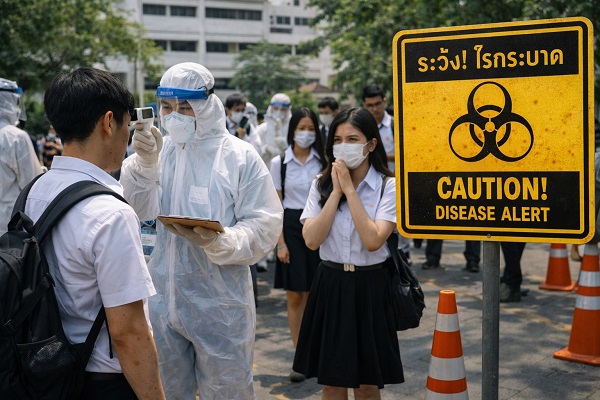 Chickenpox cluster at a major Thai university triggers urgent investigation and online learning measures
Image Credit: StockShots
The country’s Department of Disease Control (DDC) initiated an emergency response after the university announced that classes at two faculties would move fully online from March 3 to March 6, 2026, in order to limit potential transmission among students and staff.
DDC Director-General Dr. Montien Kanasawat confirmed that the agency was alerted to the situation on March 3 and immediately deployed a disease investigation team to the campus the following day. The investigation is being conducted in coordination with the Office of Disease Prevention and Control Region 4 and the Pathum Thani Provincial Public Health Office.
Thailand Medical officials are now working to determine the source of the outbreak, identify close contacts of infected individuals, and prevent further spread within the campus community and beyond.
Mid-February Student Camp Identified as Possible Source
Initial epidemiological findings suggest that a student camp held between February 13 and 16 may have been a key exposure event linked to the outbreak.
According to investigators, approximately 66 participants attended the camp, including around 60 school students who traveled from several provinces across Thailand. During the event, one participant reportedly developed symptoms consistent with chickenpox and was asked to leave. However, the camp activities continued after the individual departed.
In the weeks that followed, infections began appearing among attendees. Authorities have now confirmed that at least 13 university students and 10 visiting school pupils developed symptoms and entered the medical treatment system.
Public health officials are currently tracing the school students who attended the camp and have since returned to their home provinces. Provincial public health offices are being alerted so that local surveillance and containment measures can be implemented where necessary.
Authorities Stress Need for Better Health Awareness
Health officials say the incident highlights a broader need for stronger public awareness about infectious disease prevention, particularly in settings where people gather in close contact such as camps, dormitories, and universities.
Dr. Montien emphasized that removing an ill individual from a group setting may not be enough to stop an outbreak once exposure has already occurred.
Chickenpox, also known as varicella, is highly con
tagious and can spread rapidly among individuals who have never been infected or vaccinated. Once the virus enters a group environment, multiple people may already be incubating the disease before the first case becomes apparent.
Despite the current campus outbreak, authorities say national trends remain stable. Thailand recorded approximately 10,000 chickenpox cases nationwide during the first two months of 2026, a figure that is similar to the same period in 2025.
Understanding How Chickenpox Spreads
Medical experts note that chickenpox spreads primarily through respiratory droplets produced when infected individuals cough or sneeze. Transmission can also occur through direct contact with fluid from the characteristic skin blisters or by sharing personal items contaminated with secretions.
Dr. Pairoj Surattanawanich, deputy director-general of the Department of Medical Services, explained that the virus can also be transmitted from individuals suffering from shingles, which is caused by reactivation of the same varicella-zoster virus.
The incubation period typically ranges from two to three weeks. Symptoms often begin with fatigue, fever, and malaise before the appearance of a distinctive rash. The rash starts as flat red spots that quickly evolve into fluid-filled blisters before becoming cloudy and eventually forming crusted scabs.
Lesions most commonly appear on the face, chest, and back, but they may also develop inside the mouth or on other parts of the body.
Children usually experience milder symptoms, often presenting with a low-grade fever and mild discomfort. Adults, however, frequently develop higher fevers and more severe flu-like symptoms. Painful oral blisters may also develop in adult patients.
Potential Complications and Medical Concerns
Although chickenpox is often considered a routine childhood illness, medical experts warn that complications can occur, particularly in vulnerable populations.
Secondary bacterial infections of the skin are among the most common complications and may lead to permanent scarring. In individuals with weakened immune systems, the virus can spread beyond the skin and affect organs such as the lungs, liver, or brain.
Pregnant women who become infected during the early months of pregnancy may face additional risks, as the virus can potentially affect fetal development.
This Medical News report notes that the infectious period begins roughly 24 hours before the appearance of the rash and continues until all blisters have dried and formed scabs, typically lasting six to seven days.
Treatment Advice and Preventive Measures
Dermatology specialist Dr. Sutsaranya Pruenglamphu from Thailand’s Institute of Dermatology said that most mild cases of chickenpox can be managed at home with supportive care.
Patients are advised to rest, drink plenty of fluids, and use paracetamol to reduce fever. Aspirin should be avoided due to the risk of severe complications affecting the brain and liver. Anti-itch medications may also help reduce discomfort.
However, individuals experiencing severe symptoms—including high fever, extensive rashes, breathing difficulties, seizures, or unusual drowsiness—should seek medical attention immediately.
Doctors also recommend avoiding scratching or picking at blisters, which can cause infection and permanent scarring.
Public Health Outlook and Ongoing Monitoring
The outbreak at Thammasat University serves as an important reminder that common viral infections can still disrupt educational environments and require rapid public health responses. While chickenpox is often viewed as a routine illness, clusters such as this demonstrate how quickly the virus can spread within groups that live, study, or participate in activities together. Continued monitoring, timely reporting of symptoms, proper isolation of infected individuals, and improved awareness of vaccination options remain essential strategies for reducing future outbreaks and protecting vulnerable populations.
For the latest on the chickenpox outbreak at Thammasat University, keep on logging to
Thailand Medical News.




 Share
Share
 Tweet
Tweet
 Share
Share

































