Nikhil Prasad Fact checked by:Thailand Medical News Team Jun 11, 2026 3 months, 3 weeks, 2 days, 4 hours, 10 minutes ago
Medical News: A new scientific study has found that a unique combination of donkey milk, bovine colostrum, and royal jelly may significantly strengthen important parts of the immune system while maintaining overall health and metabolic balance. Researchers discovered that this natural blend enhanced both antibody production and innate immune defenses in an animal model, suggesting a promising future for functional nutrition strategies aimed at supporting immunity.
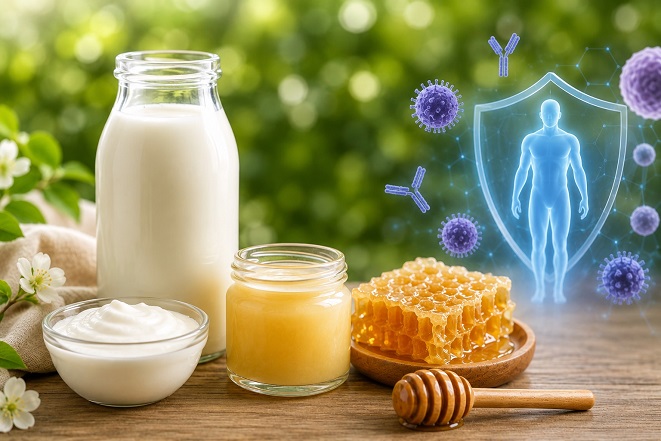 Natural combination of donkey milk, bovine colostrum, and royal jelly significantly enhanced immune responses while maintaining metabolic safety in a controlled study
Scientists Investigate a Powerful Natural Combination
Natural combination of donkey milk, bovine colostrum, and royal jelly significantly enhanced immune responses while maintaining metabolic safety in a controlled study
Scientists Investigate a Powerful Natural Combination
The study, conducted by researchers from the University of Life Sciences “King Mihai I” from Timisoara, Romania, the Faculty of Veterinary Medicine at the same university, the Horia Cernescu Research Unit, the Faculty of Bioengineering of Animal Resources, and the University of Agronomic Sciences and Veterinary Medicine of Bucharest, explored whether combining three well-known natural ingredients could produce stronger immune benefits than using them individually.
Donkey milk is naturally rich in lysozyme, an antimicrobial enzyme that helps defend the body against harmful microbes. Bovine colostrum, the first milk produced after birth, contains high levels of antibodies and immune-supporting compounds. Royal jelly, produced by honeybees, contains unique proteins and fatty acids known for their anti-inflammatory and immune-regulating properties.
How the Study Was Conducted
Researchers used 60 healthy female rabbits and monitored them over six weeks. The animals were divided into four groups. One group received only vaccination, another received only the nutritional supplement, a third received both vaccination and supplementation simultaneously, while a fourth group was given the supplement before vaccination and continued receiving it afterward. This design allowed scientists to determine whether the timing of supplementation influenced immune responses.
Throughout the study, blood samples were collected regularly to measure immunoglobulins, which are antibodies produced by the immune system, and lysozyme, an important component of innate immunity. Researchers also monitored a wide range of biochemical and blood parameters to ensure the supplement did not cause unwanted side effects.
Stronger Antibody Responses Observed
One of the most striking findings involved antibody production. Rabbits that received the nutritional supplement before vaccination and continued supplementation afterward showed the strongest antibody response by the end of the study. Their immunoglobulin levels reached 26.00 mg/mL, significantly higher than those seen in the vaccinated-only group.
Even rabbits that received the supplement without vaccination experienced a gradual rise in antibody levels. This suggests that the natural formulation itself may stimulate important aspects of immune function, even in the absence of an immune challenge. Researchers noted that the timing of supplementation appeared to play a crucial role, with pre-conditioning before vaccination producin
g the greatest benefits.
Innate Immunity Also Receives a Boost
The study also revealed impressive effects on lysozyme levels, a key marker of innate immunity. Lysozyme serves as one of the body's first lines of defense by helping destroy bacteria and supporting healthy immune signaling.
Animals receiving the supplement demonstrated sustained increases in lysozyme concentrations over time. The strongest and most persistent elevations were observed in rabbits receiving both vaccination and supplementation. Researchers found highly significant interactions between treatment and time, indicating that the supplement actively influenced immune dynamics rather than simply producing temporary changes.
Importantly, scientists discovered a significant relationship between rising antibody levels and increasing lysozyme concentrations. This suggests that the supplement may help coordinate both adaptive immunity, which develops specific defenses against threats, and innate immunity, which provides rapid protection. This
Medical News report highlights how the two arms of the immune system appeared to work together more effectively in supplemented animals.
No Evidence of Toxicity or Harm
A major concern with any immune-enhancing intervention is whether it could place stress on the liver, kidneys, blood cells, or other organs. Encouragingly, the researchers found no evidence of organ toxicity.
Comprehensive biochemical analyses showed that liver function, kidney function, lipid metabolism, and protein metabolism remained within normal physiological ranges. Blood tests also revealed stable red blood cell counts, hemoglobin levels, and inflammatory markers. Although some immune-related blood cell changes were observed, they remained within healthy limits and did not indicate harmful inflammation.
A New Direction for Immune Nutrition
The researchers believe their findings support the idea that carefully designed combinations of natural bioactive ingredients can influence immune responses in a coordinated and safe manner. Rather than simply boosting a single immune marker, the formulation appeared to strengthen multiple immune pathways while maintaining overall physiological stability.
Conclusion
The study provides compelling evidence that a blend of donkey milk, bovine colostrum, and royal jelly can enhance both innate and adaptive immune responses in a controlled animal model. Particularly noteworthy was the finding that supplementation before immune challenge produced the strongest antibody response, suggesting that nutritional pre-conditioning may be an effective strategy for improving immune readiness. Equally important, the supplement achieved these benefits without signs of liver damage, kidney stress, blood abnormalities, or excessive inflammation. While the results cannot yet be directly applied to humans, they offer an important foundation for future clinical research investigating whether similar immunonutritional approaches can help support immune resilience and overall health in people.
The study findings were published in the peer reviewed journal: Nutrients.
https://www.mdpi.com/2072-6643/18/12/1872
For the latest research in immunology, keep on logging to Thailand
Medical News.
Read Also:
https://www.thailandmedical.news/articles/immunology




 Share
Share
 Tweet
Tweet
 Share
Share

































