Nikhil Prasad Fact checked by:Thailand Medical News Team May 17, 2026 4 months, 2 weeks, 5 days, 12 hours, 38 minutes ago
Medical News: Suicide continues to be one of the most serious global public health concerns, with more than 700,000 people dying from suicide every year worldwide. While emotional trauma, depression, anxiety, and social stress are known contributors, scientists are now uncovering evidence that biological damage inside brain cells may also play a major role. A new scientific review suggests that disrupted protein regulation in the brain could contribute to suicidal behavior in ways that resemble diseases such as Alzheimer’s and Parkinson’s disease.
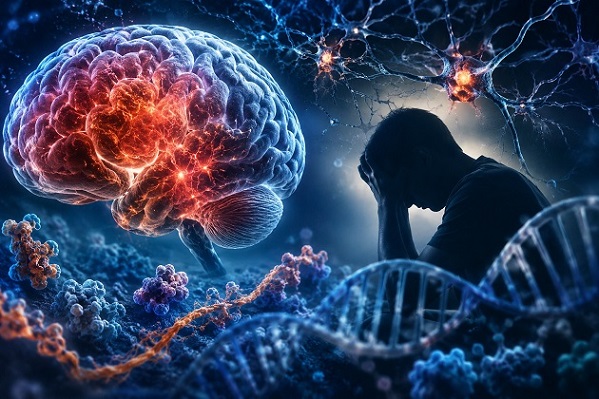 Scientists uncover evidence linking disrupted brain protein regulation to suicidal behavior and major mental illnesses
The study was conducted by researchers from the Institute of Biochemistry & Molecular Genetics and the Institute of Microbiology & Immunology at the Faculty of Medicine, University of Ljubljana in Slovenia, the Faculty of Biotechnology & Drug Development at the University of Rijeka in Croatia, the Department of Biochemistry and Molecular and Structural Biology at the Jožef Stefan Institute in Slovenia, and Jožef Stefan’s International Postgraduate School.
Scientists Investigate Brain Protein Regulation
The researchers focused on a biological process known as “proteostasis,” which refers to the system cells use to maintain healthy proteins. Under normal conditions, damaged or misfolded proteins are removed by the body’s natural cellular cleaning systems. However, when these systems fail, proteins can begin accumulating and clumping together inside cells.
Such protein buildup is already known to occur in neurodegenerative disorders like Alzheimer’s disease, Parkinson’s disease, and amyotrophic lateral sclerosis (ALS). What surprised scientists is that similar abnormalities are increasingly being observed in major psychiatric illnesses including schizophrenia, bipolar disorder, and major depressive disorder.
The new review proposes that suicidal behavior may also involve this type of disturbed protein regulation.
Important Genes Found to Be Altered
The researchers identified abnormal epigenetic changes in several important genes associated with protein aggregation. Epigenetics refers to chemical modifications that affect how genes function without altering the DNA sequence itself. Factors such as chronic stress, trauma, childhood adversity, inflammation, and environmental pressures can influence these changes.
The altered genes included DISC1, CRMP1, MAPT, PRKN, and SOD1. These genes produce proteins that have already been associated with mental illness and neurodegenerative disease. Some of these proteins are known to form harmful aggregates when brain cells are placed under prolonged stress.
For example, the MAPT gene produces the Tau protein, which forms the damaging tangles seen in Alzheimer’s disease. The SOD1 gene has been linked to ALS, while DISC1 and CRMP1 are strongly associated with schizophrenia and major depression.
Researchers also discovered abnormal methylation patterns in these genes in the brains of individuals who
died by suicide. These findings suggest that gene regulation linked to protein control systems may be disturbed in suicidal individuals.
Stress and Brain Cell Damage
The review explains that severe or long-term stress may overwhelm the brain’s ability to properly clear damaged proteins. Important protective systems such as autophagy and the ubiquitin-proteasome system may become impaired, allowing toxic proteins to accumulate.
Scientists also noted strong evidence of oxidative stress, inflammation, mitochondrial dysfunction, and abnormal cell death in people with depression and suicidal tendencies. Reduced levels of protective brain proteins such as brain-derived neurotrophic factor (BDNF) were repeatedly observed in suicide victims. These biological changes may weaken brain resilience and contribute to worsening mental health symptoms.
This
Medical News report highlights that researchers are increasingly recognizing suicide as a condition involving both psychological suffering and measurable biological disturbances within the brain itself.
Similarities With Mental Illness and Neurodegeneration
The review also discussed evidence that specific proteins such as DISC1 and CRMP1 may form abnormal clumps in people with schizophrenia, bipolar disorder, and major depressive disorder. In some studies, these protein aggregates behaved similarly to prion-like proteins capable of spreading between cells.
Scientists believe this overlap between mental illness, neurodegenerative disease, and suicidality could explain why patients with severe psychiatric disorders often face much higher suicide risks.
Conclusion
The findings from this new review provide an important new perspective on the biology of suicide. Researchers now believe that disrupted protein regulation, impaired cellular cleanup systems, inflammation, oxidative stress, and epigenetic abnormalities may collectively contribute to suicidal behavior in vulnerable individuals. Although direct proof of protein aggregation in suicidality still requires further study, the growing evidence strongly suggests that biological damage within brain cells may be a critical component of suicide risk. Understanding these mechanisms could eventually help scientists develop earlier diagnostic tools, more targeted treatments, and new prevention strategies aimed at identifying vulnerable individuals before suicidal crises develop.
The study findings were published in the peer reviewed journal: Biomolecules.
https://www.mdpi.com/2218-273X/16/5/733
For the latest on mental health issues, keep on logging to Thailand
Medical News.
Read Also:
https://www.thailandmedical.news/articles/mental-health
https://www.thailandmedical.news/articles/alzheimer,-dementia-




 Share
Share
 Tweet
Tweet
 Share
Share