Nikhil Prasad Fact checked by:Thailand Medical News Team Oct 13, 2026 49 minutes ago
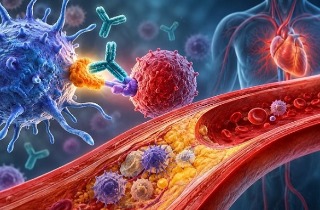
A new study by researchers from the University of Pécs in Hungary has uncovered a striking association between autoimmune antibodies linked to rheumatoid arthritis and significantly lower levels of SARS-CoV-2-specific immunoglobulin G (IgG), an important antibody involved in the immune response against COVID-19.
 New research from Hungary links rheumatoid arthritis-associated autoimmune markers to significantly lower
COVID-19 IgG antibody concentrations, revealing potential connections between autoimmunity and antiviral
immune responses.
The findings suggest that certain autoimmune antibody profiles may be associated with differences in antiviral immunity, raising questions about how autoimmune activity interacts with the body's antibody responses.
Researchers Examine Autoimmune Antibody Patterns
Researchers from the Department of Immunology and Biotechnology, Clinical Centre, Medical School, University of Pécs, analyzed 200 residual diagnostic blood samples collected between November 2023 and February 2024.
A separate historical dataset involving 73,747 patients tested between 2014 and 2024 provided additional context.
The investigation focused on anti-citrullinated protein antibodies (ACPAs), strongly associated with rheumatoid arthritis, and rheumatoid factors (RFs), alongside other autoimmune markers.
Researchers measured IgG antibodies targeting the original SARS-CoV-2 strain and the Omicron BA.1 variant.
Dramatically Lower COVID-19 IgG Levels Identified
The strongest finding involved samples containing ACPA and rheumatoid factor antibodies.
Median IgG concentrations against the original SARS-CoV-2 strain measured only 37.0 RU/mL, compared with 140.2 RU/mL in autoantibody-negative diagnostic samples.
For Omicron BA.1, concentrations were similarly reduced, measuring 20.4 RU/mL versus 78.4 RU/mL.
After adjusting for age and sex, comparison groups demonstrated 2.58 to 3.30 times higher IgG concentrations against the original strain and 2.70 to 4.87 times higher concentrations against Omicron BA.1.
These statistically significant differences suggest that the ACPA-reactive antibody profile was particularly associated with reduced antiviral IgG.
Stronger Autoimmune Reactivity Linked to Lower Antiviral Antibodies
Further investigations revealed that higher ACPA concentrations generally corresponded with lower SARS-CoV-2-specific IgG levels.
Rheumatoid factor antibodies demonstrated similar inverse correlations, with coefficients ranging from −0.299 to −0.400.
Interestingly, researchers also identified elevated natural autoantibody responses against citrate synthase and heat-shock proteins HSP60 and HSP70.
These natural autoantibody responses were positively associated with rheumatoid arthritis-related markers, suggesting that different autoimmune antibody systems may share underlying immunological mechanisms.
ng>Implications for COVID-19 Immunity
This Thailand Medical News report highlights the possibility that autoimmune antibody profiles could help explain variations in measurable antiviral antibody responses.
However, researchers emphasized that lower SARS-CoV-2-specific IgG concentrations do not necessarily mean reduced protection against infection or severe COVID-19.
Vaccination histories, previous infections, medications, and clinical outcomes were unavailable, making it impossible to determine whether autoimmune activity directly caused the observed differences.
Conclusion
The findings identify a potentially important relationship between rheumatoid arthritis-associated autoimmune markers and reduced SARS-CoV-2-specific IgG concentrations. Larger prospective studies incorporating vaccination histories, treatment information, and clinical outcomes are essential to establish the mechanisms involved and determine their clinical significance.
The study findings were published in the peer-reviewed journal: Vaccines.
https://www.mdpi.com/2076-393X/14/10/888
Read Also:
https://www.thailandmedical.news/articles/coronavirus
https://www.thailandmedical.news/articles/long-covid




 Share
Share
 Tweet
Tweet
 Share
Share