New Illegal Synthetic Hallucinogens Popular in Europe, North and South America Found to be Highly Neurotoxic
Nikhil Prasad Fact checked by:Thailand Medical News Team Jul 13, 2026 1 month, 2 weeks, 6 days, 14 hours, 8 minutes ago
Medical News:
Study Warns That Two Emerging Synthetic Drugs Popular Among Millennials and Gen Z May Be Far More Dangerous Than Previously Thought
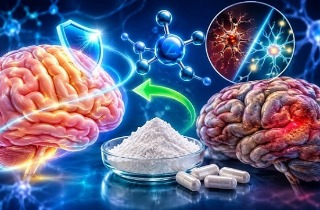
Scientists in Brazil have discovered that two increasingly encountered synthetic hallucinogens may cause significant damage to brain cells by disrupting their energy production, increasing harmful oxidative stress, and interfering with normal nerve signaling. The findings raise fresh concerns about NBOH compounds, a class of new psychoactive substances that are often sold on blotter paper and can be mistaken for LSD.
The research was conducted by scientists from the Federal University of Rio Grande do Sul, the Federal University of Health Sciences of Porto Alegre, and the Federal University of Pampa, all in Brazil.
New Hallucinogens Under the Spotlight
NBOH compounds belong to a growing family of illegal synthetic drugs created to mimic the hallucinogenic effects of LSD while avoiding existing drug control laws. These substances activate serotonin 5-HT2A and 5-HT2C receptors in the brain, producing hallucinations, altered perception, mood changes, and distorted awareness of time. Although they have become increasingly common in illicit drug markets, very little is known about their long-term effects on the brain.
To investigate their safety, researchers compared three NBOH compounds—25I-NBOH, 25E-NBOH, and 25B-NBOH—using human nerve-like cells and fruit flies, a well-established model for studying neurological disorders.
Brain Cells Showed Clear Signs of Toxicity
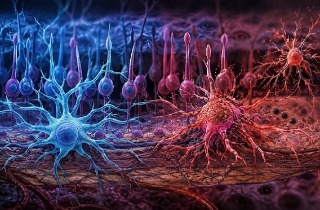
The experiments revealed that 25E-NBOH and 25B-NBOH significantly reduced the survival of human nerve-like cells, while 25I-NBOH produced little measurable damage under the same conditions. Among the three compounds, 25E-NBOH emerged as the most toxic.
The researchers also discovered that both 25E-NBOH and 25B-NBOH disrupted mitochondrial function. Mitochondria act as the cell's power generators, supplying the energy needed for survival. Instead of operating normally, these structures became abnormally hyperpolarized, suggesting profound disturbances in cellular metabolism that could eventually trigger programmed cell death.
This
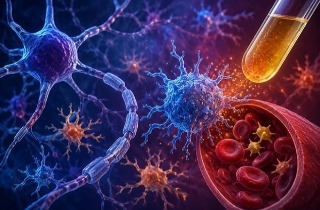
Medical News report also found that the two more toxic compounds caused a marked increase in reactive oxygen species, unstable molecules capable of damaging DNA, proteins, and cell membranes. Such oxidative stress has long been associated with neurodegenerative diseases and progressive loss of brain cells.
Movement and Nerve Signaling Were Also Affected
The researchers then examined how these drugs affected living organisms by exposing fruit flies to the compounds. Flies exposed to 25B-NBOH developed impaired climbing ability, indicating reduced motor function. At the same time, both 25E-NBOH and 25B-NBOH increased the activity of catalase, an antioxidant enzyme activated during cellular stress, and acetylcholinesterase, an enzyme responsible for regulating communication between nerve cells and muscles.
Elevated acetylcholinesterase activity can reduce the availability of acetylcholine, an essential neurotransmitter involved in movement, muscle contraction, memory, and many other brain functions. The combined biochemical and behavioral findings suggest that oxidative stress, mi
tochondrial dysfunction, and disrupted cholinergic signaling may work together to produce neurological injury.
Computer-based toxicity analyses further suggested that these compounds could also possess immunotoxic, respiratory, and potential genetic toxicity, although additional laboratory studies are needed to confirm those risks.
Growing Public Health Concerns
The researchers noted that NBOH compounds have become increasingly common in drug seizures and have already been linked to poisoning cases and fatalities.
Their findings demonstrate that even closely related synthetic hallucinogens can differ greatly in toxicity, making it especially dangerous for users who unknowingly consume these substances believing they are taking LSD. Continued research is essential to better understand their long-term neurological effects and to guide public health strategies aimed at reducing harm.
The study findings were published in the peer reviewed journal: Pharmaceuticals.
https://www.mdpi.com/1424-8247/19/7/1055
For the latest on illicit drugs and hallucinogens, keep on logging to Thailand
Medical News.
Read Also:
https://www.thailandmedical.news/articles/health-news
https://www.thailandmedical.news/articles/cannabis
https://www.thailandmedical.news/articles/mental-health




 Share
Share
 Tweet
Tweet
 Share
Share