Ancient Chinese Root Shows Powerful Ability to Protect the Liver from Alcohol Damage
Nikhil Prasad Fact checked by:Thailand Medical News Team Jun 16, 2026 3 months, 2 weeks, 4 days, 6 hours, 20 minutes ago
Medical News: Millions of people worldwide suffer from liver damage caused by excessive alcohol consumption, and finding effective treatments remains a major medical challenge. Now, researchers in China have discovered that the roots of a traditional medicinal plant known as Kadsura coccinea may offer remarkable protection against alcohol-induced liver injury by boosting the body’s natural antioxidant defenses and restoring healthy liver function.
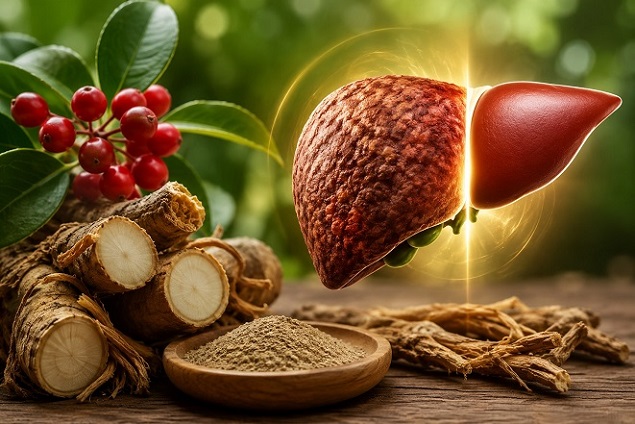 Researchers discover that Kadsura coccinea root can shield the liver from alcohol-related damage by boosting the
body's antioxidant defenses
The study was conducted by scientists from the TCM and Ethnomedicine Innovation & Development International Laboratory and the School of Pharmacy at Hunan University of Chinese Medicine in Changsha, China.
Traditional Plant Shows Modern Promise
Kadsura coccinea, commonly known in China as Heilaohu, has been used for generations in traditional medicine to treat liver disorders, rheumatism, and other ailments. Previous studies had already shown that compounds in the plant possess antioxidant and liver-protective properties. However, until now, little was known about whether the plant could specifically help combat liver damage caused by alcohol.
To investigate, researchers prepared extracts from the roots of Kadsura coccinea and tested them in mice that were given increasing amounts of alcohol over an eight-week period to mimic chronic alcohol-related liver injury.
Significant Improvements in Liver Health
Alcohol exposure caused extensive liver damage in the untreated mice. Blood tests revealed sharp increases in liver enzymes known as ALT and AST, both important indicators of liver injury.
Mice treated with Kadsura coccinea root extract showed significantly lower levels of these enzymes, indicating that their livers suffered far less damage.
The researchers also observed visible improvements in liver appearance. Untreated animals developed red, inflamed livers with evidence of cell death and tissue injury. In contrast, animals receiving the herbal extract had healthier-looking liver tissue and substantially reduced inflammation.
Fighting Oxidative Stress
One of the most important findings involved oxidative stress, a process often described as biological "rusting" that occurs when harmful molecules called reactive oxygen species accumulate inside cells.
Alcohol metabolism generates large amounts of these damaging molecules. Over time, they attack liver cells, destroy cellular structures, and trigger inflammation.
The study found that alcohol drastically reduced levels of key protective antioxidants, including glutathione (GSH), superoxide dismutase (SOD), catalase (CAT), and GPX4. At the same time, levels of malondialdehyde (MDA), a marker of oxidative damage, rose sharply.
Treatment with Kadsura coccinea root extract reversed these harmful changes. Antioxidant levels increased while oxidative damage markers declined, suggesting that
the plant helped restore the liver's natural defense systems.
This
Medical News report highlights that strengthening antioxidant defenses may be one of the most important ways to prevent alcohol-related liver disease before permanent damage develops.
Advanced Genetic and Metabolic Analysis Reveals How It Works
The researchers went beyond conventional testing and performed sophisticated metabolomic and transcriptomic analyses to understand exactly how the plant works.
These analyses revealed widespread improvements in metabolic pathways disrupted by alcohol consumption. The extract helped normalize pathways involved in amino acid metabolism, glutathione production, lipid regulation, and cellular energy balance.
The team identified hundreds of altered metabolites and genes that were corrected after treatment, indicating that the root extract was not merely masking symptoms but actively restoring normal biological function.
Key Protective Pathways Activated
Further investigation revealed that the extract acted through two critical cellular defense systems known as the MAPK and Nrf2 pathways.
Alcohol activated MAPK proteins including p38, JNK, and ERK, all of which are strongly associated with oxidative stress and liver injury. The herbal treatment significantly reduced activation of these harmful signaling molecules.
At the same time, the extract boosted activity of Nrf2, often called the body's master antioxidant switch. Activation of Nrf2 increased levels of protective proteins such as HO-1 and NQO1, helping liver cells neutralize harmful free radicals and survive oxidative attacks.
Conclusions
The findings suggest that Kadsura coccinea root extract could become a promising natural therapeutic candidate for alcohol-induced liver injury. The study demonstrated that the extract not only reduced liver enzyme elevations and tissue damage but also restored antioxidant defenses, corrected metabolic disturbances, suppressed harmful MAPK signaling, and activated the powerful Nrf2 antioxidant pathway. These combined effects helped protect liver cells from alcohol-induced oxidative stress and injury. Although further studies and human clinical trials are needed, the research provides compelling evidence that this traditional medicinal plant may one day contribute to the prevention and treatment of alcohol-related liver diseases.
The study findings were published in the peer reviewed International Journal of Molecular Sciences.
https://www.mdpi.com/1422-0067/27/12/5362
For the latest on herbs and phytochemicals, keep on logging to Thailand
Medical News.
Read Also:
https://www.thailandmedical.news/articles/herbs-and-phytochemicals




 Share
Share
 Tweet
Tweet
 Share
Share

































