Nikhil Prasad Fact checked by:Thailand Medical News Team Jan 27, 2026 6 months, 1 week, 2 days, 16 hours, 59 minutes ago
Medical News: Scientists from Italy have uncovered surprising evidence that phytochemicals found in lemon peels may help reduce damage and support early repair after spinal cord injury, at least in experimental models. This new
Medical News report highlights findings from a detailed laboratory study using zebrafish, a small freshwater species widely used in medical research because of its remarkable ability to regenerate nerve tissue.
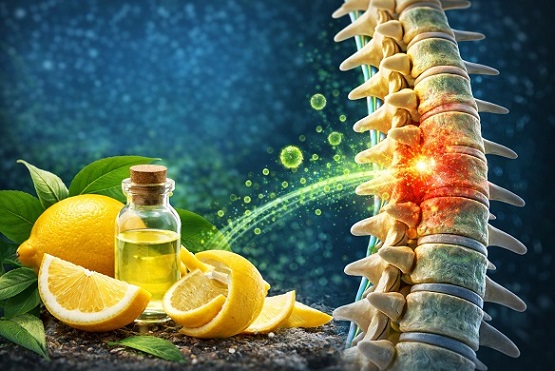 Natural lemon peel extracts were found to reduce inflammation and support early spinal cord healing in laboratory models
Where the Research Was Conducted
Natural lemon peel extracts were found to reduce inflammation and support early spinal cord healing in laboratory models
Where the Research Was Conducted
The study was carried out by researchers from the University of Messina in Italy. The teams were based at the Zebrafish Neuromorphology Lab, Department of Veterinary Sciences, the Department of Chemical Biological Pharmaceutical and Environmental Sciences, and the Department of Human Pathology and Evolutive Age “Gaetano Barresi” at the same university.
Why Spinal Cord Injury Remains a Major Challenge
Spinal cord injury often leads to lifelong movement problems and loss of sensation because damaged nerve cells in humans have very limited ability to repair themselves. After the initial physical injury, a second wave of damage occurs, driven by inflammation, swelling, and toxic molecules that further destroy nerve tissue. Reducing this secondary damage is considered one of the most important goals in spinal injury research.
Turning to Lemon Peels for Answers
Lemon peels are rich in natural substances called polyphenols and flavonoids, which are known for their anti-inflammatory and antioxidant effects. In this study, scientists prepared a concentrated extract from green lemon peels and tested it on zebrafish larvae that had a carefully induced spinal cord injury. Some fish received the extract before injury, some after injury, and others not at all.
Improved Healing and Movement
The researchers observed that zebrafish treated with the lemon peel extract showed faster wound closure at the injury site compared to untreated fish. Importantly, treated fish were also able to swim farther and faster than injured fish that did not receive the extract. No toxic effects or increased deaths were seen, suggesting the treatment was well tolerated.
Reduced Inflammation at the Injury Site
One of the most striking findings was a clear drop in inflammatory signals in treated fish. Key molecules that drive inflammation, such as TNF-alpha and il-1b, were significantly lower in fish receiving the lemon peel extract. This matters because excessive inflammation is known to worsen nerve damage after spinal cord injury.
Activation of Repair Related Pathways
The study also showed that the extract increased levels of brain derived neurotrophic factor, or Bdnf, a protein that helps nerve cells survive and regrow. In addition, genes linked to the Wnt-beta-catenin pathway, which plays
a central role in nerve regeneration, were more active. The researchers also identified Sox2 positive cells around the spinal canal, suggesting activation of repair related progenitor cells.
Why These Findings Matter
While zebrafish are not humans, they provide valuable clues about how injured nerve tissue might be supported. The results suggest that lemon peel compounds may help create a more favorable environment for nerve repair by calming inflammation and boosting natural growth signals.
Conclusions
In conclusion, this study provides strong early evidence that polyphenol rich lemon peel extract can reduce harmful inflammation, activate nerve growth pathways, and improve functional recovery after spinal cord injury in a zebrafish model. Although this does not mean lemon peels can cure spinal injuries in humans, the findings support further research into natural compounds as supportive therapies alongside conventional treatments.
The study findings were published in the peer reviewed International Journal of Molecular Sciences.
https://www.mdpi.com/1422-0067/27/3/1201
For the latest on nerve repair, keep on logging to Thailand
Medical News.
Read Also:
https://www.thailandmedical.news/articles/herbs-and-phytochemicals




 Share
Share
 Tweet
Tweet
 Share
Share