Nikhil Prasad Fact checked by:Thailand Medical News Team Jun 07, 2026 3 months, 3 weeks, 6 days, 3 hours, 1 minute ago
Medical News: A little-known protein found throughout the human body is attracting growing attention from neuroscientists after new research revealed its potentially critical role in brain inflammation and a wide range of neurological disorders, including Alzheimer's disease, Parkinson's disease, multiple sclerosis, amyotrophic lateral sclerosis (ALS), and stroke.
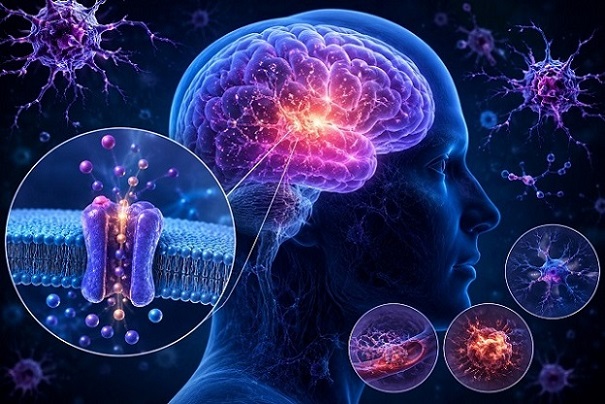 Scientists identify TRPM7 as a critical protein connecting brain inflammation, immune dysfunction, and
neurodegenerative diseases including Alzheimer's disease, Parkinson's disease, and stroke.
Researchers from the Department of Neurobiology, Morehouse School of Medicine, Atlanta, Georgia, USA, have published a comprehensive review examining the protein known as TRPM7 and its emerging role in both the body's immune system and the brain. Their findings suggest that this unique molecule may serve as an important link between immune dysfunction, chronic inflammation, and the progression of neurodegenerative diseases.
What Is TRPM7 and Why Is It Important?
TRPM7, short for Transient Receptor Potential Melastatin 7, is a remarkable protein found in almost every tissue of the human body. Unlike most proteins, it performs two completely different functions at the same time.
First, it acts as an ion channel, allowing important minerals such as magnesium, calcium, and zinc to move into cells. Second, it functions as an enzyme known as a kinase, which modifies other proteins and influences numerous cellular activities. Because it combines these two roles in a single molecule, scientists often refer to TRPM7 as a "chanzyme."
TRPM7 acts as a master regulator of cellular health by monitoring and controlling the balance of essential minerals inside cells. Through this role, it influences cell survival, growth, division, movement, and communication. Scientists believe it physically links a cell's nutritional and mineral status with its internal signaling systems, enabling cells to rapidly respond to changing conditions.
The importance of TRPM7 becomes even clearer during early development. Animal studies have shown that deleting the TRPM7 gene results in embryonic death, demonstrating that the protein is essential for normal growth and development.
When functioning normally, TRPM7 helps maintain healthy cellular balance. However, abnormal TRPM7 activity has been associated with numerous diseases. It has been linked to cardiovascular disorders such as cardiac fibrosis and obesity-related hypertension, contributes to brain cell death during oxygen deprivation and stroke, and is often overactive in certain cancers where it promotes tumor growth, survival, and spread.
The Hidden Connection Between Immunity and Brain Disease
Inflammation is a natural protective response that helps the body fight infections and repair damaged tissues. Problems arise when inflammation becomes excessive or persists for long periods.
According to the review, TRPM7 plays a central role in controlling many of the immune cells responsible for inflammatory responses. These include neutrophils, macrophages,
B cells, and T cells.
Studies have shown that TRPM7 influences how immune cells move, communicate, and release inflammatory molecules. In macrophages, for example, high TRPM7 activity promotes the production of powerful inflammatory substances such as TNF-alpha and IL-1 beta. Blocking TRPM7 can shift these cells toward a less inflammatory and potentially protective state.
The protein is also essential for the normal development and functioning of B cells and T cells, two critical components of the body's adaptive immune system.
TRPM7's Growing Role in Brain Inflammation
One of the most important discoveries highlighted in the review is the role of TRPM7 in microglia and astrocytes, two major cell types that regulate immune activity within the brain.
Microglia act as the brain's frontline immune defenders. Under normal conditions, they protect neurons and clear away cellular debris. However, when excessively activated, they can release harmful inflammatory chemicals that damage healthy brain tissue.
Research cited in the review found that inhibiting TRPM7 reduced microglial migration, inflammatory activity, and the release of damaging cytokines such as IL-6.
This
Medical News report highlights that these findings suggest TRPM7 may represent a promising therapeutic target for controlling excessive neuroinflammation before irreversible brain damage occurs.
Astrocytes, another key support cell in the brain, also appear to be heavily influenced by TRPM7. Elevated levels of the protein have been detected in multiple sclerosis lesions and chronically inflamed nervous tissue. Excessive TRPM7 activity in astrocytes has been linked to increased scar formation, impaired nerve regeneration, and higher production of inflammatory molecules associated with chronic neurological damage.
Implications for Alzheimer's Disease, Parkinson's Disease and Stroke
The review points to mounting evidence that TRPM7 contributes to several neurological diseases through multiple mechanisms.
In Alzheimer's disease and Parkinson's disease, chronic activation of microglia and astrocytes fuels ongoing inflammation that gradually destroys neurons. TRPM7 appears to regulate many of the signaling pathways involved in this damaging process.
In stroke, TRPM7 may contribute to injury in two separate ways. First, excessive channel activity can trigger toxic calcium and zinc accumulation inside neurons, leading to cell death. Second, it may amplify inflammatory responses that worsen tissue damage after the initial injury.
The protein is also believed to contribute to breakdown of the blood-brain barrier, allowing immune cells from outside the brain to enter and intensify inflammation.
A Promising New Therapeutic Target
Researchers believe TRPM7 may offer a completely new approach to treating neurodegenerative diseases and neurological injuries. Several experimental compounds capable of blocking either the channel function or enzyme function of TRPM7 have already shown encouraging anti-inflammatory effects in laboratory studies.
Conclusion
The emerging evidence places TRPM7 at the crossroads of mineral regulation, immune function, inflammation, and neurological health. Rather than being merely a cellular ion channel, TRPM7 appears to coordinate numerous biological processes that influence both immune activity and neuronal survival. Its involvement in microglial activation, astrocyte dysfunction, inflammatory signaling, and direct neuronal injury suggests that it may play a significant role in the development and progression of Alzheimer's disease, Parkinson's disease, stroke, multiple sclerosis, and other neurological disorders. While additional research is needed to fully understand its mechanisms, the growing body of evidence indicates that therapies targeting TRPM7 could eventually become valuable tools for reducing brain inflammation, protecting neurons, and slowing the progression of devastating neurodegenerative diseases.
The study findings were published in the peer reviewed International Journal of Molecular Sciences.
https://www.mdpi.com/1422-0067/27/12/5157
For the latest on TRMP7 and its association with brain diseases, keep on logging to Thailand
Medical News.
Read Also:
https://www.thailandmedical.news/articles/alzheimer,-dementia-




 Share
Share
 Tweet
Tweet
 Share
Share

































