Herbal Extract from the Blumea Balsamifera Plant Shows Promise Against All Flu Strains Including H3N2
Nikhil Prasad Fact checked by:Thailand Medical News Team Dec 08, 2025 9 months, 3 weeks, 5 days, 21 hours, 57 minutes ago
Medical News: New Herbal Hope for Flu Treatment from Southeast Asian Plant
A plant long used in Southeast Asian traditional medicine may soon become a modern-day weapon against the flu. Scientists from Kunming Medical University, Kunming University of Science and Technology, Wuhan Institute of Biological Products Co. Ltd., and Guizhou Holy Pharmaceutical Co. Ltd. have discovered that Blumea balsamifera (L.) DC.—a medicinal herb native to the region—has strong anti-influenza properties both in lab tests and in live animal studies.
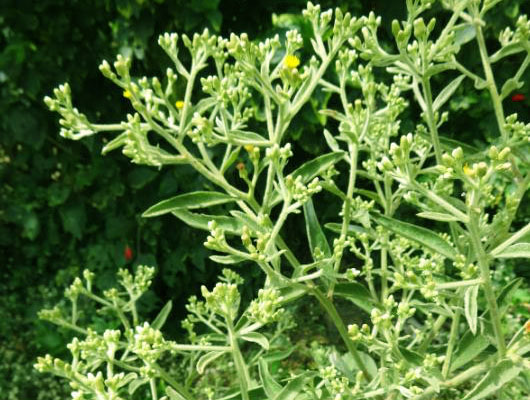 Scientists find Southeast Asian herb Blumea balsamifera can fight off multiple flu strains in lab
and mouse studies, offering a potential new antiviral therapy
This
Medical News report highlights how the researchers tested the ethanol extract of the plant, known as BBE, against several influenza strains, including A/H1N1, A/H3N2, and four types of influenza B. Their findings were impressive: BBE significantly inhibited viral infection in cultured kidney cells from dogs (MDCK cells) and also improved survival outcomes in mice infected with the flu virus.
Kills Flu Virus Before It Can Invade Cells
In laboratory studies, BBE was able to block the virus in its earliest phase—preventing it from binding to host cells and replicating. The compound showed especially strong results when introduced during the first two hours after infection began. In experiments, it reduced the expression of the viral NP protein by over 80%, proving its effectiveness in the crucial early moments of infection.
The study also found that BBE could block hemagglutination—the process by which flu viruses attach to cells. This means BBE interferes with the virus’s HA protein binding to sialic acid receptors, which is essential for infection.
Lab Results Lead to Promising Animal Trials
Beyond the test tube, BBE proved helpful in live mice. When given intranasally to infected mice, it significantly reduced flu-related weight loss, delayed death, and lowered the extent of lung damage. At higher doses (150 mg/kg/day), three out of four mice survived longer than untreated animals, and lung tissue damage was visibly reduced under microscope analysis. Histological staining showed less inflammation and better lung structure in mice treated with BBE, reinforcing the extract’s potential to prevent flu-related lung injury.
Safe and Effective with Low Toxicity
Importantly, BBE demonstrated no significant toxicity at even the highest tested concentrations. Cell viability remained high in all lab tests, meaning it could be a safe antiviral option if further developed.
This research not only supports the use of Blumea balsamifera in traditional healing practices but also suggests it could become a key player in modern antiviral therapies—especially as resistance to current flu drugs like oseltamivir increases.
The study findings were pu
blished on a preprint server and are currently being peer reviewed.
https://papers.ssrn.com/sol3/papers.cfm?abstract_id=5139285
For the latest on Influenza, keep on logging to Thailand
Medical News.
Read Also:
https://www.thailandmedical.news/articles/influenza-or-flu




 Share
Share
 Tweet
Tweet
 Share
Share

































