Nikhil Prasad Fact checked by:Thailand Medical News Team Jul 29, 2026 2 months, 5 days, 16 hours, 44 minutes ago
Medical News: A major new systematic review has found growing evidence that COVID-19 infection may increase the risk of developing a wide range of autoimmune diseases long after the initial illness has passed. While the overall risk for any individual remains relatively low, researchers say the findings highlight the need for doctors to remain alert for new autoimmune conditions, especially in people who experienced severe COVID-19.
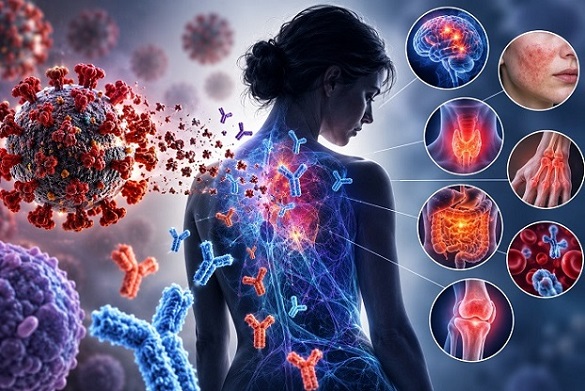 Large international review finds COVID-19 infection may raise the risk of developing several autoimmune
diseases months after recovery.
The research was conducted by scientists from Al Dhafra Hospitals, Abu Dhabi Health Service Company (SEHA), United Arab Emirates; Heartlands Hospital, University Hospitals Birmingham NHS Foundation Trust, United Kingdom; Croydon Health Services NHS Trust, United Kingdom; Al-Azhar University of Cairo, Egypt; University of Khartoum, Sudan; Dr. Sulaiman Al Habib Hospital, Saudi Arabia; Al-Azhar University, Egypt; The National Ribat University, Sudan; and an independent medical practice in Amman, Jordan.
A Massive Review Covering Millions of People
Rather than relying on isolated case reports, the researchers analyzed eight large controlled cohort studies involving tens of millions of people from the United States, Germany, the United Kingdom, South Korea, Japan, and Hong Kong. Every study compared people with confirmed COVID-19 against individuals who had not been infected.
Across all eight studies, the same pattern emerged. People who had recovered from COVID-19 consistently showed a higher likelihood of later developing one or more autoimmune disorders. Although the size of the increased risk differed between studies, the direction of the findings remained remarkably consistent.
Many Different Autoimmune Diseases Were Linked
The review found increased risks involving multiple body systems. Some of the autoimmune disorders repeatedly associated with previous COVID-19 infection included rheumatoid arthritis, systemic lupus erythematosus, Sjögren syndrome, ankylosing spondylitis, systemic sclerosis, mixed connective tissue disease, vasculitis, psoriasis, inflammatory bowel disease, Crohn's disease, ulcerative colitis, type 1 diabetes, Graves disease, multiple sclerosis, immune thrombocytopenia, antiphospholipid syndrome, alopecia and vitiligo.
Some of the strongest associations were reported for rheumatoid arthritis, lupus and ankylosing spondylitis, where certain studies found nearly a threefold increase in risk. Other studies identified significantly higher risks for autoimmune blood disorders, skin diseases and inflammatory diseases affecting the digestive tract.
Why COVID-19 May Cause Autoimmunity
Scientists believe SARS-CoV-2 may disturb the immune system in several ways. The virus appears capable of stimulating the production of autoantibodies, which mistakenly attack the body's own healthy tissues instead of invading germs.
Researchers also point to molecular mimicry, where parts of the virus resemble normal human proteins closely enough that the immune system may struggle to distinguish between them. Persistent inflammation following i
nfection, together with immune overactivation during severe illness, may further increase the chances of the body's natural immune tolerance breaking down.
This
Medical News report highlights that these biological mechanisms provide a plausible explanation for why autoimmune diseases affecting many different organs have been observed after COVID-19 rather than only a single specific condition.
Severity Makes a Difference
An important finding was that people who experienced severe COVID-19 generally faced a much greater risk of developing autoimmune diseases than those with milder infections. Several studies demonstrated a clear severity-response relationship, suggesting that stronger immune activation during acute illness may produce longer-lasting immune abnormalities.
Researchers also observed that the increased risk appeared to decline gradually over time in some studies. One large Hong Kong study additionally found that vaccinated individuals showed lower risks for several post-COVID autoimmune conditions, suggesting vaccination may help reduce some long-term complications by limiting disease severity.
Important But Not a Cause for Panic
The researchers stressed that these findings should be interpreted carefully. All of the included studies were observational, meaning they demonstrate strong associations rather than direct proof that COVID-19 causes autoimmune disease. Differences in healthcare systems, follow-up periods and patient characteristics may also explain why reported risk levels varied.
Importantly, although relative risks were often elevated, the absolute number of people developing any individual autoimmune disease remained relatively small. Most people recovering from COVID-19 will never develop one of these conditions.
Conclusion
The review provides some of the strongest evidence to date that COVID-19 infection is associated with a modest but consistent increase in the risk of developing several new autoimmune diseases, particularly connective tissue disorders, vasculitis and antibody-mediated illnesses. While further long-term prospective studies are needed to establish direct causation, the findings reinforce the importance of continued monitoring of patients recovering from severe COVID-19 and may help doctors recognize autoimmune complications earlier when treatment is likely to be most effective.
The study findings were published in the peer reviewed journal: Cureus.
https://www.cureus.com/articles/508282-autoimmune-manifestations-following-covid-19-infection-a-systematic-review?#!/
For the latest COVID-19 news, keep on logging to Thailand
Medical News.
Read Also:
https://www.thailandmedical.news/articles/coronavirus
https://www.thailandmedical.news/articles/long-covid




 Share
Share
 Tweet
Tweet
 Share
Share

































