Nikhil Prasad Fact checked by:Thailand Medical News Team Apr 18, 2026 3 months, 4 days, 19 hours, 13 minutes ago
Medical News: A groundbreaking new study is shedding light on a surprisingly simple method that may help aging muscles regain strength and function. Scientists have found that a special type of low-intensity light therapy can trigger powerful structural changes inside aging muscle tissue, potentially reversing some of the damage that comes with age.
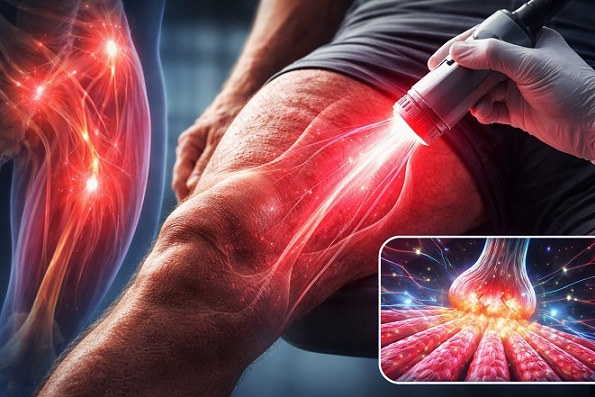 Red light therapy restores aging muscle communication and energy at the cellular level
Why Muscles Weaken with Age
Red light therapy restores aging muscle communication and energy at the cellular level
Why Muscles Weaken with Age
As people grow older, their muscles gradually lose strength and mass, a condition often referred to as age-related muscle decline. This happens partly because of damage to tiny structures called neuromuscular junctions, which act like communication bridges between nerves and muscles.
Over time, these junctions begin to deteriorate. Signals from the brain become weaker, muscles respond less effectively, and everyday movements become more difficult. Researchers have long been searching for ways to slow or reverse this process.
A Light-Based Solution Emerges
In this new study, scientists from the Federal State Budgetary Educational Institution of Higher Education Privolzhsky Research Medical University of the Ministry of Health of the Russian Federation and the Institute of Biology and Biomedicine at Lobachevsky State University of Nizhny Novgorod explored the effects of photobiomodulation, a therapy that uses low-level red light.
The research involved aging laboratory rats equivalent to older adults. The animals received short daily sessions of red-light exposure on a major thigh muscle over four days. The untreated muscle on the opposite side served as a comparison.
Remarkable Changes at the Microscopic Level
When scientists examined the muscle tissue under powerful microscopes, they discovered striking improvements.
The number of “active zones” within neuromuscular junctions increased by nearly 24 percent. These zones are critical for releasing chemical signals that trigger muscle contraction. At the same time, the postsynaptic membrane, which receives these signals, became about 20 percent longer, improving communication efficiency.
Even more impressive, the gap between nerve and muscle, known as the synaptic cleft, became narrower by over 15 percent. This change allows signals to travel faster and more effectively.
These findings were clearly illustrated in the experimental data and imaging results, including detailed structural comparisons seen in the microscopy images which highlighted improved synaptic efficiency after treatment.
Energy Factories Inside Cells Get a Boost
Another key discovery involved mitochondria, often called the “powerhouses” of cells. After treatment, their numbers increased by nearly 15 percent, indicating enhanced energy production capacity.
At the same time, the structure of these mitochondria showed signs of repair and renewal. This suggests that the light therapy may help restore the energy supply needed for muscle function.<
;br />
Unexpected Changes in Chemical Storage
Interestingly, the total number of synaptic vesicles, which store neurotransmitters, decreased. While this might seem negative, researchers believe it actually reflects increased activity. The vesicles are being used more efficiently, releasing their contents faster during nerve signaling.
This
Medical News report highlights how these combined changes point toward a more active and responsive neuromuscular system, even in aging tissue. The therapy appears to reorganize muscle communication systems rather than simply increasing their size.
Signs of Regeneration and Repair
The treated muscles also showed early signs of regeneration. Scientists observed increased activity of muscle stem cells and the formation of new muscle components. Some nerve endings even displayed sprouting behavior, suggesting attempts to rebuild lost connections.
These findings indicate that the therapy does more than improve function, it may actually stimulate repair processes at a cellular level.
What This Could Mean for Humans
Although the study was conducted in animals, the implications are significant. The biological processes involved in muscle aging are very similar between rats and humans.
If similar effects are confirmed in human studies, photobiomodulation could become a simple, non-invasive treatment to help older adults maintain muscle strength, mobility, and independence.
Conclusion
The study provides compelling evidence that low-level light therapy can trigger meaningful structural and functional improvements in aging muscles. By increasing active communication zones, enhancing energy production, narrowing the synaptic gap, and stimulating regenerative processes, this approach targets multiple aspects of muscle decline at once. While further research is needed, especially in humans, these findings open the door to a promising and accessible strategy for combating age-related muscle weakness and improving quality of life in older populations.
The study findings were published in the peer reviewed journal: Cells.
https://www.mdpi.com/2073-4409/15/8/710
For the latest on reversing muscle damage due to aging, keep on logging to Thailand
Medical News.
Read Also:
https://www.thailandmedical.news/articles/anti-aging




 Share
Share
 Tweet
Tweet
 Share
Share