Common Plant Compound Rutin Found to Calm Brain Inflammation and Protect Nerve Cells
Nikhil Prasad Fact checked by:Thailand Medical News Team Jun 07, 2026 3 months, 3 weeks, 5 days, 22 hours, 56 minutes ago
Medical News: Brain inflammation is increasingly recognized as a major driver of neurodegenerative diseases such as Parkinson’s disease and Alzheimer’s disease. Now, a new study has found that rutin, a natural compound found in apples, citrus fruits, buckwheat, tea, and other plant-based foods, may help protect the brain by calming harmful immune responses and activating repair pathways inside the nervous system.
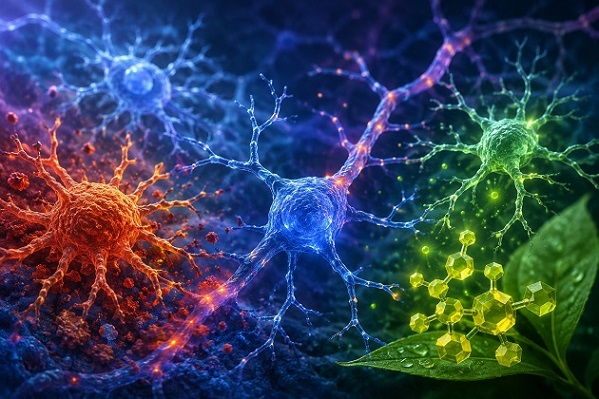 Natural flavonoid rutin helps reduce brain inflammation while activating protective pathways that support nerve cell survival
Researchers from the Federal University of Bahia (UFBA), Brazil, the State University of Southwest Bahia (UESB), Brazil, and the Federal University of Recôncavo of Bahia (UFRB), Brazil investigated how rutin affects microglia, the specialized immune cells that serve as the brain’s first line of defense against injury and disease. Their findings suggest that rutin not only reduces inflammation but also promotes biological mechanisms associated with brain repair and neuronal survival.
Why Microglia Matter in Brain Disease
Microglia play a critical role in maintaining brain health. Under normal conditions, these cells monitor the brain environment and help remove damaged cells and debris. However, when overactivated, they can release large amounts of inflammatory chemicals that damage neurons and accelerate neurodegenerative processes.
Scientists often describe microglia as existing in different functional states. One state promotes inflammation and tissue damage, while another supports healing and repair. Finding ways to shift microglia toward a protective state has become a major goal in neurological research.
Rutin Reverses Harmful Immune Activation
To examine rutin's effects, researchers exposed rat microglial cells to lipopolysaccharide (LPS), a bacterial toxin commonly used to trigger inflammation in laboratory studies.
As expected, LPS transformed the normally branched and resting microglia into an activated amoeboid form associated with inflammation. However, when rutin was added, many of these cells returned to a healthier, ramified appearance, suggesting that the flavonoid was able to suppress inflammatory activation.
The team also found that rutin significantly reduced levels of several key inflammatory molecules. Among these were tumor necrosis factor-alpha (TNF-alpha), interleukin-6 (IL-6), and NLRP3, a component of the inflammasome complex that has been strongly linked to chronic neuroinflammation and neurodegenerative diseases.
At the same time, rutin increased levels of arginase-1, a marker commonly associated with anti-inflammatory and neuroprotective microglia.
Activating the Brain’s Repair Systems
One of the most intriguing discoveries involved two important biological pathways linked to brain recovery.
Rutin increased production of glial cell line-derived neurotrophic factor (GDNF), a powerful growth factor known for its ability to support neuron survival and protect dopamine-producing brain cells that are lost in Parkinson&
amp;rsquo;s disease.
The flavonoid also boosted activity in the Sonic Hedgehog (SHH)/GLI-1 signaling pathway, a system involved in tissue repair, cell survival, and regulation of inflammation.
According to the researchers, this is the first study to demonstrate a direct link between rutin and activation of SHH/GLI-1 signaling in microglial cells. This
Medical News report highlights that the finding could open entirely new avenues for understanding how natural compounds influence brain health and recovery mechanisms.
Protection Extends to Neuronal Cells
The researchers went a step further by testing whether substances released by rutin-treated microglia could protect nerve cells.
They collected conditioned medium from microglial cultures and exposed PC-12 neuronal cells to it. Medium from inflamed microglia caused a dramatic increase in neuronal cell death. In contrast, medium from microglia treated with both LPS and rutin significantly reduced this toxicity.
The protective effect was substantial, with neuronal damage falling by approximately fivefold compared to cells exposed to inflammatory microglial secretions alone. This suggests that rutin not only calms harmful immune activity but may also encourage microglia to release factors that actively support neuronal survival.
A Promising Natural Candidate for Neurodegenerative Disorders
The findings add to growing evidence that dietary flavonoids may influence brain health in meaningful ways. By suppressing inflammatory signaling, inhibiting the NLRP3 inflammasome, increasing neuroprotective GDNF levels, and activating the SHH/GLI-1 repair pathway, rutin appears to act through multiple mechanisms simultaneously.
Conclusions
The study provides compelling evidence that rutin can transform microglia from a damaging inflammatory state into a more protective and restorative one. Beyond reducing inflammatory markers, the compound enhanced important brain repair pathways and generated conditions that improved neuronal survival. Although these experiments were conducted in laboratory cell models and human studies are still needed, the results suggest that rutin could eventually become an important component in future strategies aimed at slowing or preventing neurodegenerative disorders such as Parkinson’s disease and Alzheimer’s disease. The discovery of its effects on SHH/GLI-1 signaling is particularly noteworthy and may help identify new therapeutic targets for combating chronic brain inflammation.
The study findings were published in the peer reviewed journal: Neuroglia.
https://www.mdpi.com/2571-6980/7/2/15
For the latest about preventing or treating brain inflammation, keep on logging to Thailand
Medical News.
Read Also:
https://www.thailandmedical.news/articles/herbs-and-phytochemicals




 Share
Share
 Tweet
Tweet
 Share
Share