Nikhil Prasad Fact checked by:Thailand Medical News Team Jun 10, 2026 3 months, 3 weeks, 2 days, 23 hours, 15 minutes ago
Medical News: Metabolic dysfunction-associated fatty liver disease, commonly known as MAFLD, has become one of the fastest-growing liver disorders worldwide. Affecting an estimated 30 to 40 percent of people across many Asian countries, the condition is closely linked to obesity, diabetes, poor diet, and other metabolic problems. Despite its growing impact, there are still no approved drugs specifically designed to treat the disease.
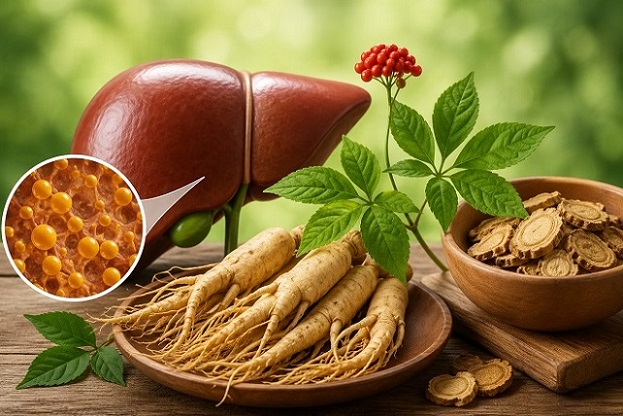 Researchers find that ginseng-derived ginsenosides may fight fatty liver disease by reducing liver fat, inflammation,
oxidative stress, and gut imbalance
Now, researchers are highlighting the remarkable potential of ginsenosides, the active compounds found in ginseng, as a possible natural approach to tackling fatty liver disease through multiple biological pathways.
The researchers were from the Department of Nutrition and Food Hygiene, the National Medical Products Administration Key Laboratory for Safety Evaluation of Cosmetics, the Guangdong Provincial Key Laboratory of Tropical Disease Research, and the School of Public Health at Southern Medical University in Guangzhou, China.
Why Fatty Liver Disease Is So Difficult to Treat
MAFLD develops when excessive fat accumulates in the liver and is accompanied by metabolic problems such as obesity or type 2 diabetes. Over time, the condition can progress to liver inflammation, fibrosis, and even liver failure.
Scientists now understand that MAFLD is driven by several interconnected problems. These include insulin resistance, abnormal fat metabolism, oxidative stress, chronic inflammation, cell damage, and disruptions in the gut microbiome. Because so many biological systems are involved, finding effective treatments has been challenging.
Ginseng Targets Multiple Disease Mechanisms
Ginseng has been used in traditional medicine for centuries and is often referred to as the “King of Herbs.” Modern scientific research has identified ginsenosides as the plant’s most important bioactive compounds.
The new review found that ginsenosides may help combat MAFLD by addressing several of the disease’s underlying causes simultaneously.
One major benefit is improved insulin sensitivity. Insulin resistance is considered one of the earliest triggers of fatty liver disease. Studies reviewed by the researchers showed that several ginsenosides helped restore normal insulin signaling, reduced blood sugar levels, and improved glucose metabolism.
At the same time, these compounds appeared to reduce the production of new fat in the liver while increasing the breakdown and removal of existing fat deposits. This combination could help prevent the dangerous buildup of liver fat that characterizes the disease.
Powerful Effects Against Inflammation and Oxidative Stress
Another important finding was the strong antioxidant and anti-inflammatory activity of ginsenosides.
In MAFLD, excessive fat accumulation leads to the production of harmful molecules known as reactive oxygen species. The
se molecules damage liver cells and trigger inflammation. The review found that ginsenosides activate protective antioxidant systems while reducing markers of oxidative damage.
Researchers also discovered that ginsenosides can suppress major inflammatory pathways, including NF-kB and the NLRP3 inflammasome. These pathways are known to drive liver inflammation and disease progression.
This
Medical News report highlights that by targeting both oxidative stress and inflammation simultaneously, ginsenosides may help interrupt the vicious cycle that pushes simple fatty liver disease toward more serious liver damage.
Protecting Liver Cells and Supporting Gut Health
The review also revealed that ginsenosides may protect liver cells from premature death. They were found to reduce apoptosis, a form of programmed cell death, while also limiting pyroptosis, a highly inflammatory type of cell destruction.
Additionally, several ginsenosides restored autophagy, a natural cellular cleanup process that removes damaged components and excess fat droplets from liver cells.
Another exciting discovery involved the gut-liver connection. Researchers found that ginsenosides can reshape gut bacteria populations, increase beneficial microbes, improve intestinal barrier function, and reduce the leakage of inflammatory toxins into the bloodstream. These changes may further support liver health and metabolic balance.
Human Studies Still Needed
Although the findings are encouraging, the researchers caution that most evidence currently comes from laboratory and animal studies. Human clinical data remain limited, making it impossible to draw definitive conclusions about effectiveness in patients.
The review also noted that different ginsenosides may work together in ways that are not yet fully understood. Future research will need to explore these interactions, improve formulations that enhance absorption, and conduct large-scale clinical trials.
Conclusion
The growing body of evidence suggests that ginsenosides could become valuable natural tools in the fight against metabolic dysfunction-associated fatty liver disease. Rather than targeting a single pathway, these compounds appear to influence multiple biological processes involved in disease development, including insulin resistance, fat accumulation, oxidative stress, inflammation, cellular damage, aging, and gut microbiome imbalance. While much more human research is required before ginsenosides can be recommended as a standard treatment, current findings indicate that they hold considerable promise as preventive and supportive interventions for one of the world’s most common liver disorders. Their broad range of actions makes them particularly attractive candidates for future metabolic disease therapies.
The study findings were published in the peer reviewed journal: Nutrients.
https://www.mdpi.com/2072-6643/18/11/1806
For the latest on fatty liver disease, keep on logging to Thailand
Medical News.
Read Also:
https://www.thailandmedical.news/articles/herbs-and-phytochemicals
https://www.thailandmedical.news/articles/gastroenterology




 Share
Share
 Tweet
Tweet
 Share
Share

































