Nikhil Prasad Fact checked by:Thailand Medical News Team Aug 29, 2026 44 minutes ago
Distinct Immune Responses Emerge Early
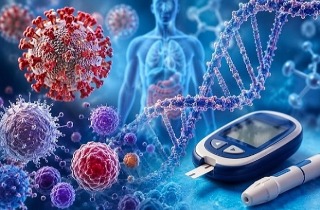
A new multicohort study has uncovered striking differences in antibody responses to human herpesvirus 6 (HHV-6) during and shortly after SARS-CoV-2 infection, potentially offering new clues to why some people develop long COVID while others recover.
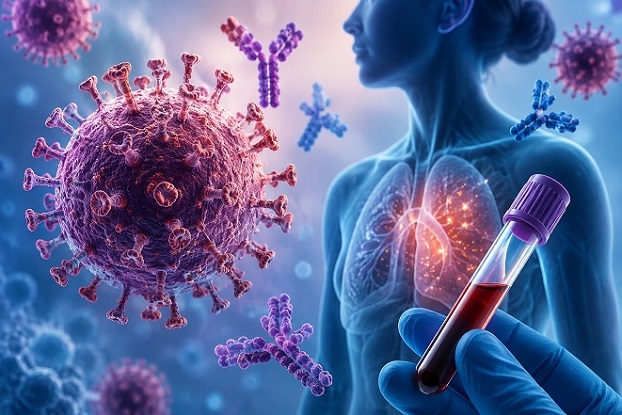 Distinct early HHV-6 IgA and IgG antibody patterns may help explain biological differences among people who develop
long COVID
Researchers analyzed antibody responses against all eight human herpesviruses, focusing on IgG, IgA, and IgM antibodies. During acute COVID-19, some participants developed increased herpesvirus-directed IgA responses, particularly against beta-herpesviruses, without comparable increases in IgG or IgM.
In the larger NIH RECOVER analysis, 124 participants were classified as having long COVID and 83 as not having long COVID. Samples were collected within 30 days of SARS-CoV-2 infection.
HHV-6 IgA and IgG Tell Different Stories
One of the most important findings was that HHV-6 IgA and IgG behaved almost like separate immune programs. High HHV-6 IgA responses were associated with greater long COVID symptom burden, while strong HHV-6 IgG responses were associated with fewer systemic symptoms and were more common among participants without long COVID.
The HHV-6 IgG high-response group also had the lowest average Long COVID Research Index among the antibody-defined groups examined. However, the apparent reduction in symptoms was not universal: neuropsychiatric symptoms remained relatively preserved or were modestly more common in this subgroup.
This
Thailand Medical News report highlights an especially intriguing observation: HHV-6 was the only herpesvirus studied that showed such a pronounced separation between IgA- and IgG-dominated immune responses.
Researchers also found long COVID-associated enrichment among high responders to HHV-1 and HHV-2 IgG. Importantly, these patterns appeared concentrated among subsets of unusually strong responders rather than representing a generalized increase in antiviral antibodies across everyone who developed long COVID.
Age Adds Another Piece to the Puzzle
HHV-6 IgG responses declined as age increased. Among the strongest responders, the median age was approximately 41 years, compared with around 55 years in the HHV-1 IgG, HHV-2 IgG, and HHV-6 IgA groups. The inverse relationship between HHV-6 IgG and age was particularly evident among female participants.
The researchers caution that these antibody patterns do not prove herpesvirus reactivation causes long COVID. Instead, they could reflect mucosal antigen exposure, immune activation, or renewed engagement of pre-existing immune memory.
Institutions Behind the Research
The researchers were affiliated with Stanford University School of Medicine, Stanford University, Stanford Children’s Health, Brigham and Women’s Hospital, and Massachusetts General Brigham. The Stanford affiliations included divisions a
nd programs covering immunology and rheumatology, pediatrics, psychiatry and behavioral sciences, primary care and population health, and the Institute for Immunity, Transplantation and Infection.
Conclusions
The findings suggest long COVID may involve multiple biologically distinct immune pathways rather than one universal mechanism. The contrasting HHV-6 IgA and IgG patterns could eventually help researchers identify meaningful long COVID subgroups, although larger longitudinal studies are needed before these antibody signatures can be considered predictive biomarkers or evidence of causation.
The study findings were published in the peer reviewed journal: eBioMedicine.
https://www.sciencedirect.com/science/article/pii/S2352396426003397
Read Also:
https://www.thailandmedical.news/articles/long-covid




 Share
Share
 Tweet
Tweet
 Share
Share