Nikhil Prasad Fact checked by:Thailand Medical News Team Jun 02, 2026 4 months, 1 day, 18 hours, 40 minutes ago
Medical News: Cardiovascular diseases remain the leading cause of death worldwide, accounting for nearly 18 million deaths every year. Despite major advances in cholesterol-lowering drugs, blood pressure medications, and surgical procedures, cardiovascular disease continues to affect millions of people and is increasingly being diagnosed in younger populations. Scientists are now discovering that a little-known protein called CD36 may play a much larger role in heart disease than previously believed.
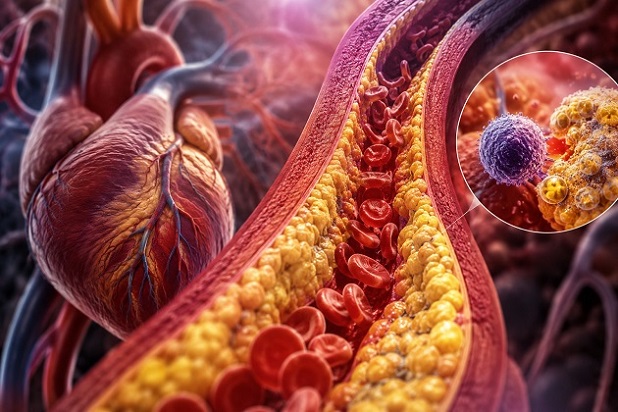 Researchers identify CD36 as a key molecular link between inflammation, abnormal lipid metabolism, and the
development of cardiovascular disease
A new review by researchers from The Queen Mary School, Jiangxi Medical College, Nanchang University; the Jiangxi Province Key Laboratory of Bioengineering Drugs, The National Engineering Research Center for Bioengineering Drugs and the Technologies, Institute of Translational Medicine, Jiangxi Medical College, Nanchang University; and the Institute of Biomedical Innovation, Jiangxi Medical College, Nanchang University in China has revealed that CD36 acts as a crucial link between abnormal lipid metabolism and chronic inflammation, two of the most important biological processes driving cardiovascular disease.
What Is CD36?
CD36, formally known as Cluster of Differentiation 36, is a receptor protein found on the surface of many different types of cells throughout the body, including immune cells, platelets, blood vessel cells, fat cells, and heart muscle cells. Under normal conditions, CD36 performs several important functions. It helps cells absorb fatty acids for energy production, remove damaged cellular debris, recognize potentially harmful substances, and participate in normal immune responses.
However, scientists have discovered that CD36 can also become a major contributor to disease. When activated excessively, it promotes the uptake of oxidized low-density lipoprotein (oxLDL), a harmful form of cholesterol that accumulates within blood vessels. This process triggers inflammation, encourages the buildup of fatty plaques, and contributes to blood vessel damage throughout the cardiovascular system.
Because CD36 sits at the intersection of fat metabolism and inflammation, researchers now believe it may be one of the most important molecular drivers of cardiovascular disease.
Connecting Cholesterol and Inflammation
For many years, cardiovascular disease was primarily viewed as a problem caused by cholesterol accumulation. Scientists now understand that inflammation is equally important.
CD36 plays a central role in connecting these two processes. When immune cells known as macrophages encounter oxidized cholesterol, CD36 enables them to absorb these harmful particles. The macrophages subsequently transform into foam cells, which are packed with fats and accumulate within artery walls.
These foam cells release inflammatory chemicals that attract additional immune cells into the affected area. As inflammation increases, arterial plaques continue to enlarge and become increasingly unstable. Eventually, these plaques may rupture, triggering the formation of dangerous blood clots that can cause
heart attacks or strokes.
Animal studies cited in the review found that eliminating CD36 activity dramatically reduced plaque formation, with some experiments reporting reductions of up to 70 percent. Such findings highlight the critical role of CD36 in the development of atherosclerosis.
Driving Blood Clots and Heart Attacks
The review also emphasizes the role of CD36 in thrombosis, the process responsible for blood clot formation.
Platelets contain large amounts of CD36 on their surfaces. When oxidized cholesterol interacts with these receptors, a cascade of molecular signals is activated that makes platelets more reactive and more likely to stick together.
This heightened platelet activity promotes clot formation inside arteries already narrowed by plaque buildup. If these clots block blood flow to the heart or brain, they can trigger potentially fatal cardiovascular events including heart attacks and ischemic strokes.
Researchers believe that therapies capable of selectively controlling CD36 activity may help reduce clotting risk while preserving normal platelet function.
A Major Contributor to Hypertension
Emerging evidence suggests that CD36 also contributes to the development of hypertension.
The protein can promote inflammation and fibrosis within blood vessel walls, causing arteries to become stiffer and less able to expand and contract normally. This increases resistance to blood flow and elevates blood pressure.
Certain genetic variations affecting the CD36 gene have also been linked to increased susceptibility to hypertension and abnormal blood pressure patterns, particularly reduced nighttime blood pressure decline, a condition associated with greater cardiovascular risk.
Complex Effects on Heart Failure
The role of CD36 in heart failure is more complicated. Heart muscle cells rely heavily on fatty acids as an energy source, and CD36 serves as one of the primary transporters responsible for delivering these fats into cardiac cells. When CD36 activity becomes too low, heart cells may not receive enough fuel to function efficiently. Conversely, excessive CD36 activity can result in toxic lipid accumulation that damages heart tissue.
Researchers found evidence suggesting that both deficiency and overactivation of CD36 can contribute to heart failure depending on the specific disease environment. As a result, future therapies may need to carefully regulate CD36 rather than simply block or stimulate its activity.
Involvement in Other Cardiovascular Disorders
Beyond atherosclerosis, hypertension, and heart failure, CD36 appears to contribute to a wide range of cardiovascular disorders.
The review highlights evidence linking CD36 to abdominal aortic aneurysms, aortic dissections, calcific aortic valve disease, and myocardial ischemia-reperfusion injury. The protein also plays important roles in cardiovascular complications associated with diabetes, where abnormal fat metabolism and chronic inflammation damage both blood vessels and heart tissue. Researchers noted that CD36 influences many different cell types, including immune cells, endothelial cells, platelets, red blood cells, and heart muscle cells. This broad biological influence may explain why the protein appears repeatedly across numerous cardiovascular conditions.
This
Medical News report highlights how CD36 is increasingly being recognized as a master regulator that links inflammation, lipid metabolism, oxidative stress, blood clotting, and cardiovascular injury through multiple interconnected pathways.
New Therapeutic Possibilities
The growing understanding of CD36 biology has sparked interest in developing therapies that target the protein.
Researchers are currently investigating several potential approaches, including small-molecule inhibitors, monoclonal antibodies, RNA-based treatments, and naturally derived compounds capable of modifying CD36 activity. Some early findings suggest that carefully controlling CD36 function may simultaneously reduce inflammation, improve lipid handling, and lower cardiovascular risk.
However, because CD36 performs essential functions in normal physiology, scientists caution that future treatments will likely require precise targeting of specific tissues and disease pathways.
Conclusion
The latest evidence positions CD36 as one of the most important emerging molecular targets in cardiovascular medicine. By linking abnormal lipid metabolism with chronic inflammation, CD36 drives many of the biological processes responsible for atherosclerosis, thrombosis, hypertension, heart failure, aortic disease, valve calcification, and diabetes-related cardiovascular complications. Rather than acting through a single pathway, CD36 influences multiple interconnected mechanisms that collectively accelerate cardiovascular damage. This makes it particularly attractive as a therapeutic target. Although further clinical studies are needed before CD36-targeted therapies become a reality, the accumulating research suggests that future treatments aimed at regulating this protein could transform how cardiovascular disease is prevented and managed, potentially reducing the enormous global burden of heart disease and stroke.
The study findings were published in the peer reviewed journal: Antioxidants.
https://www.mdpi.com/2076-3921/15/6/694
For the latest on heart inflammation and cardiovascular-damage, keep on logging to Thailand
Medical News.
Read Also:
https://www.thailandmedical.news/articles/cardiology




 Share
Share
 Tweet
Tweet
 Share
Share

































