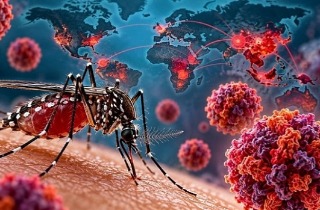
Sporadic Severe Influenza Infections Spark Growing Concerns
A potentially new influenza strain may be emerging in parts of China following suspected zoonotic spillover involving avian and swine influenza viruses, raising fresh concerns about the possibility of more serious respiratory infections.
In the last seven days, there are unverified reports that severe respiratory infections and hospitalizations are increasing in Liaoning, Guangxi and Jiangxi provinces and Hubei starting to see a trend in the last 3 days.
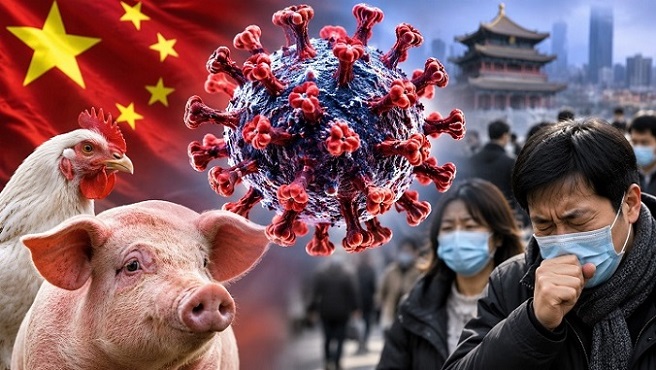 A suspected new influenza strain involving avian H9N2 and swine-origin H1N2v viruses is raising concerns about zoonotic
spillover in China
China has continued to experience sporadic human infections involving avian influenza viruses, with recent reports pointing to human infections in a few provinces in October and November 2026.
These developments have intensified attention on the genetic evolution of influenza viruses circulating among poultry, pigs, and humans.
Possible Emergence of a New Reassortant Influenza Strain
Preliminary suspicions attributed to Chinese virologists speaking anonymously suggest that the suspected strain could involve genetic reassortment between avian H9N2 influenza and swine-origin H1N2v viruses.
Both viruses have characteristics that make their potential genetic interactions particularly important.
H9N2 circulates extensively among poultry and has previously contributed genetic segments to other influenza strains, while H1N2v represents a swine-origin influenza variant capable of occasionally infecting humans.
Reassortment between influenza viruses can produce new combinations of genetic material, potentially changing viral behavior, host susceptibility, and disease severity.
Emerging Concerns Over More Severe Illness
Of particular concern are preliminary suggestions that infections involving the suspected strain could be associated with increased disease severity. Such developments would make identifying the virus's genetic composition, clinical characteristics, and transmission patterns especially important.
Growing Need for Influenza Surveillance
This
Thailand Medical News report highlights the potential public health implications of influenza reassortment involving viruses from different animal species.
The suspected emergence of a new strain underscores the importance of expanded genomic surveillance, rapid identification of unusual respiratory infections, and closer monitoring of animal-to-human transmission.
Understanding whether the suspected virus possesses genetic changes associated with increased pathogenicity or improved human adaptation will be crucial in assessing its potential public health impact.
This is a developing story and we will be providing more updates as details are verified and more official information emerges. However, at the current moment, we are facing trouble trying to get official s
tatements on this new unverified development or proper data as the health officials in China seems to be trying to conceal things.




 Share
 Tweet
 Share