Nikhil Prasad Fact checked by:Thailand Medical News Team Jun 23, 2026 3 months, 1 week, 3 days, 20 hours, 55 minutes ago
Medical News: Endometriosis, a painful condition affecting millions of women worldwide, may one day be treated with help from an herb found in many kitchen spice racks. New research suggests that an extract from rosemary (Rosmarinus officinalis) can interfere with several biological processes that allow endometriosis to develop and spread.
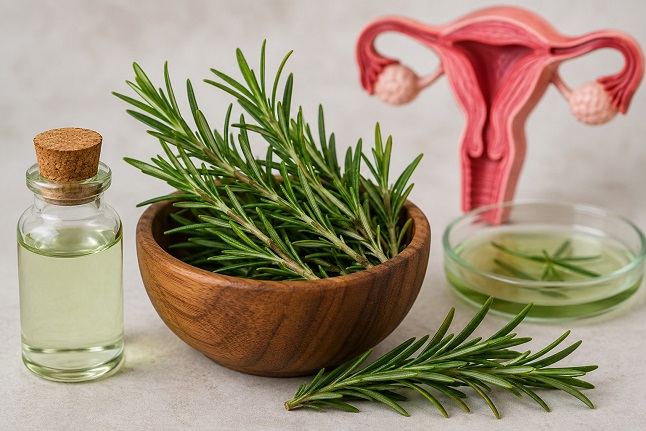 Scientists find that rosemary extract can slow endometriosis-related cell growth, reduce oxidative stress, and limit the spread of abnormal cells
Researchers from the Instituto de Biología y Medicina Experimental (IBYME)-CONICET, Instituto de Investigación en Medicina y Ciencias de la Salud at Universidad del Salvador, Instituto de Ciencia y Tecnología César Milstein-CONICET–Fundación Pablo Cassará in Argentina, and Münster University Hospital’s Departments of Radiation Oncology and Gynecology and Obstetrics in Germany investigated the effects of a hydroethanolic rosemary extract in laboratory models of endometriosis.
A Disease with Limited Treatment Options
Endometriosis occurs when tissue similar to the lining of the uterus grows outside the womb. The condition affects an estimated 10–15 percent of menstruating women and is a major cause of chronic pelvic pain and infertility. Current treatments mainly rely on hormones or surgery, but both approaches have limitations, side effects, and a high risk of disease recurrence.
Scientists have therefore been searching for safer long-term alternatives, including natural compounds that target the underlying mechanisms driving the disease.
Rosemary’s Powerful Natural Compounds
The researchers first analyzed the rosemary extract and found that it contained significant amounts of biologically active compounds. The most abundant were carnosic acid and carnosol, which together accounted for nearly a quarter of the extract, along with rosmarinic acid.
The extract also demonstrated strong antioxidant activity, meaning it could help neutralize harmful molecules known as reactive oxygen species that contribute to inflammation and tissue damage.
Slowing Cell Growth and Triggering Cell Death
One of the most important findings was that rosemary extract reduced the viability of both endometrial and endometriotic cells. As the concentration increased, fewer abnormal cells survived.
The study showed that the extract disrupted the normal cell cycle, causing cells to accumulate in a stage known as the S phase. This interruption prevented cells from progressing normally and multiplying. Researchers also observed increased levels of proteins involved in controlling cell growth, suggesting that rosemary was actively interfering with the mechanisms that allow endometriosis-related cells to proliferate.
At higher concentrations, the extract also triggered significant cell death. This is particularly important because endometriosis cells are known for their ability to resist normal self-destruction processes.
Reducing Oxidative Stress and Cell Migrat
ion
This
Medical News report notes that the rosemary extract also reduced oxidative stress in endometrial stromal cells. Oxidative stress has long been linked to inflammation and the progression of endometriosis.
Another key discovery involved cell migration. Endometriosis spreads when abnormal cells move and establish lesions in new locations. The rosemary extract significantly reduced this migratory ability, even at relatively low concentrations.
Researchers believe this anti-migration effect may be one of the most promising aspects of the extract because it appeared before major cell-killing effects occurred.
A Potential Future Nutraceutical
The researchers believe whole rosemary extracts may offer advantages over isolated compounds because multiple plant chemicals can work together to produce stronger biological effects. Importantly, several beneficial effects were achieved using lower amounts of the active compounds than previously reported when those compounds were tested individually.
Conclusions
The findings suggest that rosemary extract can target several important processes involved in endometriosis, including excessive cell growth, abnormal cell survival, oxidative stress, and cell migration. While these results come from laboratory experiments and not human clinical trials, they provide encouraging evidence that rosemary-derived formulations could eventually be developed as affordable nutraceutical or therapeutic options. Further animal and human studies will be needed to confirm safety, effectiveness, and appropriate dosing before any clinical use can be recommended.
The study findings were published in the peer reviewed journal: International Journal of Molecular Sciences.
https://www.mdpi.com/1422-0067/27/13/5654
For the latest on treating endometriosis, keep on logging to Thailand
Medical News.
Read Also:
https://www.thailandmedical.news/articles/herbs-and-phytochemicals
Medical Disclaimer: All content published by Thailand Medical News is based on scientific research and is intended for informational and educational purposes only. It is not medical advice, diagnosis, or treatment. Readers must not attempt to use, apply, or experiment with any protocols, compounds, or therapies mentioned without first consulting a qualified and licensed medical doctor. Many findings discussed are experimental or preliminary, and only a licensed healthcare professional can determine what is safe and appropriate for an individual’s specific medical condition.




 Share
Share
 Tweet
Tweet
 Share
Share

































