High Lactate Dehydrogenase Levels Linked to Higher Death Risk in Sepsis Patients
Nikhil Prasad Fact checked by:Thailand Medical News Team Jan 04, 2026 9 months, 1 day, 8 hours, 50 minutes ago
Medical News: New study reveals how a simple enzyme test could help predict survival chances in sepsis
A groundbreaking new study has found that a commonly tested enzyme in the blood, called lactate dehydrogenase or LDH, may hold the key to predicting survival outcomes for patients suffering from sepsis - a serious, life-threatening condition caused by overwhelming infection in the body.
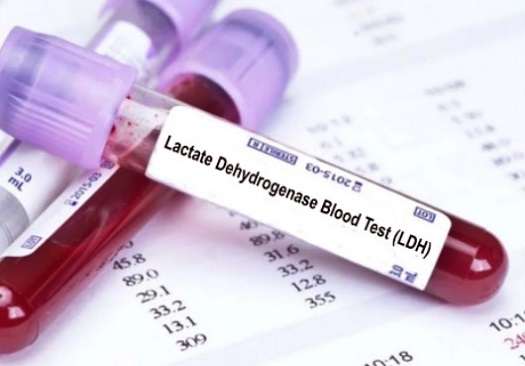 A simple LDH blood test may help predict sepsis survival chances
The research was conducted by scientists from The Affiliated Changsha Central Hospital at Hengyang Medical School, University of South China. It analyzed data from 6,775 patients with sepsis using the large-scale MIMIC-IV ICU database managed by the Massachusetts Institute of Technology (MIT) and Beth Israel Deaconess Medical Center in the United States.
According to this
Medical News report, the study examined whether blood levels of LDH, a molecule involved in cellular energy production and inflammation, were linked to patients’ risk of dying either within 30 days or one year after being diagnosed with sepsis.
Higher LDH Equals Higher Risk of Death
The researchers divided patients into four groups based on their LDH levels. They found a clear and alarming pattern - those with higher LDH levels had a significantly greater chance of dying. For every 100 IU/L increase in LDH, the risk of 30-day mortality rose by 11 percent, and the risk of one-year mortality rose by 12 percent.
The most severe cases - patients in the highest LDH group - had nearly three and a half times the risk of dying within 30 days compared to those with the lowest LDH levels. Similarly, the one-year death risk was more than tripled for those with the highest LDH readings.
LDH levels also correlated with other signs of worsening illness such as increased respiratory rate, higher lactate levels, longer ICU stays, and poorer organ function.
A Nonlinear and Powerful Prognostic Tool
Interestingly, the study found that the relationship between LDH and mortality wasn’t always a straight line. Using advanced statistical models, the researchers showed a nonlinear pattern: once LDH levels passed around 625 IU/L, the risk of death leveled off, meaning most of the risk occurred at earlier elevations.
Despite LDH not being perfect as a standalone predictor - its accuracy rates hovered around 66% - its value lies in how accessible and inexpensive the test is. It is already part of routine blood work in many hospitals, making it a simple tool that could be easily used to screen sepsis patients who need more aggressive monitoring or treatment.
Understanding the Link
Experts believe the connection between high LDH and poor outcomes in sepsis may be due to multiple factors. LDH is released when cells are damaged or die, which occurs frequently during the body’s intense response to infection. It is also linked with hypoxia (lack of oxygen), inflammati
on, and cell death - all of which are hallmarks of severe sepsis.
Implications for the Future
While the study could not prove that high LDH causes death, the strong association suggests it can help doctors quickly identify patients at risk and potentially save lives by intervening earlier.
LDH could become a key tool in guiding how hospitals care for sepsis patients, especially in resource-limited settings. The findings also call for more international research to confirm the results and explore whether LDH-lowering treatments could impact survival.
The study findings were published in the peer reviewed journal: PLOS One
https://journals.plos.org/plosone/article?id=10.1371/journal.pone.0337213
For the latest on sepsis, keep on logging to Thailand
Medical News.
Read Also:
https://www.thailandmedical.news/articles/sepsis




 Share
Share
 Tweet
Tweet
 Share
Share