Nikhil Prasad Fact checked by:Thailand Medical News Team Jun 01, 2026 4 months, 2 days, 21 hours, 37 minutes ago
Medical News: The global rollout of COVID-19 vaccines has been one of the most controversial issues in modern history. A new systematic review has now examined an unusual and extremely rare group of skin-related disorders known as cutaneous lymphomas and lymphoproliferative disorders that were reported after COVID-19 vaccination.
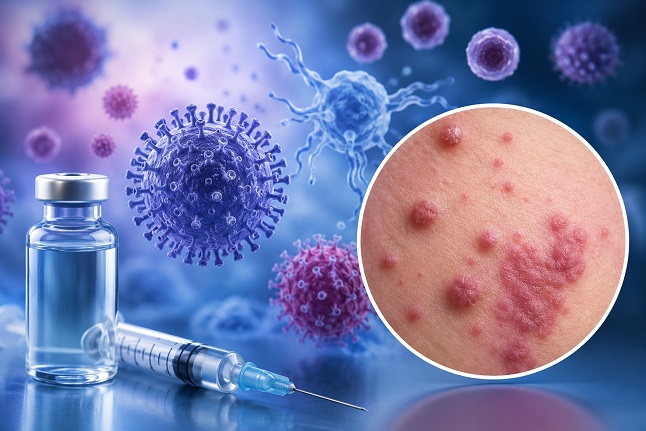 Researchers find extremely rare reports of skin lymphomas appearing shortly after COVID-19 vaccination
Researchers from the Department of Medical and Surgical Sciences, University of Bologna, Italy; the Dermatology Unit at IRCCS Azienda Ospedaliero-Universitaria di Bologna, Italy; the Dermatology Unit at Ospedale San Bortolo in Vicenza, Italy; and the Department of Medical Sciences, Section of Hematology and Rheumatology, University of Ferrara, Italy conducted the review to better understand whether there might be any link between COVID-19 vaccination and these rare skin conditions.
Understanding These Rare Skin Disorders
Cutaneous lymphomas are uncommon cancers that begin in immune cells located in the skin. Most originate from T-cells, which are important components of the body's immune defense system. Alongside these cancers, there are also non-cancerous lymphoproliferative disorders that can resemble lymphomas but generally behave in a much less aggressive manner.
Scientists have wondered whether the immune activation by the COVID-19 vaccines could occasionally reveal or temporarily worsen previously silent lymphoid disorders in certain individuals.
What the Researchers Found
The investigators reviewed published medical literature and identified 15 eligible studies describing a total of 35 patients who developed either new skin lymphomas or experienced relapses of existing disease after COVID-19 vaccination.
Of the 35 cases, 18 were confirmed cutaneous lymphomas while 17 were classified as non-neoplastic lymphoproliferative disorders. The median patient age was 58 years, and nearly two-thirds of the reported patients were men.
The most frequently reported lymphoma subtype was lymphomatoid papulosis, accounting for half of all lymphoma cases. Other conditions included Sézary syndrome, mycosis fungoides, primary cutaneous anaplastic large-cell lymphoma, and several other uncommon variants.
Interestingly, nearly 69 percent of the reported cases represented newly diagnosed disease, while about 31 percent were relapses in individuals who already had a history of these disorders.
Most Cases Appeared Soon After Vaccination
One of the most notable findings was the relatively short interval between vaccination and symptom onset. In newly diagnosed lymphoma cases, symptoms appeared anywhere from 3 to 60 days after vaccination, with most occurring within the first two weeks.
Approximately 80 percent of the reported cases followed administration of the Pfizer-BioNTech vaccine.
This
Medical News report notes that the clustering of cas
es within a short time frame prompted researchers to explore possible biological explanations. They believe vaccination may have acted as a trigger that temporarily stimulated immune activity in individuals who already harbored undetected or dormant lymphoid abnormalities.
Possible Biological Mechanisms
The review discusses several potential mechanisms. Vaccination activates immune pathways that increase production of inflammatory signaling molecules and stimulate T-cells. In people with pre-existing but silent lymphoid cell populations, this immune activation could theoretically encourage temporary expansion of these cells, making an otherwise hidden condition become clinically noticeable.
The researchers also found that more than 76 percent of cases with available laboratory testing showed positivity for a marker called CD30, which is often associated with certain low-grade and relatively indolent T-cell lymphoproliferative disorders.
Importantly, many of the reported disorders were not aggressive cancers. Several cases resolved spontaneously, while others responded well to treatments such as methotrexate, corticosteroids, phototherapy, radiotherapy, or surgical removal.
Conclusion
The review identified 35 reported cases of cutaneous lymphomas and related lymphoproliferative disorders occurring after COVID-19 vaccination, with most cases involving low-grade T-cell conditions and appearing within a few weeks of vaccination. While the timing is intriguing and biologically plausible as a triggering event in susceptible individuals, the available evidence does not establish a direct causal relationship. Instead, the findings suggest that vaccination may occasionally uncover previously silent or undiagnosed disorders through temporary immune activation. Continued monitoring, larger registries, and long-term studies will be essential to better understand these uncommon observations.
The study findings were published in the peer reviewed Journal of Skin Cancer.
https://onlinelibrary.wiley.com/doi/10.1155/jskc/4893577
For the latest vaccine news, keep on logging to Thailand
Medical News.
Read Also:
https://www.thailandmedical.news/articles/vaccine-news




 Share
Share
 Tweet
Tweet
 Share
Share

































