Nikhil Prasad Fact checked by:Thailand Medical News Team Feb 10, 2026 6 months, 2 weeks, 6 days, 11 hours, 21 minutes ago
Medical News: Understanding A Common but Debilitating Problem
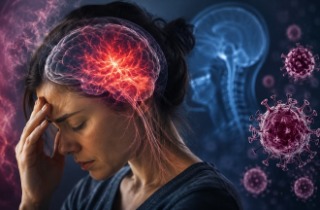
Persistent fatigue has emerged as one of the most troubling long-term symptoms following COVID-19, even among people who initially had only mild illness. Many patients report months of overwhelming tiredness, poor concentration, and lack of motivation that disrupt daily life. Scientists have struggled to explain why this happens in some individuals but not others. Now, new research sheds light on how early inflammation during COVID-19 may trigger lasting changes in the brain that drive long-term fatigue.
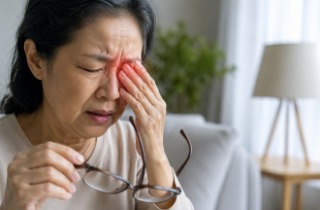
 Early COVID inflammation may rewire motivation-related brain circuits, driving months of persistent fatigue
Who Conducted The Study
Early COVID inflammation may rewire motivation-related brain circuits, driving months of persistent fatigue
Who Conducted The Study
The research was carried out by scientists from the Department of Medical Imaging at the First Affiliated Hospital of Xi’an Jiaotong University, along with collaborators from Ankang Central Hospital, Xi’an QinHuang Hospital, Shangluo Central Hospital, Yanan Traditional Chinese Medicine Hospital, Nuclear 215 Hospital of Shaanxi Province, Hanzhong Central Hospital, Yulin Hospital affiliated with Xi’an Jiaotong University, Baoji High-tech Hospital, Xidian University, and the Medical College of Wisconsin in the United States.
Tracking Inflammation Fatigue and The Brain
In this
Medical News report, researchers followed 193 adults who had recovered from mild COVID-19. Blood tests were taken during the early stage of infection to measure C-reactive protein, or CRP, a well-known marker of inflammation. Fatigue levels were assessed within the first month and again three months later. At the three-month mark, participants also underwent advanced brain scans to examine how different brain regions communicated with each other while at rest.
Key Differences in Those with Lasting Fatigue
The results were striking. About one quarter of participants developed persistent fatigue lasting at least three months. These individuals had significantly higher CRP levels during the acute phase of infection, suggesting stronger early inflammation. Higher CRP was linked to more severe fatigue both shortly after infection and months later.
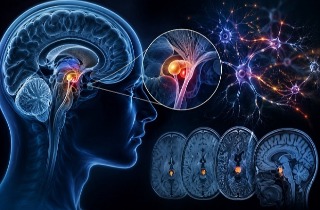
Brain imaging revealed another critical difference. People with persistent fatigue showed weaker communication between the left superior frontal gyrus, a region involved in planning and motivation, and deeper brain structures known as the striatum, which play a key role in energy, reward, and effort. The weaker this brain connectivity, the more severe the fatigue symptoms.
How Early Inflammation Sets Off a Chain Reaction
Detailed analysis showed that inflammation did not damage brain connections directly. Instead, early inflammation increased acute fatigue, which then appeared to contribute to changes in brain connectivity over time. This chain reaction helped explain how short-term illness could evolve into long-lasting exhaustion, even after the virus itself was gone.
Why These Findings
Matter
These discoveries suggest that post-COVID fatigue is not simply psychological or imagined. It reflects real biological changes involving both the immune system and brain networks that regulate motivation and energy. Identifying this pathway opens the door to earlier interventions during the acute phase of infection, when inflammation is still high.
Conclusion
The study provides compelling evidence that early inflammation during mild COVID-19 can set off a cascade leading to persistent fatigue by altering key brain circuits involved in motivation and effort. By linking blood markers, symptoms, and brain changes, the findings offer a clearer explanation for long COVID fatigue and highlight the urgent need for early anti-inflammatory or brain-targeted strategies to reduce long-term suffering.
The study findings were published in the peer reviewed journal: Brain, Behavior, & Immunity – Health.
https://www.sciencedirect.com/science/article/pii/S2666354626000293
For the latest on Long COVID, keep on logging to Thailand
Medical News.
Read Also:
https://www.thailandmedical.news/articles/long-covid




 Share
Share
 Tweet
Tweet
 Share
Share