Protein Called Brain-Derived Neurotrophic Factor Linked to Severe Nerve Pain in Chronic Back Pain Patients
Nikhil Prasad Fact checked by:Thailand Medical News Team Jun 11, 2026 3 months, 3 weeks, 3 days, 18 hours, 47 minutes ago
Medical News: Chronic Back Pain Study Finds BDNF Blood Marker May Reveal Hidden Nerve Damage and Pain Severity
Chronic low back pain affects millions of people worldwide and remains one of the leading causes of disability. While doctors often rely on patient descriptions and pain scoring systems to evaluate pain severity, researchers are increasingly searching for biological markers that can objectively measure pain. A new study from Poland suggests that a protein called brain-derived neurotrophic factor (BDNF) may provide valuable insights into both pain intensity and nerve-related pain in people suffering from chronic back pain.
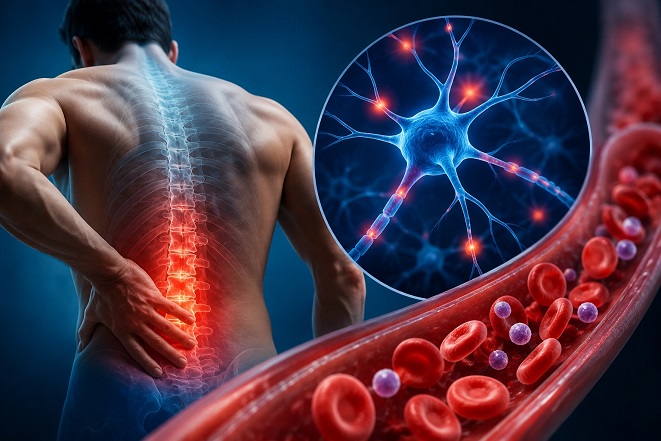 Researchers identify BDNF as a promising blood marker that may help detect severe and neuropathic pain in chronic
back pain patients
The research was conducted by scientists from the Department of Anaesthesiology and Intensive Therapy and the Department of Anaesthesiology and Intensive Therapy of Children at the Medical University of Bialystok, Poland.
What Is BDNF and Why Does It Matter?
BDNF is a naturally occurring protein that plays a critical role in the growth, survival, and communication of nerve cells. It is essential for learning, memory, and brain health. However, scientists have also discovered that BDNF is heavily involved in pain signaling pathways.
When nerves become damaged or overly sensitive, BDNF levels can rise and amplify pain signals traveling through the nervous system. Previous studies have linked elevated BDNF levels to chronic pain conditions, but little was known about how different pain treatment strategies affect this important protein.
The new study sought to determine whether BDNF levels change in patients receiving different opioid-based pain treatments and whether the protein could help identify patients suffering from neuropathic pain, a particularly difficult form of pain caused by nerve damage.
Examining Chronic Pain Patients
Researchers analyzed adults suffering from chronic low back pain who were receiving opioid-based pain treatment. A total of 42 patients received multimodal opioid-based therapy, meaning opioids were combined with other pain-relieving medications such as paracetamol, anti-inflammatory drugs, pregabalin, steroids, or muscle relaxants.
Their results were compared with patients receiving opioid treatment alone and with a control group of chronic pain patients who were not taking pain medications.
Blood samples were collected and analyzed for BDNF concentrations using highly sensitive laboratory testing.
Multimodal Therapy Appears Less Harmful
One of the most interesting findings involved the effect of different pain treatment approaches on BDNF levels.
Patients receiving opioid therapy alone had the lowest median BDNF levels at 2.7 ng/mL. Those receiving multimodal opioid-based therapy had significantly higher levels at 3.6 ng/mL. The untreated control group showed median levels of 5.0 ng/mL.
According to the researchers, opioid medica
tions are known to potentially contribute to nerve cell damage and degeneration when used long-term. The fact that multimodal therapy resulted in higher BDNF levels than opioid-only treatment suggests that combining opioids with other medications may help reduce some of the unwanted biological effects associated with opioid exposure.
The findings support growing international recommendations encouraging doctors to reduce reliance on opioid-only pain treatment whenever possible.
Higher BDNF Levels Mirror More Severe Pain
The researchers also discovered a striking relationship between BDNF levels and pain severity.
Patients reporting mild pain had median BDNF levels of 2.8 ng/mL. Those with moderate pain had levels of 3.6 ng/mL. Patients experiencing severe pain showed dramatically higher levels of 5.64 ng/mL.
The increase was statistically significant, indicating that rising BDNF concentrations closely track worsening pain.
This finding strengthens the growing body of evidence suggesting that BDNF is not merely associated with chronic pain but may actively participate in the biological processes that intensify pain perception.
Strong Link to Neuropathic Pain
Perhaps the most clinically important discovery involved neuropathic pain. Neuropathic pain occurs when nerves themselves become injured or dysfunctional. Patients often describe burning sensations, electric shocks, tingling, numbness, or stabbing pain. This form of pain is notoriously difficult to diagnose and treat.
The study found that patients with neuropathic pain had significantly higher BDNF levels than patients without nerve-related pain. Median levels reached 5.5 ng/mL in neuropathic pain sufferers compared to only 3.1 ng/mL in patients without neuropathic pain.
Researchers also found a strong correlation between BDNF levels and neuropathic pain intensity. Importantly, a BDNF level above 3.604 ng/mL predicted the presence of neuropathic pain with 74 percent sensitivity and 72 percent specificity.
These findings covered in this
Medical News report, suggest that a simple blood test measuring BDNF could one day assist doctors in identifying patients whose chronic pain has a significant nerve-related component.
A Potential Future Pain Biomarker
The researchers believe BDNF could eventually become a valuable biological tool for assessing chronic pain severity and identifying neuropathic pain in clinical practice. Although the study was exploratory and involved a relatively small patient population, it provides some of the strongest evidence yet that circulating BDNF reflects the biological activity underlying chronic pain.
Importantly, the study also suggests that multimodal pain management strategies may preserve healthier BDNF levels compared to opioid-only therapy, potentially reducing some of the neurological consequences associated with prolonged opioid use.
Conclusion
The study provides compelling evidence that BDNF plays a central role in chronic pain and nerve-related pain mechanisms. Patients experiencing more severe pain consistently exhibited higher blood levels of BDNF, while those with neuropathic pain showed particularly elevated concentrations. The findings also suggest that combining opioids with other pain-relieving therapies may produce a more favorable biological profile than relying on opioids alone. While larger studies are still needed before BDNF testing can become part of routine clinical practice, the research opens the door to a future where blood-based biomarkers help physicians objectively measure pain severity, identify hidden nerve damage, and tailor treatments more precisely for chronic pain sufferers.
The study findings were published in the peer reviewed journal: Biomedicines.
https://www.mdpi.com/2227-9059/14/6/1313
For the latest research o chronic back pain, keep on logging to Thailand
Medical News.
Read Also:
https://www.thailandmedical.news/news/the-impact-of-aging-and-hormonal-changes-on-chronic-pain
https://www.thailandmedical.news/news/canadian-study-finds-that-dietary-lifestyle-changes-show-promise-in-reducing-neuropathic-pain




 Share
Share
 Tweet
Tweet
 Share
Share