Nikhil Prasad Fact checked by:Thailand Medical News Team Feb 15, 2026 7 months, 2 weeks, 2 days, 21 hours, 47 minutes ago
Medical News: A groundbreaking scientific review has revealed that hidden support cells deep inside the brain and spinal cord may be the real drivers behind the severe nerve pain experienced by millions of people with diabetes. Researchers from the Department of Endocrinology at Tongji Hospital, Tongji Medical College, and Huazhong University of Science and Technology have uncovered powerful evidence showing that three types of glial cells—microglia, astrocytes, and oligodendrocytes—play a central role in painful diabetic neuropathy, a devastating complication affecting up to half of all diabetes patients.
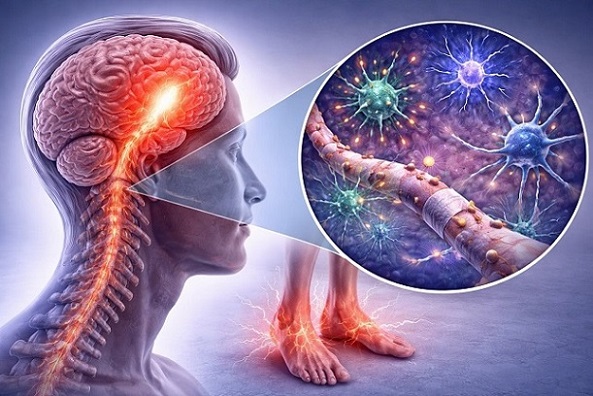 Hidden glial cells in the brain and spinal cord are now identified as key drivers of diabetic nerve pain
Painful Neuropathy is More Than Nerve Damage
Hidden glial cells in the brain and spinal cord are now identified as key drivers of diabetic nerve pain
Painful Neuropathy is More Than Nerve Damage
Painful diabetic neuropathy causes burning sensations, stabbing pain, numbness, and extreme sensitivity, especially in the legs and feet. Traditionally, scientists believed this condition was caused mainly by damage to peripheral nerves due to high blood sugar. However, this new review reveals that the central nervous system—the brain and spinal cord—is actively involved in amplifying and sustaining this pain.
The researchers explain that glial cells, once thought to only support neurons, are actually active participants in pain signaling. When exposed to high glucose levels, these cells become dysfunctional and trigger inflammation, metabolic imbalance, and abnormal nerve signaling. This creates a vicious cycle that makes pain worse and harder to treat.
Microglia Trigger Dangerous Inflammatory Storms
Microglia, the immune defense cells of the central nervous system, were found to be among the earliest responders to diabetes-related stress. Under diabetic conditions, these cells release inflammatory substances such as tumor necrosis factor and interleukins, which overstimulate nearby nerve cells and increase pain sensitivity.
The study also showed that microglia undergo metabolic changes that fuel inflammation and worsen nerve damage. Researchers identified key inflammatory pathways, including the NLRP3 inflammasome and NF-κB signaling, which amplify nerve pain signals. Importantly, certain treatments such as metformin and interleukin-35 showed promise in calming these harmful immune reactions and reducing pain in experimental models.
Astrocytes and Oligodendrocytes Disrupt Nerve Stability
Astrocytes, another type of glial cell, normally help maintain a healthy environment around neurons. But in diabetic neuropathy, these cells lose their ability to regulate chemical balance. This leads to toxic buildup of glutamate, overstimulation of nerves, and prolonged pain signaling.
Meanwhile, oligodendrocytes, which are responsible for insulating nerve fibers with protective myelin, also become impaired. Damage to this insulation slows nerve communication and increases abnormal pain transmission. This combination of inflammation, chemical imbalance, and insulation failure makes diabetic nerve pain more persistent and severe.
New Biomarkers and Future Treatment Possibilities
gt;
The researchers identified several promising biomarkers, including TSPO, GFAP, and myelin basic protein, which may help doctors detect early nerve damage before symptoms become severe. These markers could also help identify patients at higher risk and guide personalized treatment strategies.
Encouragingly, experimental treatments targeting glial cells—including metabolic therapies, anti-inflammatory compounds, and immune-modulating drugs—have shown strong potential in reducing neuropathic pain. These therapies may shift treatment from simply masking pain to actually slowing or reversing disease progression.
This
Medical News report highlights that glial cells are no longer passive bystanders but active drivers of nerve pain in diabetes. Their dysfunction creates a complex network of inflammation, metabolic disruption, and nerve signaling abnormalities that sustain chronic pain.
Conclusion
The findings represent a major shift in understanding diabetic neuropathy. Instead of focusing only on damaged nerves, scientists now recognize that the brain and spinal cord play a crucial role in causing and maintaining pain. By targeting glial cell dysfunction, future treatments could stop neuropathic pain at its source rather than just reducing symptoms. This breakthrough opens the door to earlier diagnosis, better therapies, and possibly even prevention of one of diabetes’ most debilitating complications.
The study findings were published in the peer reviewed journal: Biomedicines.
https://www.mdpi.com/2227-9059/14/2/435
For the latest on diabetic neuropathy, keep on logging to Thailand
Medical News.
Read Also:
https://www.thailandmedical.news/articles/diabetes




 Share
Share
 Tweet
Tweet
 Share
Share

































