Nikhil Prasad Fact checked by:Thailand Medical News Team May 12, 2026 3 months, 1 week, 15 hours, 6 minutes ago
Medical News: Iron deficiency continues to be one of the most widespread nutritional and medical disorders worldwide, affecting more than 1.2 billion people globally and contributing to fatigue, poor immunity, reduced physical performance, pregnancy complications, and impaired cognitive development in children. A major new scientific review is now shedding light on an oral iron formulation known as iron protein succinylate (IPS), which researchers say may offer important advantages over conventional iron supplements, particularly in terms of absorption, tolerability, and patient adherence.
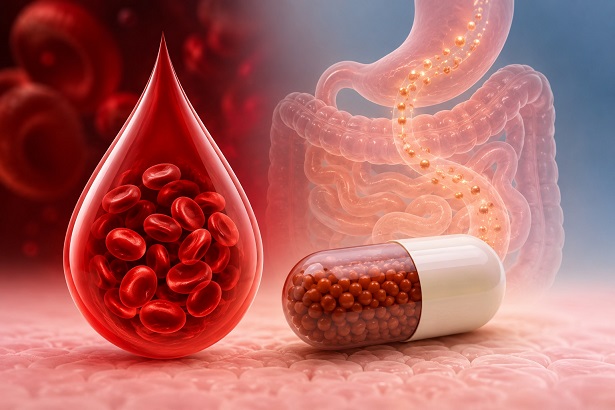 Researchers say iron protein succinylate may improve iron absorption while causing fewer gastrointestinal side
effects than conventional oral iron supplements
The review was conducted by researchers from the Blood and Tissue Bank of Navarra in Spain, Hospital Universitario Miguel Servet in Zaragoza, Spain, and Hospital Clínico Universitario Santa Lucía in Cartagena, Spain.
Iron Deficiency Is More Serious Than Many Realize
The researchers explained that iron deficiency is not simply a condition that causes anemia. Iron is essential for oxygen transport, energy production, immune defense, and normal cellular function. Even before anemia develops, many individuals experience exhaustion, weakness, dizziness, poor concentration, and reduced quality of life.
Women of reproductive age are among the most affected because of menstrual blood loss and increased iron demands. During pregnancy, iron requirements rise dramatically to support fetal growth and increased maternal blood volume. The review warned that inadequate iron levels during pregnancy may increase maternal complications and negatively affect fetal brain development.
Young children are also especially vulnerable. The study noted that iron deficiency in infancy and early childhood has been associated with attention deficits, delayed learning, impaired motor development, and weakened immunity.
Why Conventional Iron Supplements Often Fail
Although oral iron supplements remain the first-line treatment for iron deficiency, many conventional formulations are difficult for patients to tolerate. Traditional ferrous sulfate tablets commonly cause nausea, abdominal pain, constipation, diarrhea, bloating, and black stools. According to the review, gastrointestinal side effects occur in up to 60 percent of patients and are a major reason many discontinue treatment.
The researchers also highlighted another major problem involving iron absorption. Iron uptake is easily disrupted by foods such as tea, coffee, cereals, dairy products, and calcium-rich meals. Several medications including antibiotics and antacids can also reduce absorption significantly.
In addition, many chronic illnesses interfere with the body’s ability to absorb iron effectively. Conditions such as chronic kidney disease, inflammatory bowel disease, obesity, heart failure, cancer, and aging can increase levels of the hormone hepcidin, which blocks intestinal iron absorption and traps iron inside cells.
How Iron Protein Succinylate Work
s Differently
IPS was designed specifically to overcome many of the problems associated with conventional oral iron therapy. The formulation contains ferric iron bound to succinylated casein, a modified milk-derived protein that protects the stomach lining from direct iron irritation.
Unlike standard iron salts that release iron rapidly in the stomach, IPS remains stable in acidic conditions and only releases iron after reaching the intestine, where absorption occurs more efficiently. Researchers said this delayed-release mechanism appears to significantly reduce gastrointestinal side effects.
The formulation also contains succinic acid, which has been shown in several studies to enhance iron absorption by as much as 20 to 30 percent.
This
Medical News report notes that IPS may represent an important advancement because it addresses both of the main limitations of oral iron therapy: poor absorption and poor tolerability.
Clinical Studies Show Strong Benefits
The review analyzed findings from 54 clinical studies involving approximately 6,450 patients. Multiple studies demonstrated that IPS achieved similar or superior hematologic improvements compared to conventional ferrous sulfate.
In one study involving blood donors with low iron stores, IPS achieved absorption rates of 18.7 percent compared to just 6.4 percent for ferrous sulfate. Other trials showed IPS produced steadier increases in serum iron and faster improvements in hemoglobin levels.
A large multicenter clinical trial involving more than 1,000 patients found that IPS caused substantially fewer side effects than controlled-release ferrous sulfate. Only 11.5 percent of IPS users experienced adverse effects compared to 26.3 percent among those receiving ferrous sulfate.
Researchers also found that IPS absorption was not significantly reduced when taken with food, unlike many conventional iron supplements whose absorption may drop by approximately 40 percent during meals. This flexibility could improve treatment adherence among patients who struggle with fasting regimens.
Potential Importance for Difficult Patient Groups
The review emphasized that IPS may be especially useful in patients with chronic gastrointestinal disorders, inflammatory diseases, pregnancy-related iron deficiency, and elderly populations where conventional iron therapy is often poorly tolerated or ineffective.
Patients with inflammatory bowel disease, obesity, cancer, or chronic kidney disease frequently have elevated hepcidin levels that block normal iron uptake. The researchers believe IPS may help improve outcomes in some of these challenging clinical situations because of its controlled-release properties and improved tolerability profile.
Conclusions
The researchers concluded that iron protein succinylate represents a promising oral iron formulation with several clinically important advantages over traditional iron salts. Its ability to reduce gastrointestinal irritation while maintaining effective iron absorption may help improve patient adherence and long-term treatment success. Clinical evidence reviewed in the study consistently showed favorable hematologic outcomes, fewer adverse gastrointestinal effects, and better tolerability across diverse patient populations. While intravenous iron therapy remains necessary in severe or complex cases, IPS may offer a valuable and safer alternative for millions of individuals requiring oral iron supplementation, particularly those who cannot tolerate conventional formulations.
The study findings were published in the peer reviewed Journal of Clinical Medicine.
https://www.mdpi.com/2077-0383/15/10/3691
For the latest on treating iron deficiency, keep on logging to Thailand
Medical News.
Read Also:
https://www.thailandmedical.news/articles/supplements




 Share
Share
 Tweet
Tweet
 Share
Share