Nikhil Prasad Fact checked by:Thailand Medical News Team Jun 08, 2026 3 months, 3 weeks, 4 days, 23 hours, 54 minutes ago
Medical News: A major new scientific review has revealed that several of the world's most dangerous cancer-causing viruses may be exploiting a critical cellular pathway that helps cells produce cholesterol and other essential compounds. The discovery is shedding new light on how virus-linked cancers develop and could open the door to new treatment strategies using drugs that are already widely available.
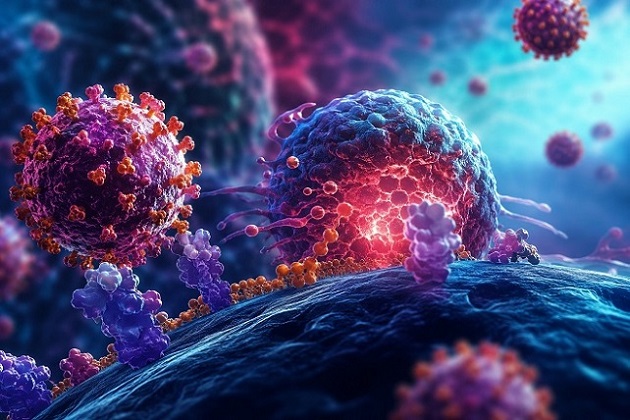 Scientists discover that cancer-causing viruses exploit a cholesterol-related cellular pathway to fuel viral survival
and tumor growth
The research was conducted by scientists from the Penn State Cancer Institute, the Department of Molecular and Precision Medicine at Penn State College of Medicine, and the Department of Medicine at Penn State College of Medicine, all in Hershey, Pennsylvania, USA.
A Hidden Pathway Helping Viruses Thrive
Scientists focused on a biological system known as the Isoprenoid Biosynthesis Pathway, also called the mevalonate pathway. While most people know this pathway because it produces cholesterol, it also creates many other molecules that cells need for growth, communication, movement, and survival.
The review found growing evidence that cancer-causing viruses manipulate this pathway to help themselves survive inside the body, replicate more efficiently, and eventually drive cancer formation.
Researchers examined all seven known human cancer-causing viruses: Epstein-Barr virus (EBV), Hepatitis B virus (HBV), Hepatitis C virus (HCV), Human Papillomavirus (HPV), Kaposi Sarcoma-associated Herpesvirus (KSHV), Human T-cell Lymphotropic Virus (HTLV-1), and Merkel Cell Polyomavirus (MCPyV). Together, these viruses are responsible for roughly 12 percent of cancers worldwide.
Viruses Rewire Cell Metabolism
The review highlights that these viruses do far more than simply infect cells. They actively reprogram the metabolism of their host cells to create a favorable environment for long-term survival.
A key target appears to be the mevalonate pathway. By increasing activity within this pathway, viruses gain access to important compounds that support viral replication, cancer-promoting signaling, and cellular transformation.
Particularly important are molecules known as farnesyl pyrophosphate and geranylgeranyl pyrophosphate. These compounds help activate proteins involved in cell growth and movement. When these proteins become overactive, the risk of cancer development rises significantly.
Epstein-Barr and Hepatitis Viruses Show Strong Dependence
Among the most striking findings were those involving Epstein-Barr virus, which infects about 90 percent of the global population.
Researchers found that EBV rapidly activates enzymes within the pathway shortly after infection. Experiments showed that blocking the pathway with statin drugs impaired the virus's ability to transform normal immune cells into rapidly growing cancer-like cells.
The review also highlighted strong evidence involving Hepatitis B and Hepatitis C viruses. Both viruses app
ear to boost cholesterol production and manipulate pathway activity to support viral replication and liver cancer development.
Several studies cited in the review showed that statins reduced viral activity and were associated with a lower risk of liver cancer in infected individuals.
This
Medical News report notes that these findings suggest viruses may share a common metabolic weakness that could potentially be exploited therapeutically.
Existing Drugs Could Offer New Possibilities
One of the most exciting aspects of the review is the growing evidence supporting the use of existing medications as potential anti-cancer tools.
Statins, commonly prescribed to lower cholesterol, block a key enzyme called HMG-CoA reductase. Laboratory studies repeatedly showed that statins could reduce viral growth, trigger cancer cell death, and interfere with cancer-promoting signals.
Other compounds, including bisphosphonates—drugs often used to treat bone disorders—also demonstrated promising effects by targeting different parts of the pathway.
Researchers believe that combining these treatments with newer cancer therapies could enhance effectiveness while overcoming some resistance mechanisms.
A New Direction for Cancer Research
The scientists conclude that despite differences among cancer-causing viruses, many appear to converge on the same metabolic pathway to promote disease. This shared dependence creates an attractive target for future therapies.
Importantly, the review also revealed significant knowledge gaps. For several viruses, researchers still do not fully understand how extensively the pathway is manipulated or which components are most important for cancer development.
Future studies will be needed to clarify these mechanisms and determine whether pathway-targeting drugs can deliver meaningful benefits in patients.
The findings suggest that a biological pathway once viewed mainly as a cholesterol-producing system may actually play a central role in virus-driven cancers. If future research confirms these observations, widely available drugs such as statins and related compounds could become valuable additions to the fight against multiple forms of cancer linked to viral infections. Such an approach could accelerate treatment development because many of these medications already have established safety records and are used around the world.
The study findings were published in the peer reviewed journal: Viruses.
https://www.mdpi.com/1999-4915/18/6/637
For the latest on Oncogenic Viruses, keep on logging to Thailand
Medical News.
Read Also:
https://www.thailandmedical.news/articles/hiv-aids
https://www.thailandmedical.news/articles/stds




 Share
Share
 Tweet
Tweet
 Share
Share

































