Nikhil Prasad Fact checked by:Thailand Medical News Team May 10, 2026 4 months, 3 weeks, 4 days, 2 hours, 5 minutes ago
Medical News: Scientists are uncovering surprising evidence that a common edible mushroom could help protect the aging brain from harmful inflammation linked to depression, memory loss, and neurodegenerative diseases. A new study has found that the king oyster mushroom, scientifically known as Pleurotus eryngii, may reduce damaging immune activity in brain cells and potentially support healthier brain aging.
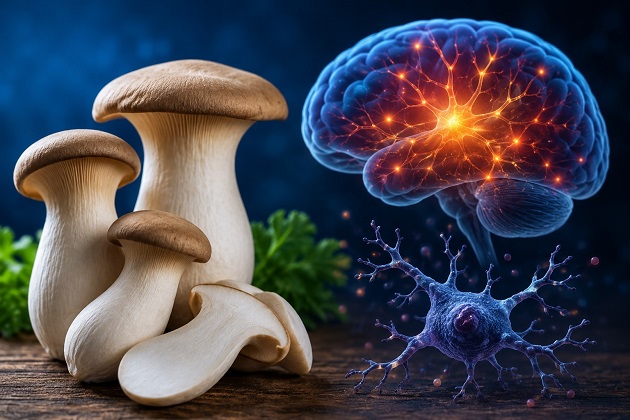 Scientists discover that king oyster mushrooms may reduce harmful brain inflammation linked to aging and depression
The research was conducted by scientists from the Laboratory of Fundamental and Applied Bioenergetics at INSERM Unit 1055 and Université Grenoble Alpes in France, the United States Department of Agriculture Human Nutrition Research Center on Aging at Tufts University in Boston, and Radiopharmaceutiques Biocliniques at INSERM Unit 1039 and Université Grenoble Alpes in France.
Researchers focused on special immune cells in the brain called microglia. These cells normally protect the brain, but when they become overactivated, they can trigger chronic inflammation that damages brain tissue over time. This process has been linked to Alzheimer’s disease, Parkinson’s disease, depression, and age-related cognitive decline.
Mushroom Compounds Show Strong Brain-Protective Effects
The scientists tested several extracts from king oyster mushrooms along with two naturally occurring phytochemical compounds found inside the mushroom: ergothioneine and N-acetyltryptamine. Ergothioneine is already known for its antioxidant properties, while N-acetyltryptamine is chemically similar to serotonin and melatonin, compounds associated with mood and sleep regulation.
Using laboratory-grown microglial cells exposed to inflammatory stress, the researchers discovered that mushroom extracts significantly reduced inflammatory activity. Some extracts were especially powerful at lowering harmful inflammatory molecules and oxidative stress markers.
One of the biggest findings involved the suppression of something called NLRP3 inflammasome activity. NLRP3 acts like an inflammatory switch inside immune cells and has become a major target in research into Alzheimer’s disease, depression, and other neurological disorders. When NLRP3 becomes overactive, it can drive chronic inflammation in the brain.
The study showed that certain king oyster mushroom extracts, especially those rich in N-acetyltryptamine, sharply reduced NLRP3 activation. The researchers also found reductions in inflammatory substances including TNF-alpha, nitric oxide-related compounds, iNOS, and NOX2, all of which are associated with brain inflammation and cellular damage.
Similar Effects to Blueberries
Interestingly, the mushroom extracts performed similarly to blueberry extract, which scientists used as a positive control because blueberries are already widely recognized for supporting brain health.
The acetone and ethanol mushroom extracts produced some of the strongest anti-inflammatory effects in the experiments. These extracts were especially rich in N-acetyltryptamine, suggesting that t
his compound may play a major role in the mushroom’s protective abilities.
This
Medical News report highlights that the findings also support earlier research suggesting that mushroom consumption may help reduce the risk of depression and cognitive decline in older adults.
Why Ergothioneine Matters
The researchers paid special attention to ergothioneine because levels of this antioxidant naturally decline with age. Previous studies have shown that lower blood levels of ergothioneine are associated with cognitive impairment and neurological disease.
King oyster mushrooms are among the richest known dietary sources of ergothioneine. The compound can cross the blood-brain barrier and enter microglial cells directly, allowing it to potentially reduce inflammation where it starts.
The researchers believe that ergothioneine and N-acetyltryptamine may work by reducing oxidative stress, which then blocks inflammatory pathways that activate NLRP3. This chain reaction could help prevent ongoing brain damage associated with aging and chronic disease.
Hope for Future Brain Health Therapies
Although the findings are promising, the researchers cautioned that the study was conducted only in laboratory cell models and not in humans. More studies involving animals and clinical trials will be necessary before scientists can confirm whether king oyster mushrooms can truly prevent or treat neurological disorders in people.
Still, the results add to growing evidence that certain foods may play an important role in protecting the brain naturally. The researchers believe king oyster mushrooms could eventually become part of dietary strategies aimed at reducing inflammation, preserving memory, and supporting mental health during aging.
The conclusions of the study are especially important because they suggest that everyday foods rich in unique bioactive compounds may help influence the same inflammatory pathways targeted by future neurological drugs. If confirmed in human studies, king oyster mushrooms may emerge as an affordable and natural nutritional tool for combating brain aging, mood disorders, and neurodegenerative diseases while supporting healthier cognitive function over the long term.
The study findings were published in the peer reviewed journal: Nutrients.
https://www.mdpi.com/2072-6643/18/10/1495
For the latest on preventing, treating or controlling brain inflammation, keep on logging to Thailand
Medical News.
Read Also:
https://www.thailandmedical.news/articles/herbs-and-phytochemicals




 Share
Share
 Tweet
Tweet
 Share
Share

































