Soluble ST2 Biomarker Shows Strong Potential in Predicting Severe Pediatric Pneumonia
Nikhil Prasad Fact checked by:Thailand Medical News Team Apr 26, 2026 5 months, 1 week, 2 days, 13 hours, 11 minutes ago
Medical News: A Growing Concern in Childhood Respiratory Infections
Mycoplasma pneumoniae pneumonia is a common cause of respiratory illness in children, particularly among school-aged groups. Although many cases resolve with standard treatment, a subset of patients can rapidly progress to severe illness, including respiratory failure, sepsis, or the need for intensive care. Identifying these high-risk cases early remains a major clinical challenge, especially during recent surges in infections observed across parts of Asia.
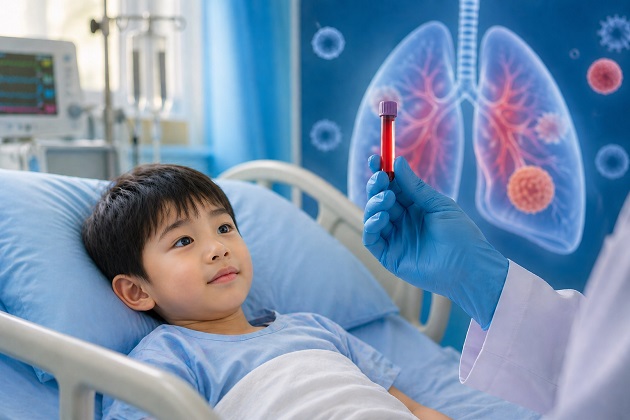 Elevated sST2 biomarker levels may help predict severe pneumonia outcomes in children
Study Identifies a Promising Prognostic Biomarker
Elevated sST2 biomarker levels may help predict severe pneumonia outcomes in children
Study Identifies a Promising Prognostic Biomarker
A new study conducted by researchers from the Department of Clinical Laboratory at the Children’s Hospital of Fudan University, National Children’s Medical Center in Shanghai, China, has identified soluble ST2 (sST2) as a highly promising biomarker for predicting severe outcomes in pediatric patients.
The research analyzed 147 hospitalized children diagnosed with Mycoplasma pneumoniae pneumonia between April 2023 and May 2024. Clinical data, laboratory findings, and patient outcomes were carefully reviewed to determine whether sST2 levels at admission could help predict disease severity.
Among the participants, 12 children experienced severe adverse events, including intensive care admission, sepsis, and one fatality. Notably, these patients exhibited significantly elevated sST2 levels at the time of hospital admission compared to those with milder disease.
Study Highlights Key Predictive Accuracy
Importantly, this Medical News report underscores that sST2 demonstrated exceptional predictive performance. Statistical analysis revealed an area under the curve (AUC) of 0.944, indicating high accuracy in identifying children at risk of severe complications. A critical threshold of 114.18 ng/mL was identified, above which the likelihood of adverse outcomes increased substantially.
Even after adjusting for age, gender, and other inflammatory markers such as procalcitonin (PCT) and interleukin-6 (IL-6), sST2 remained an independent and significant predictor of severe disease.
Superior to Conventional Inflammatory Markers
Traditional biomarkers like C-reactive protein (CRP), PCT, and IL-6 are commonly used in clinical settings to assess infection severity. However, their predictive value in distinguishing severe from non-severe cases can be limited.
The study found that sST2 outperformed several of these conventional markers, particularly CRP and lymphocyte-based indicators. Elevated sST2 levels were strongly associated with complications affecting both the lungs and other organ systems, as well as longer hospital stays.
Additionally, sST2 showed positive correlations with markers of inflammation such as CRP, PCT, IL-6, and neutrophil counts, while showing a negative correlation with lymphocyte levels. This pattern reflects an intensified immune response in more severe cases.
Biological Mechanism Behind
the Biomarker
The clinical significance of sST2 is closely tied to its role in the IL-33/ST2 signaling pathway, which regulates immune and inflammatory responses. Elevated sST2 levels may indicate an exaggerated immune reaction, often referred to as a “cytokine-driven” response.
Such excessive immune activation can contribute to tissue damage and complications, explaining why higher sST2 levels are linked to worse clinical outcomes in pediatric pneumonia cases.
Clinical Implications and Future Applications
The findings suggest that measuring sST2 levels at the time of hospital admission could provide clinicians with a valuable tool for early risk stratification. This would allow for more timely interventions, closer monitoring, and potentially improved patient outcomes.
Given the increasing incidence of more severe and treatment-resistant Mycoplasma pneumoniae infections, the introduction of a reliable biomarker like sST2 could significantly enhance clinical decision-making.
Study Limitations and Further Research
Despite its promising results, the study has limitations. It was conducted at a single center and involved a relatively small number of severe cases. Larger, multi-center studies will be necessary to validate these findings and determine how best to integrate sST2 testing into routine clinical practice.
Conclusion
The study provides compelling evidence that sST2 is a highly effective biomarker for predicting severe adverse outcomes in children with Mycoplasma pneumoniae pneumonia. Its strong predictive accuracy and association with disease severity highlight its potential as a valuable addition to current diagnostic tools. However, further research is required to confirm its clinical utility and establish standardized guidelines for its use.
The study findings were published in the peer reviewed journal: PLOS One.
https://journals.plos.org/plosone/article?id=10.1371/journal.pone.0347651
For the latest news, keep on logging to Thailand
Medical News.
Read Also:
https://www.thailandmedical.news/articles/mycoplasma-pneumonia
Medical-News-Soluble-ST2-Biomarker-Shows-Strong-Potential-in-Predicting-Severe-Pediatric-Pneumonia
Elevated sST2 biomarker levels may help predict severe pneumonia outcomes in children.




 Share
Share
 Tweet
Tweet
 Share
Share