Nikhil Prasad Fact checked by:Thailand Medical News Team Oct 29, 2026 1 hour ago
New research suggests that the immune system may remain locked in a prolonged battle against viral proteins in some people with long COVID, potentially explaining why symptoms persist months or even years after infection.
 Scientists identify persistently activated and potentially exhausted antiviral immune cells in long COVID
patients, offering new clues about lingering viral activity.
The study involved researchers from the University of Pennsylvania, University of California San Francisco, Yale University, Icahn School of Medicine at Mount Sinai, University of Freiburg, Temple University, University of Florida, Orlando College of Osteopathic Medicine, Howard Hughes Medical Institute, and San Francisco Veterans Affairs Medical Center.
Immune Cells Reveal Hidden Viral Activity
Researchers analyzed more than 500 blood samples from over 300 individuals, including more than 150 people with long COVID.
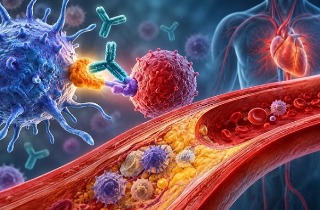
Using advanced immune profiling, they examined CD8 T cells, specialized immune cells responsible for recognizing and destroying virus-infected cells.
This
Thailand Medical News report highlights a striking finding: 40% of long COVID samples showed elevated activation of T cells targeting the SARS-CoV-2 spike protein, compared with just 16% of recovered controls.
The difference remained statistically significant after accounting for demographic factors and previous coronavirus exposure.
Signs of Persistent Immune Stimulation
Unlike recovered individuals, some long COVID patients maintained elevated spike-specific T-cell activation at four and twelve months after infection.
These immune cells displayed increased expression of activation markers including CD38, CD39, and HLA-DR.
Genetic analysis identified 549 upregulated genes and 138 downregulated genes compared with recovered controls.
Many changes involved immune activation, inflammatory responses, and cellular exhaustion, suggesting prolonged stimulation rather than ordinary immune memory.
Epstein-Barr Virus May Also Contribute
Researchers also discovered increased activation of T cells recognizing Epstein-Barr virus proteins associated with viral replication.
More than half of long COVID participants showed elevated activation against SARS-CoV-2 spike and/or Epstein-Barr virus antigens.
Importantly, comparable activation was not consistently observed against influenza, cytomegalovirus, or varicella-zoster virus.
Exhausted Immune Cells Raise Concerns
Further experiments revealed that highly activated spike-specific T cells produced less interferon-gamma and tumor necrosis factor when stimulated.
These findings suggest that persistent immune stimulation may impair antiviral defenses rather than strengthen them.
What the Findings Mean
The findings support the possibility that linger
ing viral antigens contribute to long COVID in certain patients. However, researchers did not directly establish persistent infection or prove that these immune abnormalities cause symptoms. Larger studies must determine whether these cellular signatures can guide diagnosis or targeted treatments.
Reference: The study, titled “Persistently activated virus-specific CD8 T cells indicate antigen-driven immune aberrations in long COVID,” was published as a bioRxiv preprint on October 16,th 2026, and has not yet undergone peer review.
https://www.biorxiv.org/content/10.64898/2026.10.14.759221v2
Read Also:
https://www.thailandmedical.news/articles/long-covid 



 Share
 Tweet
 Share