Nikhil Prasad Fact checked by:Thailand Medical News Team Jan 29, 2026 6 months, 1 week, 3 days, 23 hours, 10 minutes ago
Medical News: A growing body of evidence is now raising concerns that COVID-19 may leave behind more than short-term illness, potentially accelerating damage inside blood vessels long after recovery. New scientific commentary is drawing attention to subtle but important changes in arteries seen in people who have survived COVID-19, suggesting possible long-term heart and stroke risks.
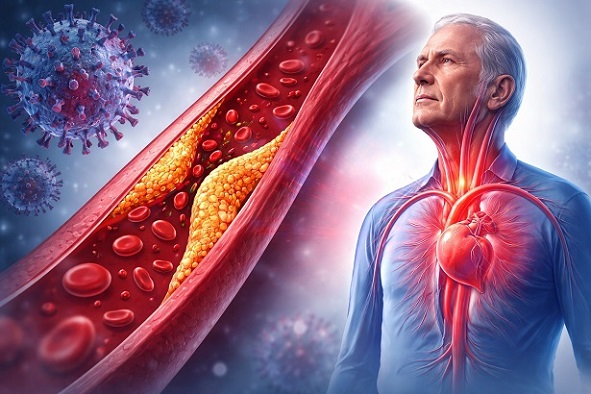 COVID-19 survivors may face faster hidden artery aging that raises future heart and stroke risks
What Prompted the New Concerns
COVID-19 survivors may face faster hidden artery aging that raises future heart and stroke risks
What Prompted the New Concerns
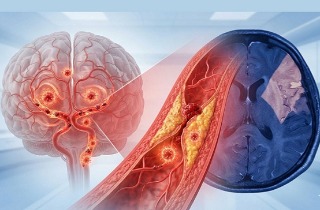
The discussion centers on a recent study that examined whether COVID-19 infection could speed up early artery damage, a process known as atherosclerosis. This condition involves the gradual thickening of artery walls and is a major cause of heart attacks and strokes. Researchers focused on a measurement called carotid intima-media thickness, or CIMT, which looks at the thickness of the artery wall in the neck using ultrasound.
The study was by researchers from several institutions, including an independent research center in Basel Switzerland, the Department of Neurology at the National Memorial Hospital of Vukovar in Croatia, Sveti Duh University Hospital in Zagreb Croatia, and the Faculty of Medicine and Faculty of Dental Medicine and Health at the University Josip Juraj Strossmayer of Osijek Croatia.
Key Findings Explained Simply
The original study followed 92 adults, including people who had recovered from COVID-19 and a control group with no prior infection. At the start, artery thickness was similar in both groups. However, after 12 to 18 months, those who had COVID-19 showed a noticeably greater increase in artery wall thickness. In simple terms, their arteries appeared to age faster.
Blood tests revealed that higher levels of inflammation markers, such as C-reactive protein, and unhealthy fat ratios in the blood were linked to this faster artery thickening. Age and heart rate also played an important role in how quickly these changes occurred.
Why Measurement Accuracy Matters
The commentary highlights several technical issues that could influence how results are interpreted. Atherosclerosis does not develop evenly, and measuring only one small area of an artery may miss other problem spots. Timing measurements with the heartbeat is also critical, as artery thickness naturally changes during each beat. Without strict consistency, small errors can appear large, especially when changes are measured in fractions of a millimeter.
In addition, the authors stress the importance of using the same artery location during follow-up scans and ensuring that examiners are blinded to patient history to avoid unintentional bias.
Why This Medical News Report Matters
This
Medical News report underscores that even mild or moderate COVID-19 infections may have hidden effects on the cardiovascular system. While CIMT testing is quick and non-invasive, it requires careful technique to produce reliable results. Small in
accuracies could lead to misleading conclusions about heart risk.
Conclusions And Public Health Implications
The findings reinforce growing concerns that COVID-19 may trigger long-lasting inflammation that quietly damages blood vessels. Although more large-scale studies are needed, the evidence suggests survivors may benefit from cardiovascular monitoring. Understanding these risks early could help doctors prevent future heart attacks or strokes through lifestyle changes and targeted treatment strategies.
The study findings were published in the peer reviewed journal: Viruses.
https://www.mdpi.com/1999-4915/18/2/170
For the latest COVID-19 News, keep on logging to Thailand
Medical News.
Read Also:
https://www.thailandmedical.news/articles/coronavirus
https://www.thailandmedical.news/articles/long-covid




 Share
Share
 Tweet
Tweet
 Share
Share