Nikhil Prasad Fact checked by:Thailand Medical News Team Jun 24, 2026 3 months, 1 week, 2 days, 13 hours, 52 minutes ago
Medical News: Scientists Uncover a Persistent Immune Circuit Driving Long COVID
A new study has shed important light on why some people continue to suffer from long COVID months or even years after their initial coronavirus infection. Researchers have identified a powerful immune interaction between two types of immune cells—monocytes and plasma cells—that appears to sustain inflammation and abnormal immune activity long after the virus has disappeared.
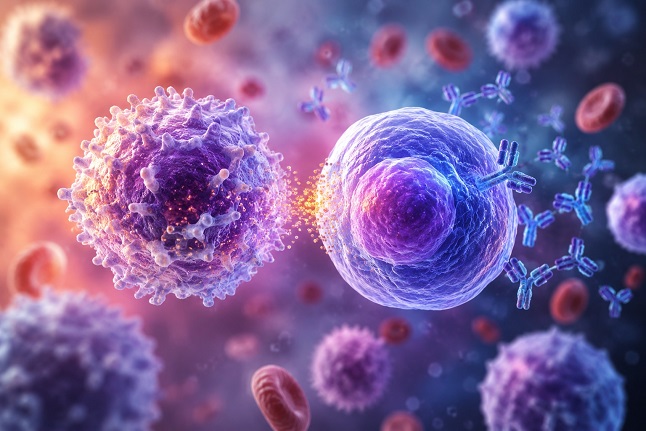 Scientists discover a persistent immune partnership between monocytes and plasma cells that may help explain the
lasting symptoms of long COVID.
The study, conducted by scientists from the University of Trento, Fondazione IRCCS Policlinico San Matteo, Fondazione IRCCS Ca' Granda Ospedale Maggiore Policlinico, and the University of Pavia in Italy, used advanced single-cell analysis to track immune changes in long COVID patients for up to a year after infection.
Tracking Long COVID at the Single-Cell Level
Long COVID is a condition in which symptoms such as fatigue, muscle weakness, brain fog, memory problems, breathing difficulties, and depression continue for months after recovery from COVID-19. Despite affecting millions worldwide, the biological mechanisms behind the condition have remained poorly understood.
To investigate, researchers analyzed blood samples from seven long COVID patients and five individuals who recovered from COVID-19 without developing lingering symptoms. Samples were collected at three, six, and twelve months after infection.
Using cutting-edge single-cell RNA sequencing, the team examined more than 24,000 individual immune cells, allowing them to observe how specific cell populations behaved over time.
Plasma Cells Remain Hyperactive for Months
One of the most striking discoveries involved plasma cells, specialized immune cells responsible for producing antibodies.
The researchers found that plasma cells in long COVID patients remained highly active long after infection. These cells continued producing large quantities of antibodies and showed signs of significant cellular stress linked to sustained antibody manufacturing.
Genes involved in antibody production, immune activation, and complement system activity were consistently elevated. The complement system is a powerful immune defense mechanism that can contribute to inflammation when activated excessively.
Even twelve months after infection, plasma cells continued displaying abnormal activity, suggesting that the immune system remains trapped in a prolonged state of alert.
Monocytes Fuel Chronic Inflammation
The study also identified persistent activation of monocytes, key immune cells involved in inflammation and pathogen detection.
Monocytes from long COVID patients exhibited elevated expression of genes linked to inflammatory signaling pathways, including NF-kB, interferon respons
es, and cytokine production. Laboratory testing further confirmed that these cells spontaneously produced higher levels of inflammatory molecules such as IL-1α, IL-1β, IL-8, and MIP-1α during the first six months after infection.
These findings indicate that monocytes remain activated long after the acute infection has resolved, potentially contributing to many long COVID symptoms.
A Powerful Immune Partnership Emerges
Perhaps the most important finding was the discovery of a sustained communication network between plasma cells and monocytes.
At three months after infection, the researchers observed extensive signaling exchanges among plasma cells, monocytes, and other immune cells. By six months, these interactions became concentrated around a dominant plasma cell-monocyte axis.
This
Medical News report highlights how these two cell types appear to reinforce each other's activity. Plasma cells promote inflammatory signaling, while monocytes provide signals that help maintain plasma cell activation. Together, they create a self-sustaining cycle that may drive persistent symptoms.
The researchers noted that this pattern resembles immune circuits often seen in autoimmune diseases, raising the possibility that autoimmune-like processes may contribute to long COVID.
Signs of Improvement After One Year
The good news is that the immune system appeared to gradually move toward recovery over time.
By twelve months, inflammatory signaling had diminished, and immune communication networks shifted toward pathways involved in regulation, repair, and immune balance. Monocyte-driven inflammation decreased, while other immune cells associated with regulatory functions became more prominent.
Although signs of immune dysfunction remained detectable, the overall pattern suggested a slow but measurable restoration of immune equilibrium.
Implications for Future Treatments
The findings suggest that therapies targeting the interaction between monocytes and plasma cells could potentially help reduce long COVID symptoms. By interrupting this persistent inflammatory partnership, it may be possible to restore normal immune function and accelerate recovery.
The researchers conclude that long COVID appears to be sustained by a coordinated immune network involving persistently activated plasma cells and inflammatory monocytes. This immune partnership remains active for months after infection and may represent one of the central biological drivers of the condition. Importantly, while signs of recovery emerge over time, the study demonstrates that immune abnormalities can persist for at least a year, emphasizing the need for continued research into targeted therapies that can break this cycle and improve outcomes for long COVID patients.
The study findings were published on a preprint server and are currently being peer reviewed.
https://www.researchsquare.com/article/rs-9917774/v1
For the latest on Long COVID, keep on logging to Thailand
Medical News.
Read Also:
https://www.thailandmedical.news/articles/long-covid




 Share
Share
 Tweet
Tweet
 Share
Share

































