Nikhil Prasad Fact checked by:Thailand Medical News Team May 11, 2026 3 months, 3 weeks, 1 day, 17 hours, 48 minutes ago
Medical News: A major new scientific study is challenging long-held assumptions about tranexamic acid, commonly known as TXA, a drug widely used around the world to prevent life-threatening bleeding. Researchers have discovered that under certain conditions, the medication may unexpectedly make some blood clots easier to break down instead of protecting them.
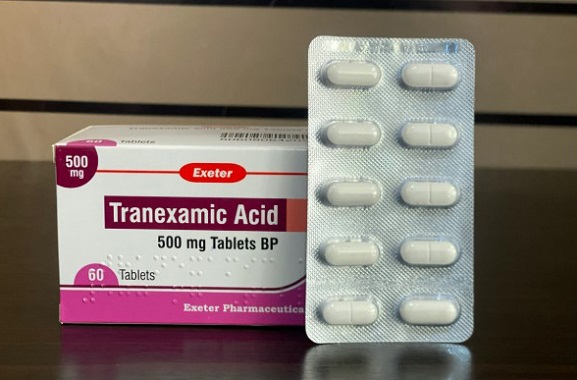 Scientists have discovered that tranexamic acid may unexpectedly alter clot structure and sometimes
accelerate clot breakdown under certain conditions
The findings are attracting attention because TXA is routinely used in emergency medicine, trauma care, surgeries, and childbirth complications to help stabilize blood clots and reduce bleeding. While the drug has saved countless lives, scientists now say its effects may depend heavily on timing, clot structure, and the biological environment surrounding the clot itself.
The study was conducted by researchers from Semmelweis University and the HCEMM-SU Thrombosis and Hemostasis Research Group in Hungary, the Research Centre for Natural Sciences in Hungary, Nikola Vaptsarov Naval Academy in Bulgaria, Varna Free University “Chernorizets Hrabar” in Bulgaria, and the Australian Maritime College at the University of Tasmania in Australia.
A Drug Long Considered a Bleeding Lifesaver
Tranexamic acid has been viewed for decades as one of the most effective anti-bleeding drugs available. It works by slowing fibrinolysis, the natural process in which the body dissolves blood clots after they are no longer needed.
Earlier international clinical trials showed that when TXA is given quickly after severe trauma or postpartum hemorrhage, it can significantly reduce deaths caused by uncontrolled bleeding. Because of these successes, the drug became a standard treatment in many emergency settings.
However, doctors have also noticed something puzzling over the years. When TXA is used preventively before major bleeding begins, the benefits are often inconsistent. Some clinical trials showed little improvement in patient outcomes despite the drug’s strong reputation. Researchers wanted to understand why.
Scientists Discover Unexpected Clot Behavior
To investigate, the research team created several laboratory models designed to mimic both emergency treatment and preventive use of TXA.
In one model, TXA was introduced into blood clots before clot-dissolving enzymes attacked the clot. In another model, clot formation and clot breakdown happened simultaneously while TXA was present.
The results were striking.
When TXA was present before clot breakdown began, the drug sometimes accelerated clot dissolution instead of slowing it down, especially when plasminogen levels were at normal physiological concentrations. Plasminogen is a blood protein that helps generate plasmin, the enzyme responsible for breaking down clots.
This unexpected effect did not occur in the models where clot formation and clot breakdown happened together. In those situations, TXA behaved as expected and prolonged clot stability.
/>
The findings suggest that the timing of TXA administration may play a much larger role than previously understood.
Changes In Clot Structure May Be Responsible
The researchers also discovered that TXA physically changes the microscopic structure of fibrin, the protein network that forms the backbone of blood clots.
Using scanning electron microscopy, scientists observed that TXA caused fibrin fibers to become significantly thicker. In some cases, the thickest fibers more than doubled in diameter. Even relatively low concentrations of the drug produced measurable structural changes in the clot network.
Although thicker fibers may sound stronger, the altered clot structure also created larger pores within the clot mesh. Researchers believe these larger spaces may allow clot-dissolving enzymes to penetrate more deeply into the clot, making it easier to break apart under certain biological conditions.
Importantly, the researchers ruled out increased plasmin generation as the main reason for the faster clot breakdown. Instead, the structural remodeling of the clot itself appears to be a major factor.
Timing May Determine Whether TXA Helps or Harms
The study suggests that TXA works best when given during active bleeding when clot-dissolving activity is already high. In contrast, preventive administration before bleeding develops may produce clot structures that behave differently than expected.
This Medical News report highlights that the findings may help explain why some major clinical studies failed to show clear benefits from prophylactic TXA use in areas such as childbirth, blood disorders, and certain surgeries.
Researchers emphasized that TXA remains an important and often life-saving medication. However, the study reveals that its biological effects are far more complex than previously believed.
The scientists also noted that their experiments were performed in controlled laboratory systems rather than full human circulatory systems. More studies will therefore be needed before treatment guidelines can be changed.
Still, the findings provide important new insights into how blood clot stability is influenced not only by medications but also by the microscopic architecture of the clot itself, the surrounding protein environment, and the exact timing of treatment. The study also raises the possibility that future TXA therapies may eventually need to be more personalized depending on the patient’s condition and bleeding risk.
The conclusions are especially significant because they show that clot behavior cannot be understood through simple “stronger versus weaker” assumptions. Instead, the interaction between clot structure, fibrin organization, plasminogen levels, and drug timing may determine whether TXA protects clots effectively or unintentionally makes them more vulnerable to breakdown.
The study findings were published in the peer reviewed journal: Biomolecules.
https://www.mdpi.com/2218-273X/16/5/696
For the latest Med News, keep on logging to Thailand Medical News.
Read Also:
https://www.thailandmedical.news/articles/med-news




 Share
Share
 Tweet
Tweet
 Share
Share

































