Nikhil Prasad Fact checked by:Thailand Medical News Team Mar 22, 2026 6 months, 1 week, 6 days, 1 hour, 8 minutes ago
Medical News: A team of researchers from the College of Chinese Materia Medica, Chongqing University of Chinese Medicine, the College of Traditional Chinese Medicine, Chongqing Medical University, and the Institute of Pharmacology and Toxicology, Chongqing Academy of Chinese Materia Medica have uncovered promising evidence that a traditional herbal remedy may help control life-threatening lung inflammation linked to sepsis and viral infections.
This
Medical News report highlights how the plant Eupatorium lindleyanum DC. could play a crucial role in calming the dangerous immune overreaction known as a “cytokine storm,” a condition often seen in severe infections including COVID-19.
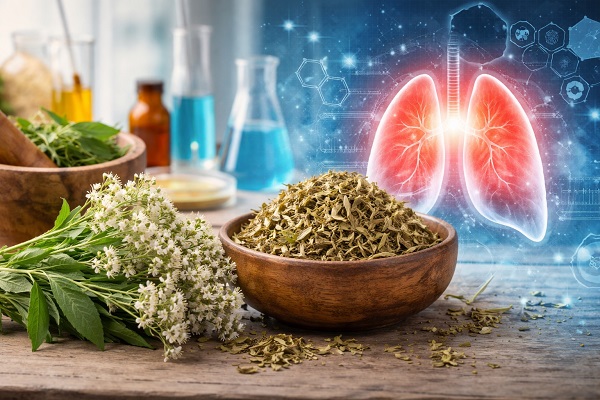 Traditional herb shows powerful effects in reducing dangerous lung inflammation and cytokine storms
What Makes Cytokine Storms So Dangerous
When the body fights infection, it releases proteins called cytokines to help coordinate the immune response. However, in severe cases, this process goes into overdrive, flooding the body with excessive inflammatory signals. This “cytokine storm” can damage organs, especially the lungs, leading to breathing failure and even death.
The researchers focused on this problem because both sepsis and viral infections like COVID-19 share this same harmful mechanism. Finding a treatment that can safely calm this response could save many lives.
The Herbal Candidate Under Study
Eupatorium lindleyanum DC., a plant long used in traditional Chinese medicine, is known for its anti-inflammatory and antiviral properties. However, until now, scientists had not fully understood how it works inside the body.
The research team used a combination of laboratory experiments, animal studies, and computer simulations to explore its effects in detail. They identified 32 active compounds within the plant, many of which interact with key biological pathways linked to inflammation.
Key Findings from the Study
The results were striking. In animal models with severe lung injury, the herbal extract significantly reduced swelling, bleeding, and immune cell buildup in lung tissue. According to findings shown in lung tissue analysis, treated subjects had visibly healthier lung structures compared to untreated ones.
The herb also lowered levels of major inflammatory molecules such as TNF-α and IL-6—two of the main drivers of cytokine storms. Importantly, these reductions were dose-dependent, meaning higher doses led to stronger effects.
In cell-based experiments, the extract successfully blocked inflammatory signaling pathways, particularly NF-κB and PI3K–Akt. These pathways are known to act like “on switches” for inflammation. By turning them down, the herb effectively reduced excessive immune activity.
A Powerful Compound Called Hyperoside
One standout compound identified in the pl
ant is hyperoside. The study showed that it binds strongly to key proteins involved in inflammation and viral infection, including ACE2—the receptor used by SARS-CoV-2 to enter cells.
In further experiments, hyperoside reduced lung damage in mice exposed to a coronavirus-like pseudovirus. It also lowered ACE2 levels and suppressed genes linked to inflammation, suggesting both anti-inflammatory and antiviral potential.
Why This Discovery Matters
These findings suggest that Eupatorium lindleyanum DC. works through multiple pathways at once. Instead of targeting just one part of the disease process, it acts broadly—reducing inflammation, protecting lung tissue, and potentially interfering with viral activity.
Conclusion
The study provides strong evidence that this traditional herbal medicine could offer a new approach to treating severe lung inflammation caused by infections. By targeting multiple biological pathways simultaneously, it may help control cytokine storms more effectively than single-target drugs. While further clinical studies in humans are needed, the results are highly encouraging and point toward a future where natural compounds could complement modern treatments in managing life-threatening inflammatory conditions.
The study findings were published in the peer reviewed journal: Current Issues in Molecular Biology.
https://www.mdpi.com/1467-3045/48/3/333
For the latest on herbs and phytochemical, keep on logging to Thailand
Medical News.
Read Also:
https://www.thailandmedical.news/articles/coronavirus
https://www.thailandmedical.news/articles/herbs-and-phytochemicals




 Share
Share
 Tweet
Tweet
 Share
Share

































