Nikhil Prasad Fact checked by:Thailand Medical News Team Nov 09, 2026 12 minutes ago
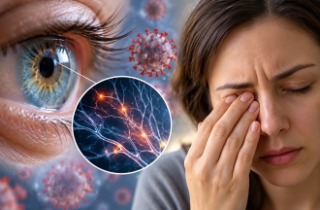
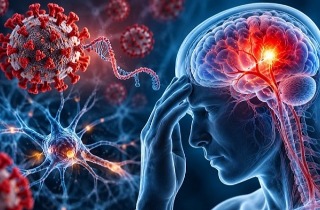
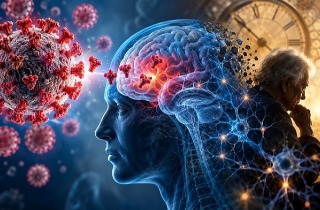
A major international scientific review has uncovered troubling biological connections between SARS-CoV-2 infection and neurodegenerative diseases, including Alzheimer's and Parkinson's. Researchers warn that the virus may activate damaging processes in the brain that persist long after respiratory symptoms disappear, potentially contributing to neurological deterioration years later.
 Scientists identify shared inflammatory and neurological mechanisms linking COVID-19 with processes involved in
Alzheimer's and Parkinson's diseases.
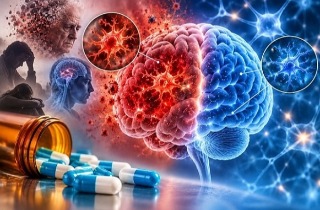
The findings suggest that COVID-19 and neurodegenerative diseases share several underlying mechanisms, including chronic inflammation, immune dysfunction, blood-brain barrier damage, mitochondrial impairment, and abnormal protein accumulation.
The research involved institutions including the Luxembourg Institute of Health, University of Luxembourg, Barcelonaβeta Brain Research Center, University of Barcelona, Fraunhofer Institute for Algorithms and Scientific Computing, Amsterdam University Medical Center, University of Amsterdam, Fraunhofer Institute for Translational Medicine and Pharmacology, University of Oxford, Pharmacoidea Ltd, Causality Biomodels, Pompeu Fabra University, Institute of Evolutionary Biology, Catalan Institution for Research and Advanced Studies, Centre for Genomic Regulation, and Centre Hospitalier de Luxembourg.
COVID-19 May Leave Lasting Changes in the Brain
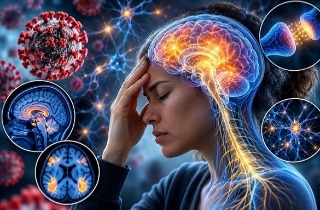
Although COVID-19 initially emerged as a respiratory illness, mounting evidence indicates that SARS-CoV-2 can affect the central nervous system.
Neurological complications range from headaches and dizziness to memory problems, impaired concentration, depression, and persistent brain fog.
The researchers highlighted previous investigations reporting neurological symptoms in approximately 20% to 80% of Long COVID patients, depending on the population studied and methods used.
Importantly, brain imaging studies have identified reductions in brain tissue volume and alterations in neurological connectivity following infection, sometimes even among individuals without obvious persistent symptoms.
However, the researchers emphasized that these observations do not establish that COVID-19 directly causes Alzheimer's or Parkinson's disease.
Persistent Inflammation Could Drive Neurological Damage
One particularly concerning finding involves prolonged immune activation. During infection, the immune system releases inflammatory signaling molecules called cytokines to combat the virus. However, excessive or persistent production can damage healthy tissues.
Studies reviewed identified elevated inflammatory markers, including interleukin-6, interleukin-1 beta, and tumor necrosis factor-alpha, months after infection.
One investigation involving 706 participants found that circulating SARS-CoV-2 spike protein antigens were approximately twice as likely to be detected among people with Long COVID, with roughly 43% testing positive.
Another investigation detected viral genetic material in intestinal tissue samples
from five Long COVID patients approximately two years after infection.
These observations raise the possibility that persistent viral material could sustain inflammatory activity long after the initial illness.
This
Thailand Medical News report highlights the researchers' concern that prolonged inflammation may gradually create conditions favorable to neuronal injury and degeneration.
Damage to the Brain's Protective Barrier
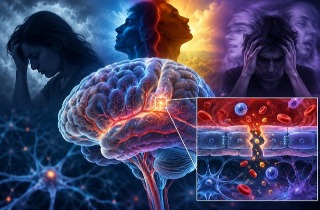
Another important mechanism involves the blood-brain barrier, a specialized protective system controlling which substances enter brain tissue from the bloodstream.
SARS-CoV-2-associated inflammation may weaken this barrier, allowing inflammatory molecules and immune cells to penetrate sensitive neurological tissues.
In one study involving 127 COVID-19 patients, approximately 50% of cerebrospinal fluid samples showed evidence of blood-cerebrospinal fluid barrier dysfunction.
A separate imaging investigation involving seven survivors of severe COVID-19 and 17 healthy controls identified significantly increased blood-brain barrier permeability approximately three months after intensive care discharge. Such abnormalities could potentially amplify inflammation and interfere with normal neuronal functioning.
Abnormal Protein Accumulation Raises Further Concerns
The review also examined how SARS-CoV-2 might influence proteins associated with neurodegenerative disorders.
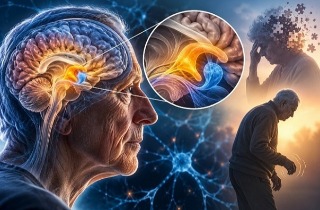
Alzheimer's disease involves abnormal accumulation of amyloid-beta and tau proteins, while Parkinson's disease is strongly associated with aggregation of alpha-synuclein.
Under certain conditions, these proteins become misfolded and form harmful deposits that interfere with neuronal communication and survival.
Researchers identified several possible pathways through which viral infection, oxidative stress, inflammation, and mitochondrial dysfunction might encourage these processes.
Experimental investigations involving cells and animals support some of these mechanisms, although direct confirmation in living human brains remains limited.
Immune Dysfunction May Continue for Months
The researchers also described evidence of prolonged immune abnormalities among Long COVID patients.
Some investigations identified persistent activation of inflammatory pathways involving IL-6 and JAK-STAT signaling for more than 180 days.
Other studies detected altered T-cell activity, immune exhaustion markers, and possible autoimmune responses.
However, results differed across populations, potentially reflecting differences in viral variants, vaccination status, age, underlying illnesses, and infection severity.
These inconsistencies highlight the complexity of determining which patients might face greater long-term neurological risks.
Advanced Brain Models Could Reveal Hidden Connections
The review emphasized emerging research technologies, including human stem cell-derived brain organoids and laboratory blood-brain barrier models.
These systems allow scientists to investigate how infection affects brain cells, inflammatory responses, and neuronal survival.
Artificial intelligence-assisted knowledge graphs may also identify shared disease pathways and potential therapeutic targets.
Researchers highlighted inflammatory signaling, immune regulation, and genetic factors as promising areas for further investigation.
Conclusions
The findings suggest that SARS-CoV-2 infection may contribute to biological processes associated with Alzheimer's and Parkinson's diseases, particularly through persistent inflammation, vascular injury, immune disturbances, and abnormal protein aggregation.
Nevertheless, establishing whether these changes ultimately increase neurodegenerative disease incidence requires long-term clinical monitoring and additional experimental evidence.
The study findings were published in the peer reviewed journal: Cellular and Molecular Neurobiology.
https://link.springer.com/article/10.1007/s10571-026-01785-9




 Share
 Tweet
 Share