Nikhil Prasad Fact checked by:Thailand Medical news Team Jun 16, 2026 3 months, 2 weeks, 4 days, 34 minutes ago
Medical News: A little-known immune system protein called CD22 is rapidly emerging as one of the most promising targets in modern medicine, offering new hope for patients battling aggressive blood cancers and difficult-to-treat autoimmune disorders. Scientists are now developing a wide range of therapies aimed at CD22, from antibody-drug conjugates and immunotoxins to advanced CAR-T cell therapies, with several already showing impressive results in clinical studies.
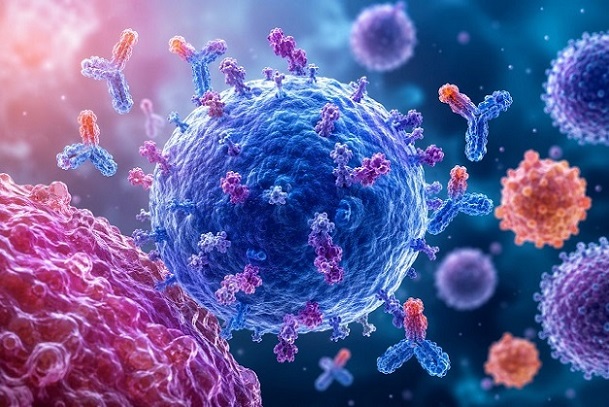 Scientists are increasingly targeting the CD22 protein to develop powerful new treatments for blood cancers
and autoimmune diseases
What Is CD22 and Why Does It Matter?
CD22 is a protein found almost exclusively on the surface of B cells, a type of white blood cell that plays a crucial role in the immune system. Under normal conditions, CD22 acts like a natural brake, preventing B cells from becoming overly active and helping maintain immune balance. When this control system fails, B cells can contribute to the development of cancers such as B-cell acute lymphoblastic leukemia (B-ALL), non-Hodgkin lymphoma, and hairy cell leukemia, as well as autoimmune diseases like rheumatoid arthritis and systemic lupus erythematosus.
One of CD22’s most attractive features is that it is highly specific to B cells. This allows therapies to target harmful B cells while minimizing damage to other tissues. Another advantage is that CD22 rapidly pulls attached molecules inside the cell, making it an ideal doorway for delivering cancer-killing drugs directly into diseased cells.
A Growing Arsenal of CD22-Targeted Treatments
Researchers have developed multiple approaches to exploit CD22. These include monoclonal antibodies that bind directly to the protein, radioactive antibodies that deliver radiation to cancer cells, antibody-drug conjugates that carry potent toxins, bispecific antibodies that recruit immune cells to attack tumors, and CAR-T therapies that genetically reprogram immune cells to hunt down CD22-expressing cells.
The review was conducted by scientists from the National “111” Center for Cellular Regulation and Molecular Pharmaceutics, the Key Laboratory of Fermentation Engineering, the Cooperative Innovation Center of Industrial Fermentation, the Hubei Key Laboratory of Industrial Microbiology, and the School of Life and Health Sciences at Hubei University of Technology in Wuhan, China, together with researchers from the Department of Public Health Dunedin at the University of Otago, New Zealand.
The Approved Drug Already Changing Leukemia Treatment
One of the biggest success stories is inotuzumab ozogamicin, the only approved CD22-targeting antibody-drug conjugate. In a major Phase III trial involving patients with relapsed or refractory B-cell acute lymphoblastic leukemia, the drug achieved a complete remission rate of more than 80 percent, dramatically outperforming standard chemotherapy, which achieved remission in less than 30 percent of patients. The treatment also helped far more patients proceed to potentially life-saving stem cell transplantation.
CAR-T Therapy Takes CD22 Targeting to the Next L
evel
Perhaps the most exciting advances involve CD22-targeted CAR-T cell therapy. These treatments genetically engineer a patient's own immune cells to recognize and destroy CD22-positive cancer cells. Early clinical trials showed complete remission rates reaching approximately 70 percent in patients with relapsed or treatment-resistant B-ALL, including many who had previously failed CD19-targeted therapies.
Researchers also discovered that combining CD19 and CD22 targeting in a single CAR-T treatment can reduce the risk of cancer cells escaping detection. Dual-targeted therapies have produced longer-lasting remissions and may overcome one of the biggest limitations of earlier CAR-T approaches. This
Medical News report highlights how these dual-targeting strategies are increasingly being viewed as the future of cellular cancer therapy.
What Does This Mean for Autoimmune Diseases?
Scientists believe CD22-targeted therapies could also revolutionize treatment for autoimmune diseases. In disorders such as lupus and rheumatoid arthritis, abnormal B cells attack the body's own tissues. Because CD22 is present on these harmful B cells, therapies directed at CD22 may selectively eliminate them while preserving much of the body's protective immune function.
Although clinical experience remains limited, encouraging results from B-cell-targeted CAR-T therapies in severe lupus have strengthened confidence that CD22-directed treatments could eventually provide long-lasting remission for autoimmune patients who fail existing therapies. Researchers are now exploring next-generation approaches, including off-the-shelf CAR-NK and universal CAR-T platforms, which could make these treatments safer, more affordable, and more widely available.
Conclusion
The rapid progress in CD22-targeted therapies marks an important turning point in the treatment of both blood cancers and autoimmune diseases. What makes CD22 particularly valuable is its unique combination of B-cell specificity, powerful immune-regulating functions, and ability to efficiently internalize therapeutic agents. While challenges such as treatment resistance, manufacturing complexity, and safety concerns remain, the growing success of antibody-drug conjugates and CAR-T therapies suggests that CD22 could become one of the most important therapeutic targets of the next decade. As researchers continue refining these technologies, patients with previously untreatable cancers and autoimmune disorders may soon benefit from more precise, effective, and potentially long-lasting treatments.
The study findings were published in the peer reviewed International Journal of Molecular Sciences.
https://www.mdpi.com/1422-0067/27/12/5406
For the latest on CD22, keep on logging to Thailand
Medical News.
Read Also:
https://www.thailandmedical.news/articles/cancer
https://www.thailandmedical.news/articles/cancer




 Share
Share
 Tweet
Tweet
 Share
Share

































