Nikhil Prasad Fact checked by:Thailand Medical News Team Jun 01, 2026 4 months, 3 days, 2 hours, 41 minutes ago
Medical News: Glaucoma has long been viewed as a disease driven mainly by pressure inside the eye. However, a new scientific review is highlighting a promising new direction that could transform future treatments: repairing damaged blood vessels and restoring healthy blood flow to the eye. Researchers now believe that problems in the eye’s vascular system may play a far bigger role in glaucoma than previously thought, opening the door to innovative therapies that go beyond simply lowering eye pressure.
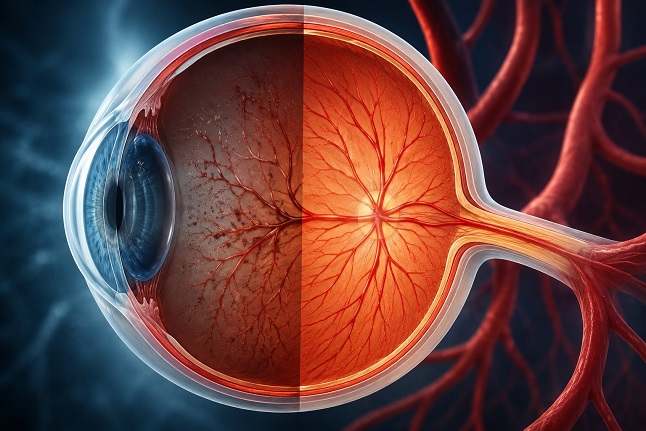 Scientists reveal that restoring blood flow and repairing damaged eye blood vessels may become a powerful new
strategy for preventing glaucoma-related blindness.
The review was conducted by researchers Susannah Waxman and Adriana Di Polo from the Department of Neuroscience at the University of Montreal and the University of Montreal Hospital Research Centre (CHUM), Montreal, Quebec, Canada.
Glaucoma Is More Than an Eye Pressure Disease
Glaucoma is one of the leading causes of irreversible blindness worldwide. The disease damages retinal ganglion cells, specialized nerve cells that transmit visual information from the eye to the brain. Once these cells die, vision loss is permanent.
For decades, reducing intraocular pressure has been the cornerstone of glaucoma treatment. While pressure-lowering medications and surgeries can slow disease progression, many patients continue to lose vision despite successful pressure control. Some individuals even develop glaucoma despite having normal eye pressure levels.
These observations have led scientists to search for other factors that may contribute to the disease. Increasingly, evidence points to problems involving blood vessels and blood circulation within the eye.
The Eye Depends on a Delicate Blood Supply
The retina and optic nerve are among the most metabolically active tissues in the human body. To function properly, they require a constant and carefully regulated supply of oxygen and nutrients delivered through an intricate network of tiny blood vessels.
In healthy eyes, blood flow automatically adjusts to meet changing demands. When visual activity increases, blood vessels expand to deliver additional oxygen and nutrients. This process, known as neurovascular coupling, depends on close communication between nerve cells, support cells, and blood vessels.
The new review explains that when this communication system breaks down, retinal cells may no longer receive the support they need to survive.
Vascular Damage May Occur Before Nerve Cell Death
One of the most striking findings discussed in the review is that blood vessel abnormalities may appear before significant nerve damage becomes detectable. Animal studies have repeatedly shown reduced blood flow, damaged capillaries, and loss of vascular density in the early stages of glaucoma. In several experiments, these vascular changes emerged before retinal ganglion cells began dying.
Human studies are producing similar findings. Large population analyses have revealed that people with lower retinal vascular density
face a greater risk of developing glaucoma. Advanced imaging techniques have also demonstrated that areas with reduced blood flow often correspond closely to regions where vision loss later occurs.
Researchers have further observed that blood flow reductions in the optic nerve head can sometimes be detected before measurable visual field defects appear.
These findings raise an important possibility: vascular dysfunction may not simply be a consequence of glaucoma but could be helping to drive the disease itself.
Regenerating Blood Vessels Could Change Treatment Strategies
Unlike nerve cells, which have very limited regenerative ability, blood vessels possess a remarkable capacity to repair and remodel themselves.
This
Medical News report highlights a growing belief among scientists that restoring healthy vascular architecture could help interrupt the cycle of degeneration seen in glaucoma.
The review discusses several biological pathways involved in blood vessel growth and repair. One of the most important is vascular endothelial growth factor A (VEGF-A), a protein known for stimulating the formation of new blood vessels.
Interestingly, VEGF-A may also directly protect nerve cells from damage. Studies have shown that increasing VEGF-A levels can shield retinal ganglion cells from injury. However, researchers caution that excessive VEGF activity can trigger harmful abnormal vessel growth, meaning any future therapies will need to carefully balance benefits and risks.
Other molecules such as platelet-derived growth factors and angiopoietin-1 may help stabilize newly formed blood vessels and ensure they function properly rather than becoming fragile or leaky.
New Approaches to Restore Blood Flow
Beyond rebuilding blood vessels, researchers are also exploring methods to improve blood circulation through existing vessels.
One promising experimental treatment is PER-001, a sustained-release implant that blocks endothelin receptors. Endothelin-1 is a powerful blood vessel constrictor that is often elevated in glaucoma patients. Early clinical trial findings suggest that blocking its effects may increase blood flow to the retina and optic nerve while helping preserve visual function.
Scientists are also investigating Rho-kinase inhibitors, drugs already used to lower eye pressure. These medications may provide additional benefits by relaxing blood vessels and improving circulation independently of their pressure-lowering effects.
Gene therapy approaches are attracting growing interest as well. Researchers envision future treatments capable of providing long-term control over molecules that regulate blood vessel health and blood flow, potentially reducing the need for repeated interventions.
A New Era for Glaucoma Research
The review concludes that future glaucoma therapies may need to target both nerve cells and blood vessels simultaneously. While protecting retinal ganglion cells remains essential, ensuring that those cells receive adequate oxygen and nutrients may be equally important.
The researchers emphasize that vascular regeneration and blood flow restoration represent two distinct but complementary strategies. Combining these approaches with traditional pressure-lowering treatments could provide more durable protection against vision loss. If future studies confirm these findings, glaucoma care could evolve from focusing primarily on eye pressure to addressing the broader neurovascular health of the eye. Such a shift could offer hope to millions of patients worldwide who continue to experience progressive vision loss despite receiving current standard treatments. The growing understanding of the eye’s vascular system may ultimately pave the way for therapies capable not only of slowing glaucoma but potentially preserving vision far more effectively than ever before.
The study findings were published on a preprint server and are currently being peer reviewed.
https://www.preprints.org/manuscript/202604.1979
For the latest on glaucoma, keep on logging to Thailand
Medical News.
Read Also:
https://www.thailandmedical.news/articles/glaucoma-news




 Share
Share
 Tweet
Tweet
 Share
Share

































