Nikhil Prasad Fact checked by:Thailand Medical News Team Jun 02, 2026 3 months, 7 hours, 50 minutes ago
Medical News: Millions of people struggling with long COVID often complain that they cannot think clearly, remember simple things, or stay mentally focused. Now, researchers in Brazil have found evidence that better physical fitness may significantly improve brain function in people recovering from COVID-19, especially those suffering from lingering cognitive issues commonly called “brain fog.”
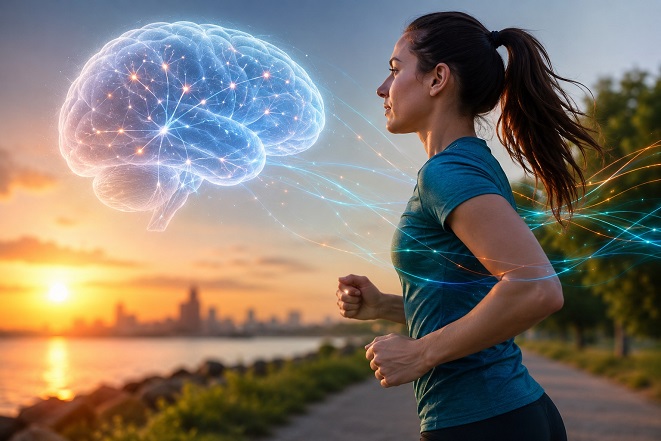 Scientists find that better physical fitness may significantly improve memory and brain function in long COVID patients
The new study was conducted by scientists from the Brain Institute of Rio Grande do Sul (BraIns), the Graduate Program in Medicine, Pediatrics and Child Health, the Graduate Program in Medicine and Health Sciences, and the Centro Infant Department of Pediatrics at the Pontifical Catholic University of Rio Grande do Sul (PUCRS) in Porto Alegre, Brazil.
Researchers examined 34 adults who had previously been hospitalized with COVID-19 and were still experiencing long-term symptoms nearly three years after infection. The team wanted to determine whether physical fitness levels could influence memory, attention, language skills, and other forms of cognitive performance.
Strong Link Between Fitness and Brain Function
Participants underwent detailed cognitive testing using the Addenbrooke’s Cognitive Examination-Revised, a tool that measures memory, verbal fluency, language, attention, and visuospatial skills. They also completed VO2 max testing, which measures how efficiently the body uses oxygen during exercise and is considered a key indicator of cardiovascular fitness.
The findings were striking. Individuals with higher VO2 max levels consistently performed better on cognitive tests. Memory showed the strongest connection to physical fitness. Researchers found a powerful correlation between better aerobic capacity and stronger memory scores.
Patients classified as physically active also achieved much higher cognitive scores compared to sedentary individuals. Those considered “very active” showed some of the best overall brain performance results in the study.
Scientists reported that participants with stronger physical fitness demonstrated better language abilities, improved verbal fluency, and higher overall cognitive function.
Why Exercise May Help Long COVID Patients
Long COVID has become a growing global health crisis. Many survivors continue to experience exhaustion, breathing problems, depression, anxiety, and cognitive difficulties months or even years after infection.
Researchers believe the virus may trigger long-lasting inflammation in the brain, reduced blood flow to brain tissues, and damage to blood vessels. These changes may interfere with how brain cells communicate, leading to forgetfulness, confusion, slower thinking, and poor concentration. Exercise appears to counter many of these harmful effects.
The study explained that physical activity can stimulate the production of important brain-supporting chemicals known as neurotrophic factors, including brain-derived neurotrophic factor or BDNF. These substances help the brain repair itself, stre
ngthen neural connections, and improve neuroplasticity, which is the brain’s ability to adapt and recover.
Exercise may also reduce inflammation, improve blood circulation to the brain, support healthy blood vessels, and enhance oxygen delivery throughout the body. According to this
Medical News report, the researchers believe these combined effects may explain why physically fitter participants showed significantly better cognitive performance despite having previously suffered serious COVID-19 infections.
Brain Fog Still Affecting Survivors Years Later
The average participant in the study was 52 years old, and most continued to experience persistent symptoms such as fatigue, breathing difficulties, behavioral changes, and cognitive impairment nearly two years and seven months after hospitalization.
Even though many participants had only mild lung involvement during their original infection, the long-term neurological effects remained substantial.
The researchers also discovered that longer hospital stays were associated with worse language performance later on, suggesting that severe infections may leave lasting effects on brain health.
Importantly, the scientists stressed that exercise-based rehabilitation programs may offer a practical and low-cost way to help long COVID patients regain mental clarity and cognitive function.
Exercise Could Become Part of Long COVID Treatment
The researchers noted that structured exercise programs combining aerobic training and resistance exercise have already shown benefits in previous studies involving long COVID patients. These programs were linked to improvements in oxygen capacity, muscle strength, fatigue levels, and breathing difficulties.
The new findings add further evidence that physical activity may also play a major role in protecting and restoring cognitive health after COVID-19.
The researchers cautioned that the study was relatively small and conducted at a single medical center, meaning larger international studies are still needed.
However, the findings strongly support the idea that staying physically active may help the brain recover after COVID-related damage.
The conclusion of the study is particularly important because many long COVID patients currently have limited treatment options. The researchers believe carefully supervised exercise programs could become an essential part of future rehabilitation strategies for millions suffering from persistent cognitive symptoms. They also emphasized that physical fitness may not only improve physical recovery but could help restore memory, focus, and overall mental functioning in survivors struggling with long-term neurological complications after COVID-19.
The study findings were published in the peer reviewed journal: Frontiers in Sports and Active Living.
https://www.frontiersin.org/journals/sports-and-active-living/articles/10.3389/fspor.2026.1738512/full
For the latest on Long COVID, keep on logging to Thailand
Medical News.
Read Also:
https://www.thailandmedical.news/articles/long-covid




 Share
Share
 Tweet
Tweet
 Share
Share

































