Nikhil Prasad Fact checked by:Thailand Medical News Team Jul 08, 2026 1 month, 3 weeks, 4 days, 18 hours, 12 minutes ago
Medical News: For decades, depression has largely been explained as a disorder caused by imbalances in brain chemicals such as serotonin and dopamine. While that theory has helped guide treatment, it has never fully explained why many antidepressants take weeks to work, why millions of patients fail to improve, or why newer drugs like ketamine can relieve symptoms within hours. A new review by researchers from the Department of Physiology, Dongguk University College of Medicine, Gyeongju, Republic of Korea, proposes a broader explanation that could reshape how scientists understand and eventually treat major depressive disorder.
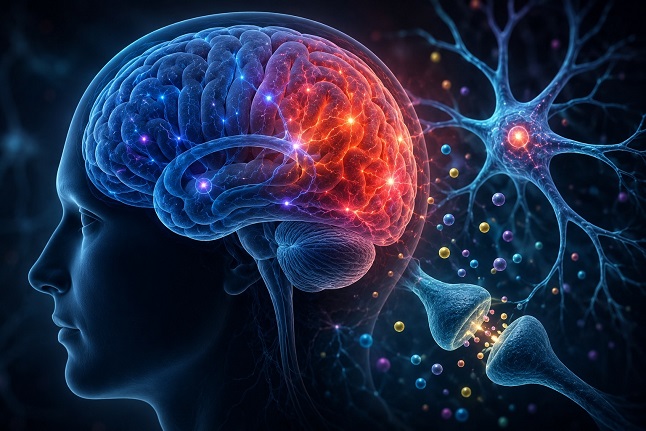 Researchers propose that disrupted ion balance in brain cells may be a fundamental driver of depression and a
promising target for future treatments
A New Way of Looking at Depression
Instead of focusing mainly on neurotransmitters, the researchers argue that depression may result from a widespread breakdown in the brain's ability to control electrically charged particles known as ions. These include calcium, potassium, chloride and sodium, which constantly move in and out of brain cells through tiny structures called ion channels.
These movements allow nerve cells to communicate, process emotions, form memories and adapt to stress. When this delicate balance is disrupted, brain circuits involved in mood, thinking and emotional control may become unstable. According to the review, chronic stress, inflammation, genetics and metabolic problems may all contribute to this gradual loss of ionic balance.
Why Ion Channels Matter
The review highlights several families of ion channels that appear to play important roles in depression. Calcium channels help brain cells adapt and form new connections, but excessive calcium activity may damage these same cells during prolonged stress. Potassium channels normally keep nerve cells from becoming overly active, while chloride transporters determine whether calming signals in the brain actually remain calming.
Researchers also point to channels found in support cells called astrocytes and microglia. These cells help regulate inflammation, remove waste products and maintain the chemical environment surrounding neurons. If these support systems begin to fail, they may trigger inflammation, weaken communication between brain cells and create a cycle that worsens depressive symptoms.
A Fresh Direction for Future Treatments
This Medical News report highlights how the review also explains why ketamine produces unusually rapid antidepressant effects. Rather than simply changing neurotransmitter levels, ketamine appears to reset disrupted brain networks by restoring healthy communication, boosting brain-derived neurotrophic factor (BDNF), activating mTOR signaling and encouraging the growth of new synaptic connections.
The authors believe future treatments could directly target ion channels such as TREK-1, KCNQ, NKCC1/KCC2, P2X7 receptors and other pathways involved in restoring normal electrical balance. They also suggest combining medications with brain stimulation techniques such as transcranial magnetic stimulation and EEG-guided therapies to personalize tre
atment.
Artificial intelligence, genetic analysis, single-cell sequencing and other multiomics technologies may eventually identify each patient's unique ion channel abnormalities, allowing therapies to be tailored to the biological mechanisms driving their depression rather than relying only on symptoms.
A More Complete Picture of Depression
The review presents depression as a disorder affecting not only neurotransmitters but also the electrical stability of entire brain networks. Instead of viewing inflammation, impaired brain plasticity and altered communication as separate problems, the authors unite them under a single framework centered on disrupted ionic homeostasis. This concept may also help explain why depression varies so greatly between individuals and why some patients respond poorly to conventional antidepressants.
Conclusion
The proposed framework does not replace existing theories of depression but significantly expands them by identifying ionic homeostasis as a central biological process linking genetics, chronic stress, inflammation and brain network dysfunction. If future research confirms these mechanisms, therapies that restore normal ion balance could open entirely new avenues for faster, more effective and more personalized treatments for major depressive disorder.
The study findings were published in the peer reviewed International Journal of Molecular Sciences.
https://www.mdpi.com/1422-0067/27/13/6084
For the latest research on depression and mental health issues, keep on logging to Thailand
Medical News.
Read Also:
https://www.thailandmedical.news/articles/mental-health




 Share
Share
 Tweet
Tweet
 Share
Share

































