Nikhil Prasad Fact checked by:Thailand Medical News Team Apr 30, 2026 5 months, 4 days, 4 hours, 41 minutes ago
Medical News: Researchers uncover dual-action plant compound that targets both brain and blood vessels
A new study has revealed that natural compounds extracted from Snow Chrysanthemum may offer a powerful new way to combat vascular dementia, a condition that affects memory and thinking due to poor blood flow in the brain. The research highlights how these plant-based flavonoids can work on both the brain and the vascular system at the same time, offering hope for a more effective and safer treatment strategy.
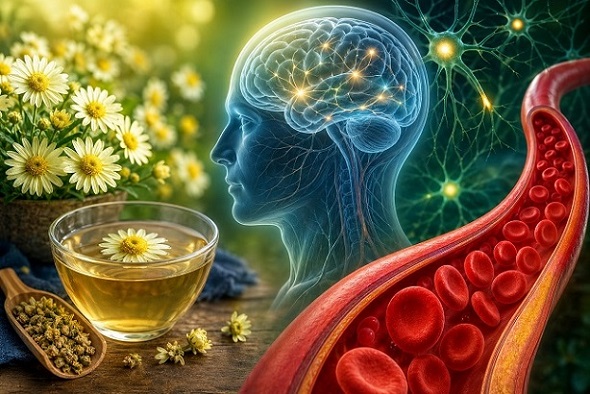 Natural plant compounds may protect brain and blood vessels to slow dementia progression
What Is Vascular Dementia and Why It Matters
Vascular dementia is one of the most common forms of cognitive decline, especially in older adults. It is closely linked to high blood pressure, which damages blood vessels and reduces blood flow to the brain. Over time, this leads to memory loss, confusion, and difficulty in daily functioning.
Current treatments mainly focus on managing symptoms or controlling blood pressure, but they often fall short of reversing brain damage. This has pushed scientists to look for therapies that can address multiple causes at once.
A Natural Compound with Powerful Potential
In this study, scientists examined flavonoids extracted from Snow Chrysanthemum, a traditional medicinal plant widely consumed as herbal tea. These compounds, known as total flavonoids from Snow Chrysanthemum (TFSC), were found to contain a high concentration of bioactive ingredients—almost 85 percent flavonoids.
The research team, from the Institute of Medicinal Plant Development at the Chinese Academy of Medical Sciences and Peking Union Medical College, along with the Xinjiang Institute of Materia Medica, conducted experiments using rats that had both high blood pressure and vascular dementia-like conditions.
Improvements In Blood Flow and Brain Function
The findings were striking. Rats treated with TFSC showed a significant drop in blood pressure compared to untreated animals. At the same time, blood flow to the brain improved notably, helping restore oxygen and nutrient supply.
More importantly, the treated rats performed much better in memory and learning tests. They were quicker to find hidden platforms and better at recognizing new objects, indicating improvements in both spatial and non-spatial memory.
Protecting Brain Cells from Damage
Detailed examination of brain tissue revealed that TFSC helped protect neurons from damage. Areas of the brain responsible for memory, such as the hippocampus, showed fewer abnormal cells and healthier structures after treatment.
The compounds also boosted the body’s natural defense systems. Levels of protective enzymes increased, while harmful molecules linked to oxidative stress were reduced. At the same time, inflammation markers dropped significantly, suggesting that TFSC calms harmful immune responses in the brain.
This
:16px">Medical News report highlights that these combined effects create a powerful protective environment for brain cells, reducing ongoing damage and supporting recovery.
How It Works at The Molecular Level
The study also explored how TFSC works at a deeper biological level. Researchers found that it influences important signaling pathways in the brain, including those involved in cell survival, inflammation control, and blood vessel function.
Gene analysis showed that TFSC could switch on protective genes while turning off harmful ones. These changes help maintain brain cell health and improve communication between neurons.
The compound works through a dual mechanism—improving blood circulation while directly protecting nerve cells—linked by its antioxidant and anti-inflammatory actions.
A Safer and More Holistic Approach
One of the most promising aspects of this research is the safety profile. Unlike many drug combinations currently used, TFSC did not cause major side effects in the study. Its natural origin and multi-target action make it a strong candidate for long-term use.
Conclusion
The findings suggest that Snow Chrysanthemum flavonoids could represent a new generation of treatments for vascular dementia. By simultaneously lowering blood pressure, improving blood flow, reducing inflammation, and protecting brain cells, TFSC addresses the disease from multiple angles. This multi-layered approach may overcome the limitations of current therapies that focus on only one aspect of the condition. While further human studies are needed, the results provide a strong foundation for developing safer, more effective treatments that not only slow cognitive decline but potentially improve brain function over time.
The study findings were published in the peer reviewed journal: Pharmaceuticals.
https://www.mdpi.com/1424-8247/19/5/700
For the latest on herbs and phytochemicals, keep on logging to Thailand
Medical News.
Read Also:
https://www.thailandmedical.news/articles/herbs-and-phytochemicals
https://www.thailandmedical.news/articles/alzheimer,-dementia-




 Share
Share
 Tweet
Tweet
 Share
Share

































