Nikhil Prasad Fact checked by:Thailand Medical News Team Jun 26, 2026 3 months, 1 week, 14 hours, 9 minutes ago
Medical News:
Researchers Discover That COVID-19 Leaves Lasting Changes in the Immune System That Resemble Faster Biological Aging
Scientists have uncovered more evidence that COVID-19 does much more than cause a temporary viral illness. A new study has found that the virus can leave behind long-lasting changes in the immune system that closely resemble accelerated biological aging. The findings suggest that even after recovery from infection, the immune system may behave as though it has aged faster than expected.
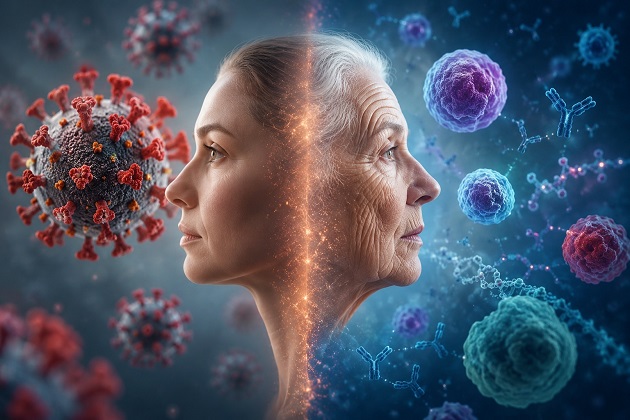 New research shows COVID-19 leaves lasting immune system changes that resemble accelerated biological aging,
even after recovery
The research was led by scientists from the Key Laboratory of Geriatrics, Beijing Institute of Geriatrics, Beijing Hospital, National Center of Gerontology, National Health Commission, Institute of Geriatric Medicine, Chinese Academy of Medical Sciences, together with researchers from Xiangya Hospital of Central South University, The First Affiliated Hospital of Xi'an Jiaotong University, Shandong Provincial Hospital Affiliated to Shandong First Medical University, and Capital Medical University, all in China.
A New Way to Measure Immune Aging
The research team analyzed blood samples from 195 healthy adults aged between 25 and 93 years and also followed 94 of these individuals after they had recovered from COVID-19. Using advanced immune sequencing technology, they examined millions of immune receptor patterns found on T cells and B cells, the body's frontline defenders against infections.
The researchers then developed a sophisticated "immune aging clock" using machine learning. Instead of simply looking at a person's calendar age, the new tool estimated biological aging based on how the immune system had changed over time.
COVID-19 Made the Immune System Look Older
The study revealed that aging naturally reduces the diversity of immune cells, making it harder for the body to recognize and fight new infections. However, COVID-19 dramatically intensified these age-related changes.
People who had recovered from COVID-19 showed fewer unique immune cell clones, reduced immune diversity, larger populations of over-expanded immune cells, and significant alterations in the genes and amino acids used to build immune receptors. These are all characteristics normally associated with older age.
The researchers also discovered that immune diversity declined sharply around the age of 60, but COVID-19 appeared to push the immune system further along this aging pathway regardless of a person's actual age.
Machine Learning Confirmed Accelerated Biological Aging
One of the most important findings was that the newly developed immune aging clock consistently estimated older biological ages in people who had recovered from COVID-19. Their calculated biological age exceeded their actual age, indicating accelerated immune aging.
This
&
lt;strong>Medical News report highlights that the researchers also found reduced intrinsic capacity among post-COVID participants. Intrinsic capacity refers to the body's overall physical and mental ability to function, suggesting that immune aging may be linked to broader declines in health and resilience.
The study also found evidence that SARS-CoV-2 infection altered immune memory. Certain immune cell populations expanded dramatically after infection, particularly those linked to SARS-CoV-2, while the overall immune repertoire became less diverse and more unevenly distributed. Older adults showed a weaker ability to generate new immune clones after infection, suggesting a reduced capacity to respond to future health threats.
Important Implications for Long COVID and Healthy Aging
The findings provide strong evidence that COVID-19 may speed up processes normally associated with aging of the immune system. Such immune remodeling could help explain why some people continue experiencing health problems months or even years after infection and why repeated infections may have cumulative effects on long-term health.
The researchers believe that their immune aging clock may eventually become a valuable clinical tool for identifying individuals at higher risk of immune decline, age-related diseases, and persistent post-COVID complications.
Conclusion
The study provides compelling evidence that COVID-19 leaves lasting biological effects that extend well beyond the initial infection. By accelerating changes normally seen during aging, the virus appears to weaken immune diversity, promote abnormal immune cell expansion, and reduce overall immune resilience. The newly developed immune aging clock offers an innovative way to measure these changes and may become an important tool for monitoring long-term health after COVID-19. The findings also reinforce growing concerns that preventing repeated infections remains important for preserving healthy aging and maintaining a strong immune system throughout life.
The study findings were published in the peer reviewed journal: Aging Cell.
https://onlinelibrary.wiley.com/doi/10.1111/acel.70580
For the latest COVID-19 news, keep on logging to Thailand
Medical News.
Read Also:
https://www.thailandmedical.news/news/covid-19-causes-premature-aging




 Share
Share
 Tweet
Tweet
 Share
Share

































